table of contents
Cyber attacks hit enterprises every 39 seconds in 2026. Attackers slip past firewalls and EDR tools because they mimic normal users. You need someone who turns the tables on them.
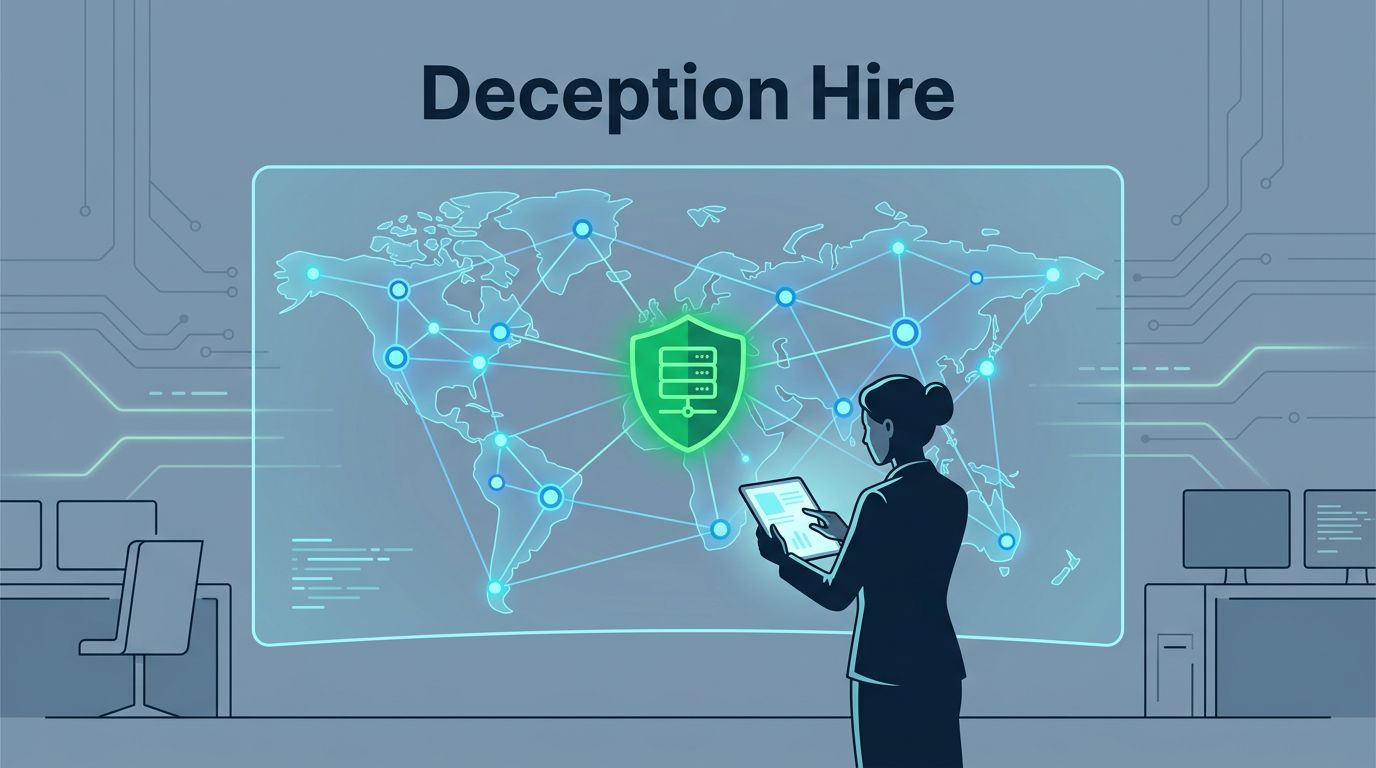
A cyber deception specialist builds fake assets that lure threats into revealing themselves. These pros deploy decoys in cloud setups and identity systems. They cut detection time from days to minutes. This guide shows you how to hire cyber deception specialists who fit your SOC and boost threat intel.
Understand What a Cyber Deception Specialist Does
Cyber deception specialists create traps that look like real assets. Attackers touch a fake server or credential, and alerts fire with full context. This shifts your team from reaction to early warning.
In modern SOCs, these experts integrate decoys with SIEM and SOAR tools. They route events for automated playbooks. For example, a fake AWS bucket triggers isolation scripts. Trends show cloud and identity deception rising fast because threats target SaaS apps and fake exec accounts.
Specialists also overlap with detection engineering. They tune decoys to match your environment, like mimicking Active Directory for lateral movement hunts. AI tools now auto-generate adaptive traps that evolve with attacker behavior.

Expect them to handle daily tasks like breadcrumb placement. These clues lead attackers to honeytokens. In threat intel workflows, they analyze interactions to map TTPs against MITRE ATT&CK. Check this Cyber Deception Lead job description for a real example of AI-driven tactics and team mentoring.
Your hire will reduce MTTD by feeding high-fidelity signals into existing ops. They collaborate with threat hunters to validate findings. Without this role, SOCs drown in noise while missing active adversaries.
Key Qualifications to Look For
Focus on skills that deliver results in 2026 SOCs. Must-haves include hands-on experience with deception platforms like Acalvio or custom honeypots. Candidates need Python for scripting decoys and automation.
They must know cloud environments, AWS or Azure, to deploy realistic fakes. Identity deception experience counts too, like trap accounts in Okta. Look for MITRE Engage knowledge because it guides active defenses.

Nice-to-haves add polish. AI familiarity helps with dynamic decoys. Detection engineering background speeds SOC integration. Certifications like OSCP or GIAC show practical edge.
| Qualification Type | Must-Have Examples | Nice-to-Have Examples |
|---|---|---|
| Technical Skills | Python scripting, cloud decoys, MITRE ATT&CK | AI trap generation, Databricks forensics |
| Experience | SOC integration, threat hunting | Team leadership, industrial OT decoys |
| Soft Skills | Adversary mindset, log analysis | Cross-team communication |
This table highlights priorities. A strong candidate scores high on must-haves first. Mid-level pay runs $110,000 to $150,000, per market data. Demand stays high due to skills gaps.
Prioritize sysadmin basics for decoy maintenance. See deception engineer roles that stress attacker tradecraft and custom tooling.
Where to Source Cyber Deception Talent
Start with niche job boards like BuiltIn and LinkedIn. Search “deception engineer” or “threat hunter deception.” Government contractors post roles needing clearances.
Conferences draw experts. Black Hat and DEF CON talks on active defense pull top talent. Recruit from threat intel teams because skills overlap.
Partner with firms like Bud Consulting for vetted candidates. They specialize in hard-to-fill cybersecurity roles. Networks on Reddit’s r/netsec or Discord SOC channels yield referrals.
Remote roles grow, but hybrid suits SOC integration. Target mid-market pros tired of big-tech churn. Post outcome-based descriptions, like “deploy decoys that cut alert noise by 40%.”
Outline Sample Job Responsibilities
Write clear duties to attract fits. Core tasks include designing decoys for hybrid clouds. They deploy and tune them weekly.
Daily, monitor interactions via SIEM feeds. Analyze for TTPs and enrich threat intel. Collaborate on playbooks for containment.
They maintain realism, rotating assets to evade detection. Integrate with EDR for bidirectional alerts. Report metrics like engagement rates to leadership.
- Build identity traps in IAM systems.
- Test decoys against red team sims.
- Automate breadcrumb drops with scripts.
Expect quarterly audits for coverage gaps. This role reports to SOC manager or CISO.
Ask These Interview Questions
Probe real skills over resumes. Start with scenarios. “Walk me through deploying a cloud decoy that mimics S3 buckets. How do you make it believable?”
Test adversary thinking. “An attacker pivots via RDP. What fake assets lead them to a honeytoken?” Good answers mention breadcrumbs and MITRE tactics.

Gauge SOC fit. “How do you route deception alerts to SOAR without overwhelming analysts?” Look for enrichment and playbook examples.
Behavioral probe: “Describe a time your decoy caught an advanced threat. What followed?” Follow up on outcomes.
Technical deep dive: “Code a simple Python script for a honeytoken logger.” Time it at 20 minutes.
End with culture. “How do you balance deception with compliance?” From hiring best practices, consistent questions predict success.
Avoid These Common Hiring Mistakes
Don’t chase certs over experience. OSCP helps, but deployment history wins. Many overlook cloud skills, then struggle with hybrid threats.
Skip generalists. Detection engineers lack deception mindset. Always test with a take-home: build a basic decoy.
Rush without assessments. Resumes lie; scenarios reveal gaps. Ignore salary benchmarks, and you’ll lowball at $100k when market hits $140k.
Neglect team fit. Deception pros need hunter collaboration. Failing SOC integration wastes the hire.
For 2026 trends like AI ops, demand SOC workflow proof. See deception SOC integration tips.
Wrapping It Up
Hire cyber deception specialists who deploy realistic traps and tie them to your SOC. They deliver early alerts that sharpen threat intel and speed response.
Focus on must-have skills like cloud decoys and scripting. Use targeted questions and avoid cert obsession. This approach fills your gap fast.
Ready to build your team? Book a Discovery Call with Bud Consulting for specialized recruitment help.