table of contents
Your compliance team spends hours chasing evidence for audits. Spreadsheets pile up, and deadlines loom. You know automation could fix this, but who sets it up?
A compliance automation specialist bridges rules and tech. They build systems that track controls nonstop. In fintech or SaaS, where regs like SOC 2 and GDPR hit hard, these pros keep you audit-ready without burnout.
This guide walks you through spotting the need, writing the job post, and picking winners. You’ll get real questions and pitfalls to dodge. Let’s build your team right.
What a Compliance Automation Specialist Does
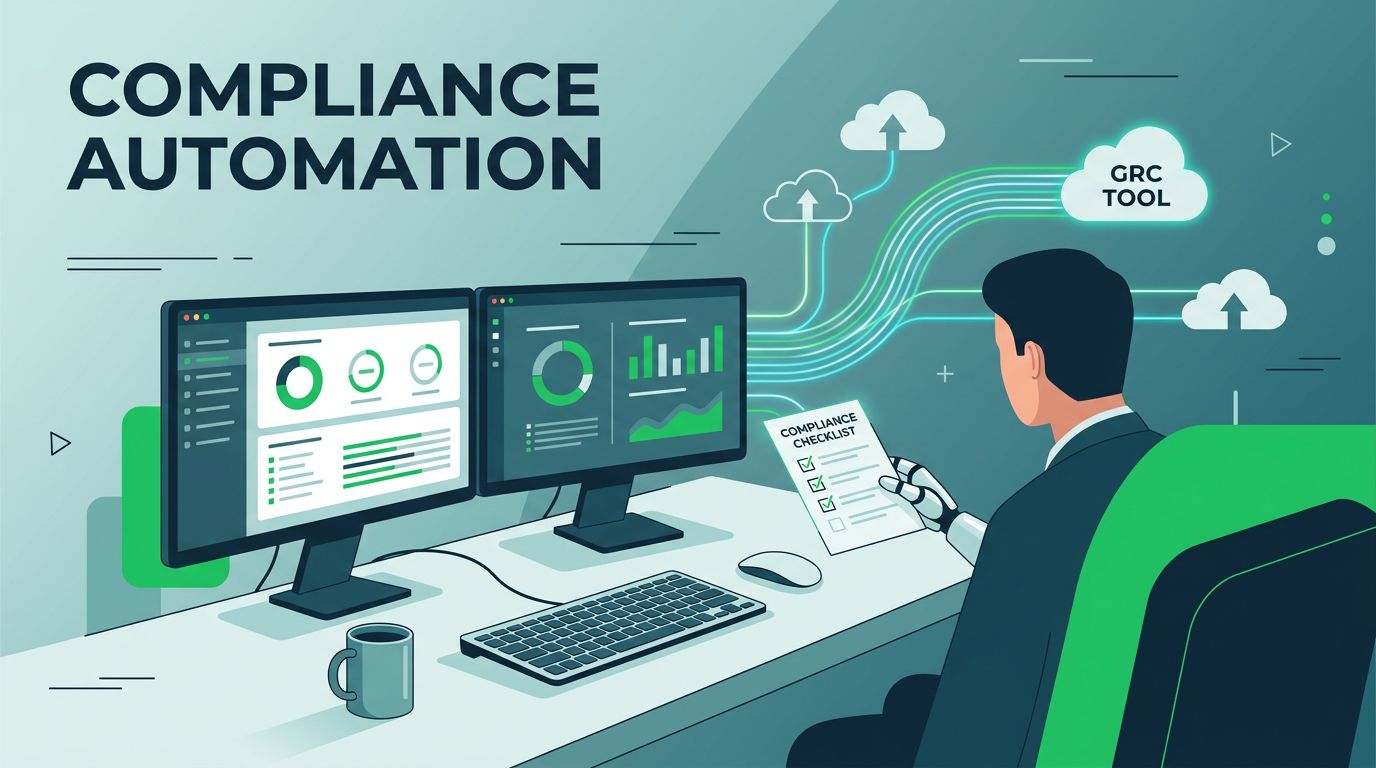
These specialists automate the grunt work of compliance. They map regs to your systems, then code scripts that pull evidence automatically. No more manual logs for ISO 27001 or PCI DSS.
They design pipelines. For example, they connect AWS logs to your GRC tool. When a control fails, alerts fire off. Audits become reviews of dashboards, not scrambles.
In 2026, they lean on AI for smart checks. Tools flag risks in real time, like public S3 buckets. They also update workflows as regs change, such as DORA in Europe.
Daily tasks include testing integrations with GitHub or Okta. They validate data from Snowflake or Jira. Support audits by prepping reports. Root cause analysis follows breaches.
Titles vary: compliance engineer, GRC automation lead, or security governance analyst. Core job stays the same. They own evidence collection and control monitoring.
Signs Your Company Needs One Now
Scale tells the tale. If audits eat weeks yearly, hire up. Manual checks don’t scale past 50 employees in regulated spaces.
Look at pain points. Teams chase vendor docs or patch logs? Automation fixes that. Fines hit because reports lag? Continuous monitoring prevents repeats.
Fintech firms face DORA’s real-time reporting. SaaS needs SOC 2 Type II evidence on tap. Healthtech juggles HIPAA and ISO 27001. If you map multiple frameworks, one person streamlines it.
Check tool use. You run Vanta or Drata but underuse it? A specialist tunes integrations. Demand surges in 2026; shortages mean salaries climb to $130K-plus in the US.
Growth signals it too. New funding? Expansion to EU? Regs follow. Don’t wait for the next audit crunch.
Full-Time Employee or Consultant?
Start with needs. Short-term audit? Grab a consultant. They ramp fast on tools like Hyperproof or Sprinto. Cost: $150-250/hour, project-based.
Long haul suits full-time. Ongoing regs demand steady hands. They embed in your stack, from CI/CD to dashboards. Retention builds institutional knowledge.
Compare options:
| Factor | Full-Time | Consultant |
|---|---|---|
| Cost | $120K-160K salary + benefits | $10K-50K per project |
| Ramp Time | 1-3 months | 1-2 weeks |
| Ownership | High; owns roadmap | Task-focused |
| Flexibility | Fixed hours | As-needed |
| Best For | Scaling teams | One-off fixes |
Full-time wins for SaaS growth. Consultants bridge gaps, like pre-IPO rushes. Hybrid works: hire consultant to prototype, then full-time to scale.
Test waters with a 3-month contract-to-hire. It cuts risk.

Crafting an Effective Job Description
Nail the basics first. Title it “Compliance Automation Engineer” or similar. List frameworks: SOC 2, ISO 27001, GDPR.
Hook with impact. “Join us to automate compliance at scale. Cut audit prep from weeks to days.” Add company mission for regulated players.
Key duties:
- Build scripts for evidence from AWS, Okta, GitHub.
- Integrate GRC tools like Drata or Vanta.
- Run continuous control tests.
- Support audits with dashboards.
- Map regs to code.
Qualifications next. 3+ years in compliance tech. Python proficiency. Experience with APIs, Terraform. Bonus: AI tools like LLMs for narratives.
Salary range: $130K-170K base, equity for startups. Remote OK, but note travel for audits.
Post on LinkedIn, Indeed, specialized boards. For examples, see Vercel’s Compliance Automation Engineer role. Tailor to your stack.
End with culture fit. “We value builders who explain tech to non-techies.”
Key Skills and Tools for Top Specialists
Seek Python masters first. They script evidence pulls, like S3 policy checks. REST APIs and webhooks follow close.
GRC platforms matter most. Vanta automates SOC 2. Drata handles multi-framework monitoring. Secureframe suits startups. Top tools for 2026 include Hyperproof, Sprinto, Scrut.
Cloud skills shine. AWS, Azure IAM integrations. Terraform for infra-as-code compliance.
Soft skills count. They translate regs to engineers. Explain control gaps without jargon.
In 2026 trends, AI integration rules. Use LLMs to classify risks or draft reports. No-code tweaks keep pace with NIS2 or DORA.
Screen for:
- Hands-on automation proof.
- Framework mapping experience.
- Integration portfolios.

Screening Resumes: Qualifications That Matter
Scan for 3-5 years in GRC automation. Look past general compliance; seek “built pipelines for SOC 2.”
Red flags: No code samples. Generic “managed compliance” claims. Ignore lawyer-heavy backgrounds without tech.
Must-haves:
- Python or Go scripting.
- Tool certs: Vanta admin, Drata partner.
- Reg knowledge: GDPR, HIPAA.
- Projects: GitHub repos with control tests.
Score resumes 1-10. Top 20% advance. Phone screen: “Walk me through automating a control.”
Diversity helps. Women and underrepresented groups fill these roles less. Broaden searches.
Top Interview Questions to Ask
Probe real work. Start behavioral: “Describe automating evidence for ISO 27001.”
Tech deep dive: “How do you integrate Okta with Drata? What if APIs change?”
Scenario: “Control fails in prod. Walk through root cause and fix.”
Culture fit: “How do you sell automation to skeptical ops leads?”
AI angle: “Built LLM tools for compliance? Pros and cons?”
Assign homework: Script a simple S3 public bucket check. Review live.

For full lists, check Diligent’s senior role.
Hiring Mistakes That Cost You Time
Hire too junior. They need both compliance smarts and code chops. Skip this, and tools gather dust.
Overlook industry fit. Fintech pros know AML; healthtech owns HIPAA. Generic hires flop.
Wrong structure. Report to CISO, not just legal. Isolation kills impact.
Generic questions. Ask specifics, or answers blur.
Rush without trial. Probation periods or projects weed out mismatches.
CEOs often pick policing types over builders. Focus on automation proof.
Conclusion
Hire a compliance automation specialist to end audit chaos. They deliver continuous monitoring and real-time dashboards. Start with a sharp job post, screen for Python and tools like Vanta, then grill on real scenarios.
Your team gains speed and scale. Regs become a strength, not a drag.
Need help sourcing? Book a Discovery Call with Bud Consulting. Get the right fit fast.