table of contents
Your SOC team spots alerts but misses the full attack chain. Red team reports gather dust. You need purple team exercises that bridge those gaps right now. These sessions let attackers and defenders collaborate live to sharpen detection and response.
In 2026, threats from nation-states demand this approach. Teams run simulations tied to MITRE ATT&CK, tweak rules on the fly, and measure fixes. You end up with stronger skills across the board.
This guide walks you through building them step by step. Start small, scale up, and watch your defenses improve.
Grasp the Core of Purple Teaming
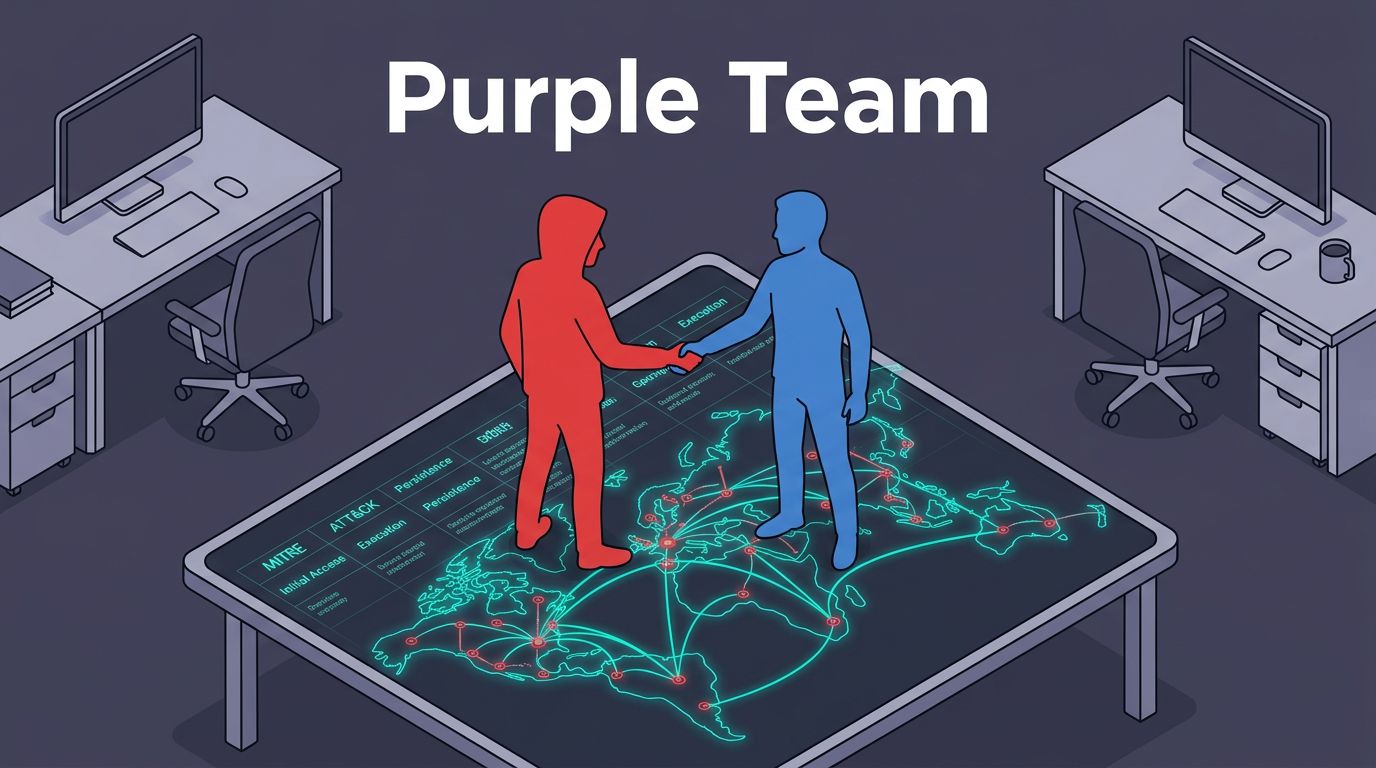
Purple teaming differs from red-blue fights. Red simulates attacks. Blue defends. Purple combines them for shared learning. Everyone sees what works and what fails in real time.
Focus on skill building. Detection engineers write better rules. Analysts cut response times. Leaders spot training needs. Use MITRE ATT&CK as your map. It lists tactics like initial access or lateral movement with real techniques.
Current trends show monthly automated runs plus quarterly human-led ones. Tools handle basics. People test evasions. This mix covers more ground fast.
Pick a scope first. Target high-risk areas like credential abuse or cloud setups. Align with your threats, say ransomware groups. Document goals: improve detection on three techniques.
Teams need four to six people. Two red, two blue, one coordinator, one scribe. Meet weekly at first. Run biweekly exercises. Debrief always.
Success comes from repetition. After each run, update playbooks. Track progress over months. Your team turns theory into muscle memory.
Pick the Right Scenarios
Choose scenarios that match your environment. Start with common paths: phishing to access, credential abuse, lateral movement, privilege escalation, cloud misconfiguration. Tie each to MITRE ATT&CK techniques for realism.
Phishing-to-access uses T1566.001, spearphishing attachments. Red sends safe lures. Blue checks email filters, EDR blocks. Discuss why some slip through.
Credential abuse hits T1550, like dumping LSASS. Red grabs hashes post-compromise. Blue tunes SIEM for process anomalies.
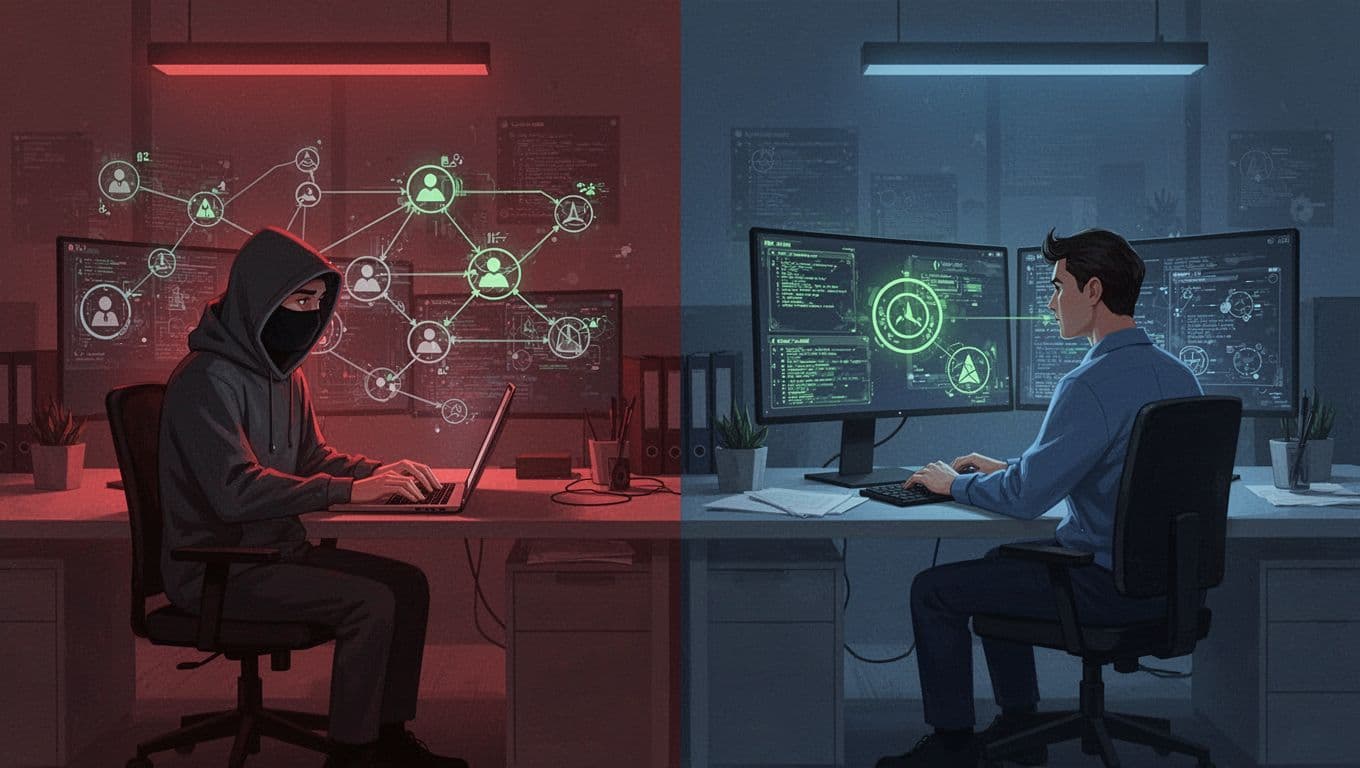
Lateral movement, T1021, involves remote services like SMB. Red pivots machines. Blue validates network logs in EDR.
Privilege escalation, T1068, exploits misconfigs. Red elevates via weak permissions. Blue improves behavioral analytics.
Cloud misconfig, T1133, targets open S3 buckets. Red enumerates, exfils data. Blue tests IAM logs.

Build chains of three to five steps. Example: Phishing leads to execution, then persistence. Use MITRE ATT&CK adversary emulation plans for templates.
Limit to your stack. On-prem? Focus Windows. Hybrid? Mix cloud. Test evasions like living-off-the-land binaries.
Validate relevance. Review threat intel. Pick techniques your EDR or SIEM struggles with. This builds targeted skills.
Plan Your First Exercise
Assemble your group. Red leads attacks. Blue handles detection. Coordinator times it. Scribe notes everything.
Set a date two weeks out. One hour max for starters. Pick one scenario, say lateral movement.
Map the technique. List red actions: Scan ports, exploit SMB, dump creds. Expected blue signals: Network connects, process spawns.
Check tools. Red uses Atomic Red Team. Blue preps SIEM queries, EDR hunts.

Draft rules. No production impact. Safe hosts only. Pause on issues.
Here is a quick planning checklist:
- Define objectives (two max).
- Assign roles.
- List ATT&CK IDs.
- Prep test environment.
- Schedule debrief.
Share intel upfront. Red briefs blues on the technique without spoilers. Blues share log sources.
Rehearse mentally. Red walks actions. Blue lists queries.
If gaps appear, like missing logs, note them. Plan fixes post-exercise.
This prep cuts chaos. Your first run feels smooth.
Run the Exercise Step by Step
Follow a clear flow. It keeps momentum high.
Start with a kickoff. Red announces the technique. Blue baselines systems.
Red executes slowly. Announce each step: “Running PsExec for lateral move.” Pause five minutes.
Blue hunts. Check SIEM, EDR. Triage alerts. Respond as in real incidents.
Communicate live. Slack or voice: “Alert fired on port 445.” Red confirms or denies.
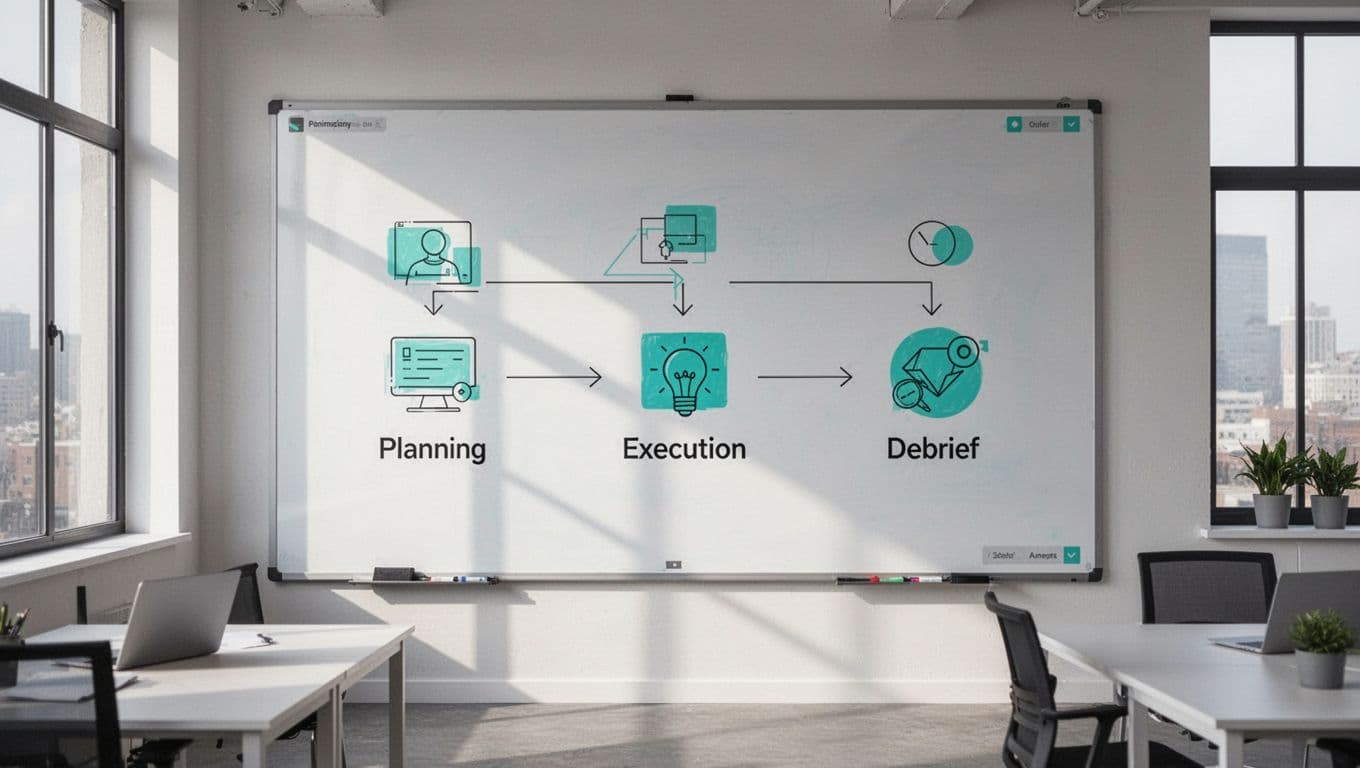
Midway, pause for tweaks. Blues adjust rules. Red retests.
End at time. No extensions.
Debrief immediately. What detected? What missed? Why?
Log findings. Red shares commands. Blue exports queries.
Use tools like LogRhythm purple team cases for structured runs.
Rotate roles next time. Everyone learns both sides.
This process builds trust fast.
Measure Success and Metrics
Numbers prove value. Track what matters.
Key metrics: Detection rate, time to detect (MTTD), time to respond (MTTR), false positives.
Aim for 80% detection on tested techniques. MTTD under 10 minutes.

Here is a sample metrics table:
| Metric | Target | Baseline | Post-Exercise |
|---|---|---|---|
| Detection Rate | 80% | 40% | 75% |
| MTTD | <10 min | 25 min | 7 min |
| MTTR | <30 min | 60 min | 20 min |
| Techniques Covered | 5 | 2 | 4 |
Log per technique. Use ATT&CK Navigator to visualize coverage.
Review trends quarterly. Detections up? Good. Stalled? Dig why.
Tie to outcomes. Fewer incidents. Faster hunts.
Share with leaders. “We cut MTTR by 50% in three months.”
For tools, integrate with SIEM like Splunk. Picus Security ATT&CK guide offers scoring ideas.
Adjust targets as skills grow.
Avoid Common Mistakes with Checklists
New teams trip on basics. Fix them early.
Mistake one: No clear scope. Fix: Limit to one chain.
Mistake two: Siloed debriefs. Fix: Joint session, all voices.
Mistake three: Ignore baselines. Fix: Snapshot logs before.
Purple team readiness checklist:
- Environment isolated.
- Logs enabled (Windows events, network flows).
- Backup rules.
- Non-disclosure for intel.
Execution checklist:
- Time each step.
- Capture screenshots.
- Note variants tested.
Post checklist:
- Update detections.
- Document lessons.
- Schedule next run.
Overlook cloud logs? Blues miss exfils. Skip evasions? Tests fake real threats.
From Scythe purple team framework, use one-pagers for roles.
Test tools first. EDR like CrowdStrike, SIEM like Elastic. Confirm they log ATT&CK events.
Build habits. Weekly reviews prevent repeats.
If internal skills lack, book a discovery call with Bud Consulting for talent or advisory.
Use This Simple Template
Adapt this for your next exercise. Copy, fill gaps.
Exercise Template
Title: Lateral Movement Validation
Date: [Insert]
ATT&CK Technique: T1021.002 SMB/Windows Admin Shares
Objectives:
- Detect unauthorized shares.
- Respond in under 15 min.
Red Actions:
- Enumerate shares: net view target
- Access: net use targetIPC$
- Pivot: copy payload
Blue Expected:
- SIEM: Event ID 5145
- EDR: Suspicious net use
Metrics:
- Detected: Yes/No
- Time: __ min
- Notes: ________
Debrief Notes: ________
Action Items:
- Tune rule X.
- Train on Y.
Save as Markdown. Version control in Git.
Scale to scenarios. Add phases for chains.
From DataField purple team planning, include scoring.
Run it tomorrow. Tweak after first use.
Conclusion
Purple team exercises turn fragmented teams into unified defenders. You pick scenarios, plan tight, run live, measure gains, and repeat.
Skills stick because everyone contributes. Detections rise. Responses speed up.
Start with one technique this week. Track your first metrics. Build from there.
Your SOC gets resilient. Threats lose their edge.