table of contents
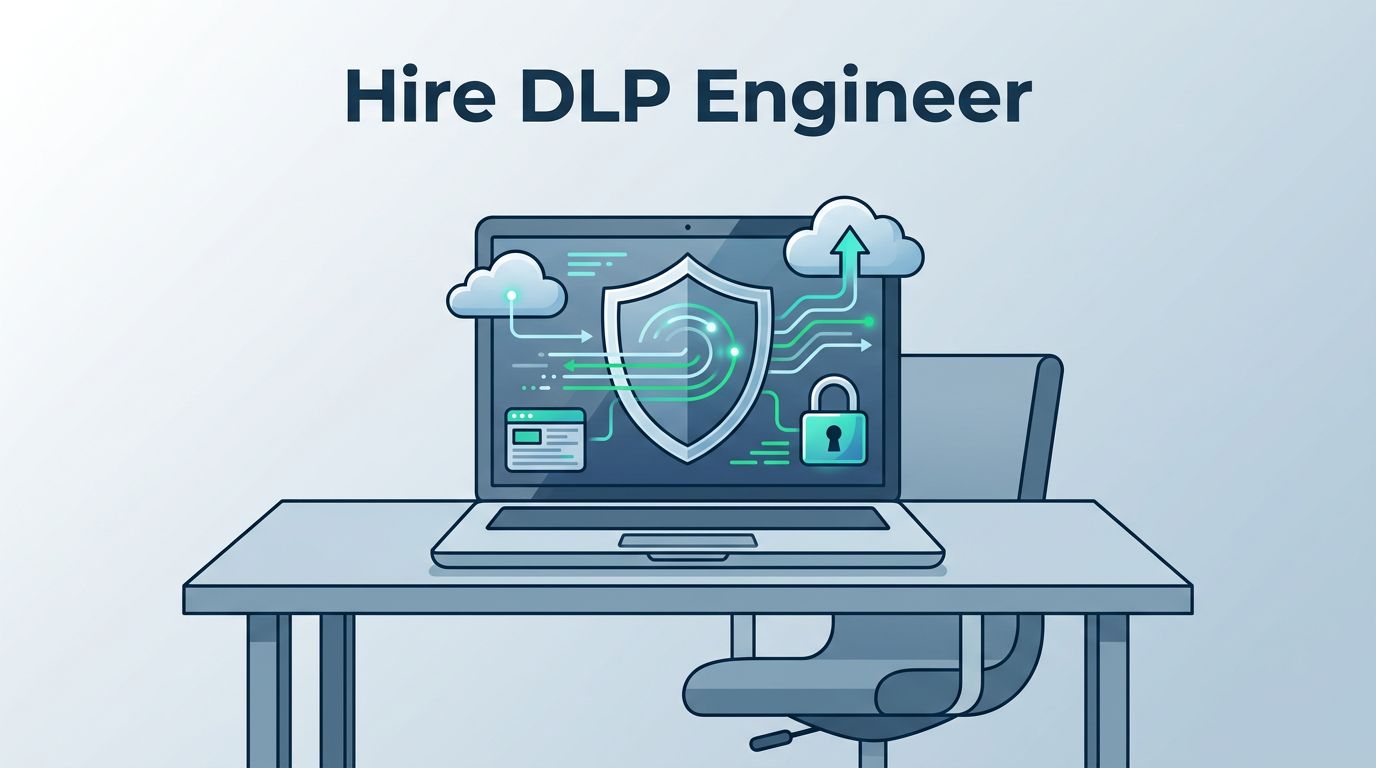
Data breaches cost companies millions each year. You face rising risks from AI tools, cloud sprawl, and remote teams. A skilled data loss prevention engineer stops sensitive info from leaking through emails, endpoints, or SaaS apps.
Hiring one right now protects your business. This guide shows you how to find and onboard talent that fits your cloud-first setup or compliance needs. Let’s start by matching the role to your environment.
Assess Your DLP Needs in a Cloud-First World
Cloud environments change everything for data protection. Traditional DLP tools miss data in SaaS apps like Slack or Google Drive. In 2026, you need coverage for endpoints, networks, and clouds.
Think about your stack. Microsoft Purview handles data classification and compliance in Microsoft 365. It scans emails and Teams for sensitive info. Pair it with endpoint DLP on laptops to block USB copies.
CASB, SSE, and SASE add layers. CASB monitors cloud access security brokers for risky uploads. SSE secures service edges across browsers and apps. SASE ties it into secure access service edges for full network control.
Email security demands focus too. Engineers tune rules to catch PHI in attachments or PII in subjects. Data classification comes first. Auto-label files as confidential based on content, not just patterns.
Incident response ties it together. Your hire triages alerts in SIEM tools like Splunk. They quarantine files and notify legal teams fast.
Regulatory compliance shapes priorities. GDPR requires real-time monitoring. HIPAA needs audit logs for health data. Map your rules to these laws early.
Start small. Inventory your data flows. Then define gaps. A DLP engineer bridges them without overwhelming your team.
Essential Skills for DLP Engineers Today
Top DLP engineers master specific tools and concepts. They handle endpoint DLP on devices with CrowdStrike or SentinelOne. Network DLP uses Wireshark to inspect traffic.
Cloud DLP fits 2026 realities. They configure AWS or Azure scanners for S3 buckets. AI-driven detection spots leaks to ChatGPT or browser shares.
SIEM integration is key. They write Splunk queries to cut false positives. Dashboards show risk scores in real time.
Data classification skills shine. Engineers use tools like those in Trellix to label unstructured data automatically. They understand privacy regs to avoid fines.
Incident response experience matters. They perform forensics, document breaches, and coordinate fixes. Database security rounds it out. Monitor queries, patch vulns, and enforce row-level access.
Soft skills seal the deal. Clear reports explain risks to execs. Teamwork links security with IT and dev. Problem-solving fixes workflows without blocking users.
Look for hands-on proof. They know Nessus for scans and Qualys for compliance. Curiosity keeps them ahead of AI threats.
In short, seek balanced expertise. Technical depth plus communication wins.
Defining the Scope for Your DLP Hire
Narrow the job to your setup. Cloud-first orgs prioritize SaaS monitoring over on-prem servers. If you use Microsoft Purview, demand experience there.
Endpoint DLP needs differ. Remote teams copy files to personal drives. Your engineer blocks that and coaches users.
CASB/SSE/SASE ecosystems require integration skills. They align policies across Zscaler or Palo Alto Prisma. Email security focuses on Proofpoint or Mimecast rules.
Data classification sets foundations. Hire someone who automates labels for 80% accuracy. Incident response pros handle alerts end-to-end.
Compliance drives scope too. EU firms need GDPR logging. US health orgs want HIPAA encryption.
Job description example: “Configure DLP in multi-cloud envs. Respond to 50+ alerts weekly. Train teams on policies.”
Tailor salary to scope. Base pay hits $150K-$200K in 2026, plus equity for seniors.

This role evolves fast. Annual reviews adjust scope as threats shift.
Where to Source DLP Talent
Specialized roles like this hide in niche spots. LinkedIn works, but filter for “DLP engineer” plus tools like Symantec or McAfee.
Cybersecurity job boards shine. CyberSN lists DLP pros with verified skills. Dice and ClearanceJobs suit cleared candidates.
Recruiters speed things up. Firms like Bud Consulting match talent for hard roles. They know cloud DLP experts.
Communities help too. Reddit’s r/cybersecurity or DEF CON talks reveal active pros. ISC2 forums connect certified folks.
Referrals beat ads. Ask peers at similar firms. Offer $5K bounties for strong leads.
Contract sites like Upwork fill gaps short-term. Vet for US-based experts.
For 2026, target AI-savvy hires. Post on Hacker News for innovators.
Track diversity. Women and underrepresented groups bring fresh views to security.
Aim for 20-30 applicants. Quality trumps quantity.
Check data loss prevention engineers to hire for vetted options.
Build a Strong Interview Process
Screen resumes first. Look for 3+ years in DLP tools. Hands-on projects beat certs.
Phone screen lasts 15 minutes. Ask about recent incidents they handled.
Technical interviews follow. Live demos show skills. Use take-homes sparingly.
Panel rounds include peers. IT and legal join for fit.
Culture checks close it. Chat over coffee about team dynamics.
Time it right. Two weeks total keeps candidates engaged.
Common pitfall: Skip behavioral questions. Probe past failures.
For remote hires, use async video. Tools like HireVue assess communication.
Measure success. Track offer acceptance and 90-day retention.

Refine yearly. Feedback from rejects improves next time.
Sample Interview Questions That Reveal True Skill
Test depth with targeted questions. Start with scenarios.
Technical probes:
- Walk us through tuning a Purview policy for email PII. What rules reduce noise?
- How do you integrate endpoint DLP with CASB in a SASE setup?
- Describe classifying unstructured data in Google Drive. Tools?
Incident response:
- You see high-risk alert for cloud share. Steps?
- False positive floods SIEM. How fix?
Compliance and soft skills:
- Explain a breach to non-tech execs.
- How balance security with dev speed?
2026-specific:
- AI tools leak data. Mitigation?
- Zero trust for databases. Approach?
Rate answers 1-5. Strong ones include examples and trade-offs.
Follow up: Why that choice? Probes thinking.
Use a scorecard. Weight technical 50%, response 30%, fit 20%.
These reveal doers from talkers.
Your DLP Engineer Hiring Checklist
Use this step-by-step list. Check off as you go.
- Define needs: List tools (Purview, Trellix) and gaps (cloud, endpoint).
- Write JD: Include skills, salary range, remote options.
- Post jobs: LinkedIn, CyberSN, recruiters.
- Screen fast: Resume keywords, 10-min call.
- Interview loop: Tech demo, panel, culture fit.
- Reference check: Talk to former bosses on incidents.
- Offer smart: Competitive pay, clear ramp-up.
- Onboard well: Pair with mentor, access day one.
Add metrics: Time-to-hire under 45 days.
Customize for size. Startups skip panels.
This checklist cuts mistakes.
For best practices, see 7 data loss prevention best practices.
Full-Time Staff, Contractor, or Managed Service?
Choose based on scale. Full-time suits mature teams. They own policies long-term.
Contractors fit pilots. Hire for 3-6 months to deploy initial rules. Cost: $100-$150/hour.
MSSP support scales for SMBs. Providers like Secureworks manage alerts 24/7. Saves headcount.
Compare options:
| Option | Pros | Cons | Best For |
|---|---|---|---|
| Full-time | Deep integration, ownership | High cost, ramp time | Large orgs with 100K+ users |
| Contractor | Quick start, expertise | Knowledge leaves | Deployments, audits |
| MSSP | 24/7 coverage, no hires | Less control, recurring fees | SMBs, compliance focus |
Hybrid works too. Full-time leads, MSSP handles nights.
Assess budget. Full-time pays off in year two via efficiency.

Test with project. Then commit.
Book a Discovery Call with Bud Consulting for tailored advice.
Conclusion
Hire a data loss prevention engineer who matches your cloud and compliance realities. Focus on skills like AI detection, SIEM tuning, and incident response. Use the checklist and questions to pick winners.
Strong hires cut leaks and fines. Start assessing needs today. Your data stays safe.
(Word count: 2487)