table of contents
Table of Contents
- What Is a Secrets Management Engineer?
- Key Technical Skills to Prioritize
- Soft Skills That Drive Success
- Top Places to Source Candidates
- Build a Standout Job Description
- Run Effective Interviews
- Compare Candidate Profiles
- Avoid Common Hiring Mistakes
- Your Secrets Management Hiring Checklist
- Conclusion
- Frequently Asked Questions
Your cloud infrastructure hums along. Yet secrets like API keys and database passwords leak everywhere. One breach costs millions.
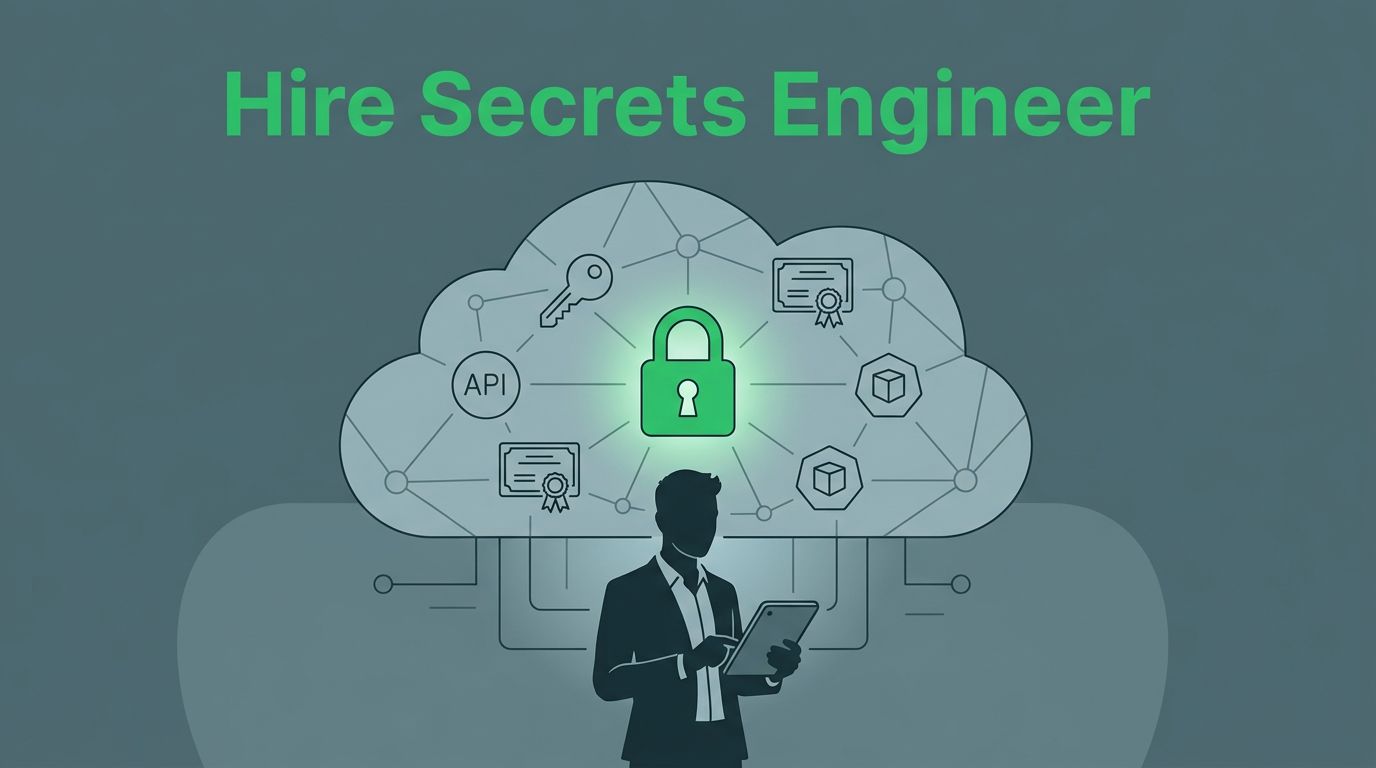
Hiring a secrets management engineer fixes that. This specialist locks down credentials across AWS, Kubernetes, and beyond. They automate rotation and enforce zero trust.
You need one now. Demand surges as regulations tighten in 2026. Let’s break down how to find and hire the right talent.
What Is a Secrets Management Engineer?
Secrets management engineers secure sensitive data in modern stacks. They handle API keys, certs, and tokens. No more hard-coded creds in Git repos.
These pros design systems that fetch secrets at runtime. They integrate with HashiCorp Vault or AWS Secrets Manager. Rotation happens automatically. Access logs capture every touch.
Why hire one? Breaches hit 80% of firms from leaked secrets last year. Engineers treat this as code, not policy. They build vaults into CI/CD pipelines.
Expect them to own compliance too. Think SOC 2 or GDPR audits. They validate least privilege across services.

This role blends security and DevOps. Your engineer prevents sprawl. They measure blast radius of each credential. For details on secrets sprawl patterns, check recent reports.
They collaborate with platform teams. Security sets rules. Engineering implements them. Result? Sustainable protection.
In 2026, AI-driven attacks target secrets first. Your hire spots those threats early.
Key Technical Skills to Prioritize
Focus on cloud-native tools first. Top candidates master AWS Secrets Manager, Azure Key Vault, and GCP Secret Manager. They pair these with IAM policies.
Key rotation stands out. Engineers script auto-swaps every 24 hours. No downtime. They use AWS KMS or Vault for that.
Kubernetes expertise matters. They secure pods with External Secrets Operator. RBAC blocks overreach. Image scans catch embedded keys.

IaC skills shine. Terraform modules deploy vaults repeatably. No manual configs. They scan for secrets in code with TruffleHog.
Automation comes next. Python or Go scripts pull secrets into pipelines. GitHub Actions or Jenkins integrate seamlessly.
Zero trust principles apply. MFA guards vaults. They detect anomalous access via CloudTrail logs.
Monitoring rounds it out. Splunk or ELK tracks usage. SIEM alerts on misuse.
From 2026 trends, these skills dominate job reqs. Cloud certs like AWS Security Specialty prove hands-on work.
Test for PKI knowledge. They manage cert lifecycles end-to-end.
Soft Skills That Drive Success
Technical chops get candidates in the door. Soft skills keep them effective.
Communication tops the list. They explain risks to devs without jargon. “Your API key expires soon. Rotate it here.”
Collaboration fits DevSecOps. They pair with teams to embed security. No silos.
Adaptability counts. Tools evolve fast. Your engineer learns Istio service mesh overnight.
Problem-solving shows in war stories. They fixed a prod outage from stale creds. How?
Curiosity drives learning. They track OWASP updates. For a solid OWASP secrets cheat sheet, review that resource.
These traits predict impact. Probe them in chats.
Top Places to Source Candidates
LinkedIn leads. Search “secrets management engineer” plus “Vault” or “Kubernetes secrets.” Filter for recent posts.
GitHub profiles reveal real work. Look for Terraform repos with vault integrations. Forks and stars matter.
Specialized boards help. Dice or Indeed for security roles. Post on Reddit’s r/devops or r/cybersecurity.
Communities yield gems. Black Hat talks or DEF CON villages. Attendees build cutting-edge tools.
Recruiters specialize here. Firms like Bud Consulting match rare talent. They know IAM and DevSecOps hires.
Conferences work too. AWS re:Inforce draws experts. Network there.
Referrals beat all. Ask your cloud engineers. They know peers.
Aim for 50 outreach messages weekly. Track responses.
Build a Standout Job Description
Start with impact. “Secure our cloud estate. Own secrets at scale across multi-cloud.”
List must-haves. AWS Secrets Manager, Vault, Terraform. Kubernetes RBAC.
Mention culture. “Join DevSecOps teams. Automate compliance.”
Salary ranges attract. $180K-$250K base in 2026, plus equity. Remote OK.
Perks seal it. Cert reimbursements. Hack weeks.
Use keywords naturally. “Hire secrets management engineer” draws searches.
Post everywhere. Company site, LinkedIn, Hacker News.
Tailor for juniors vs seniors. Juniors need mentorship paths.
Track apps. Tweak based on quality.
Run Effective Interviews
Screen resumes first. Spot Vault projects or KMS audits.
Phone chat 15 minutes. Ask: “Walk me through key rotation in K8s.”
Technical round next. Live code a Terraform vault module. Or debug a secret leak scenario.
Behavioral digs deeper. “Tell me about a breach you stopped.”
Cultural fit last. Chat with peers. Do they gel?
Panel reviews scorecards. Consensus hires win.

For best practices on monitoring secret access, see developer guides.
Offer fast. Top talent moves quick.
Compare Candidate Profiles
Use a table to stack them up. Focus on gaps.
| Skill Area | Candidate A | Candidate B | Candidate C |
|---|---|---|---|
| Cloud Secrets Tools | AWS, Azure | AWS, GCP, Vault | All three + Azure |
| Kubernetes Security | Strong | Basic | Expert |
| IaC Experience | Terraform | Pulumi | Both |
| Automation (Python/Go) | Python | Go | Both |
| Years in Role | 4 | 6 | 3 |
Candidate A fits mid-size teams. B owns enterprise scale. C builds from scratch.
Weigh trade-offs. Experience beats certs sometimes.
Score 1-5 per row. Total guides decisions.
Add soft skills column if needed.
This spots the match.
Avoid Common Hiring Mistakes
Don’t chase generalists. Secrets need specialists.
Skip resume keywords only. Test hands-on.
Overlook culture. Lone wolves fail in teams.
Ignore comp trends. Pay below market loses talent.
Rush offers. Vet references always.
Miss diversity. Broaden sourcing.
One pitfall: Hard-coding tests. Real scenarios matter more.
Learn from others. Adjust your process.
Your Secrets Management Hiring Checklist
Use this to stay on track.
- Define needs: List tools and scale.
- Source wide: LinkedIn, GitHub, referrals.
- Screen sharp: Resume + quick call.
- Interview deep: Tech, behavioral, culture.
- Compare fair: Use scorecards or tables.
- Offer right: Competitive pay, clear path.
- Onboard strong: Pair with seniors day one.
Check off as you go. Hire confidently.
If stuck, Book a Discovery Call with Bud Consulting. They specialize in these roles.
Conclusion
Hire a secrets management engineer to lock down your stack. Prioritize cloud tools, automation, and team fit. Follow the checklist for results.
Breaches drop. Compliance holds. Teams trust the system.
Act now. Secure talent secures your future.
Frequently Asked Questions
What salary should I offer a secrets management engineer in 2026?
Expect $180K-$250K base. Add bonuses for cloud certs. Equity boosts seniors.
How long does hiring take?
4-8 weeks. Source early. Top picks fill fast.
Must they know HashiCorp Vault?
Ideal, yes. Pairs well with cloud natives. Alternatives like AWS work too.
What if my team lacks DevSecOps?
Start small. Hire brings practices. Train others alongside.
Can juniors fill this role?
With mentorship, yes. Pair strong IaC base with seniors.