table of contents
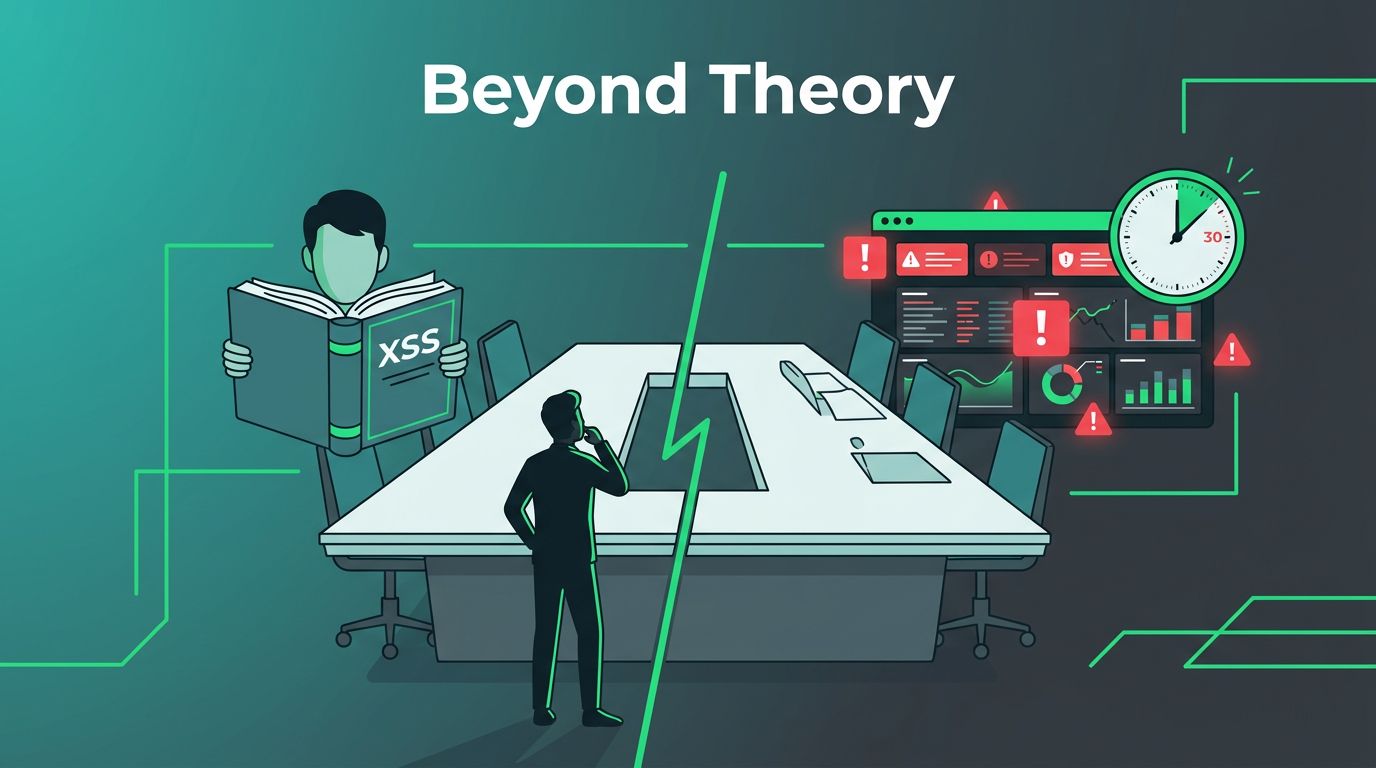
You sit across from a candidate who perfectly recites the definition of a cross-site scripting attack. They know the ports, the protocols, and the common defensive measures by heart. Yet, when you place them in a real-world incident response scenario, they freeze. This gap between theoretical knowledge and practical application is why many organizations struggle to find the right people for their security teams.
The standard interview process often prioritizes memorization over the actual judgment required for modern security operations. If you rely on rigid, textbook-style inquiries, you risk filtering out professionals who could be your best assets. Instead, you need to look for evidence of how a candidate thinks, prioritizes, and communicates under pressure.
Beyond Textbook Definitions
Memorized answers provide a false sense of security. When a candidate lists the steps of a standard risk assessment, they are simply accessing their long-term memory. They are not demonstrating how they adapt to your specific environment. Many candidates study for these questions as if they were taking a certification exam. As a result, you often end up with a team that knows the rules but fails to protect the company when a novel threat appears.

It is helpful to avoid common mistakes in cybersecurity interviews that prevent true evaluation. Instead of asking candidates to define concepts, ask them to explain a mistake they made or a project that failed. Someone who can reflect on their past technical decisions demonstrates much more potential than someone who can define a firewall. A top-tier candidate will admit they don’t know an answer rather than guessing, as they understand the professional risk of being wrong in a security context.
The Value of Scenario-Based Interviews
Security work is rarely about following a predefined script. It is about constant trade-offs between availability, usability, and protection. If you want to identify talent that can thrive, you must shift toward scenario-based testing. Present a messy, incomplete situation to the candidate. Ask them how they would prioritize their actions when they lack all the facts.

For example, don’t ask “How do you detect a breach?” Instead, describe a scenario where logs show suspicious outbound traffic from a production server at 2:00 AM on a Friday. Ask them which specific logs they check first and why. This reveals their mental model of the infrastructure and their ability to stay calm during an incident. You can find more helpful advice on how to prepare for a cybersecurity job interview by focusing on these practical demonstrations of skill.
Assessing Judgment and Communication
Technical ability is only half the battle in security. A brilliant engineer who cannot explain risk to a non-technical stakeholder will face constant roadblocks. During the interview, pay attention to how they bridge the gap between technical complexity and business impact. Can they explain why a vulnerability matters, or do they only talk about the how of the exploit?
Top-tier professionals understand that their role is a business function. They know how to negotiate with developers, work with IT operations, and influence leadership decisions. If a candidate uses too much jargon, they are likely hiding a lack of deep conceptual understanding. Force them to translate technical risks into plain language. If they struggle, they will likely struggle to gain buy-in when it counts most for your organization.
Recognizing True Problem Solvers
The best security hires view their work as a cycle of continuous learning. They don’t just rely on the tools they already know. During your next round of hiring, look for candidates who demonstrate intellectual curiosity. Ask them about the last security research paper they read or the last open-source tool they tested for fun.
| Traditional Question | Alternative Scenario-Based Prompt |
|---|---|
| What is the difference between symmetric and asymmetric encryption? | We found a clear-text password in a configuration file. How do you assess the blast radius? |
| List the steps of the incident response lifecycle. | You have a limited budget and two critical patches. How do you decide which one to apply first? |
| How do you configure a web application firewall? | A critical app is being brute-forced. It is used by the CEO. What are your first three steps? |
These scenarios move the conversation from “what do you know” to “how do you act.” You will find that candidates who handle these situations well often exhibit higher levels of ownership and situational awareness. If you find your current methods are falling short of your hiring goals, Book a Discovery Call with Bud Consulting to refine your approach to technical talent acquisition.
Avoiding Common Hiring Pitfalls
It is easy to fall into the trap of seeking a perfect match for every single skill on your job description. This often leads to unrealistic expectations and missing out on excellent talent who can learn your tech stack quickly. You might interview someone who lacks one specific tool experience but has the right mindset for your team’s challenges. Don’t let a rigid checkbox system blind you to the potential in front of you.
Your hiring team must also remain respectful of the candidate’s time and interests. If the entire interview focuses on your needs without exploring what the candidate values in their work, they may lose interest. A great interview is a two-way street where you also demonstrate the quality of your security culture. Remember that the best talent is always evaluating you as much as you are evaluating them.
Building a Strong Security Culture
The final piece of the puzzle is alignment. You need to know if the candidate’s professional values match your company’s risk appetite. Ask them about a time they disagreed with a manager on a security decision. How did they handle the conflict? Did they prioritize the security outcome or the personal relationship?
These types of questions reveal character. They show whether a candidate will be a partner to the business or a blocker. A security team that works well with other departments is always more effective than one that sits in an ivory tower. By hiring for these soft skills alongside technical competency, you create a foundation that lasts much longer than any specific tool deployment.
Final Thoughts on Hiring Strategy
The search for top-tier security talent requires moving away from stale, predictable questions. You want to see the candidate’s thought process, their ability to handle pressure, and their capacity for clear communication. By focusing on scenarios, you gain a clearer picture of how they will perform in your environment. Remember that the best professionals are those who admit what they don’t know and prioritize the most significant risks to the business. If you take the time to build a more authentic interview process, you will attract the thinkers and the doers who actually make an organization safer.