table of contents
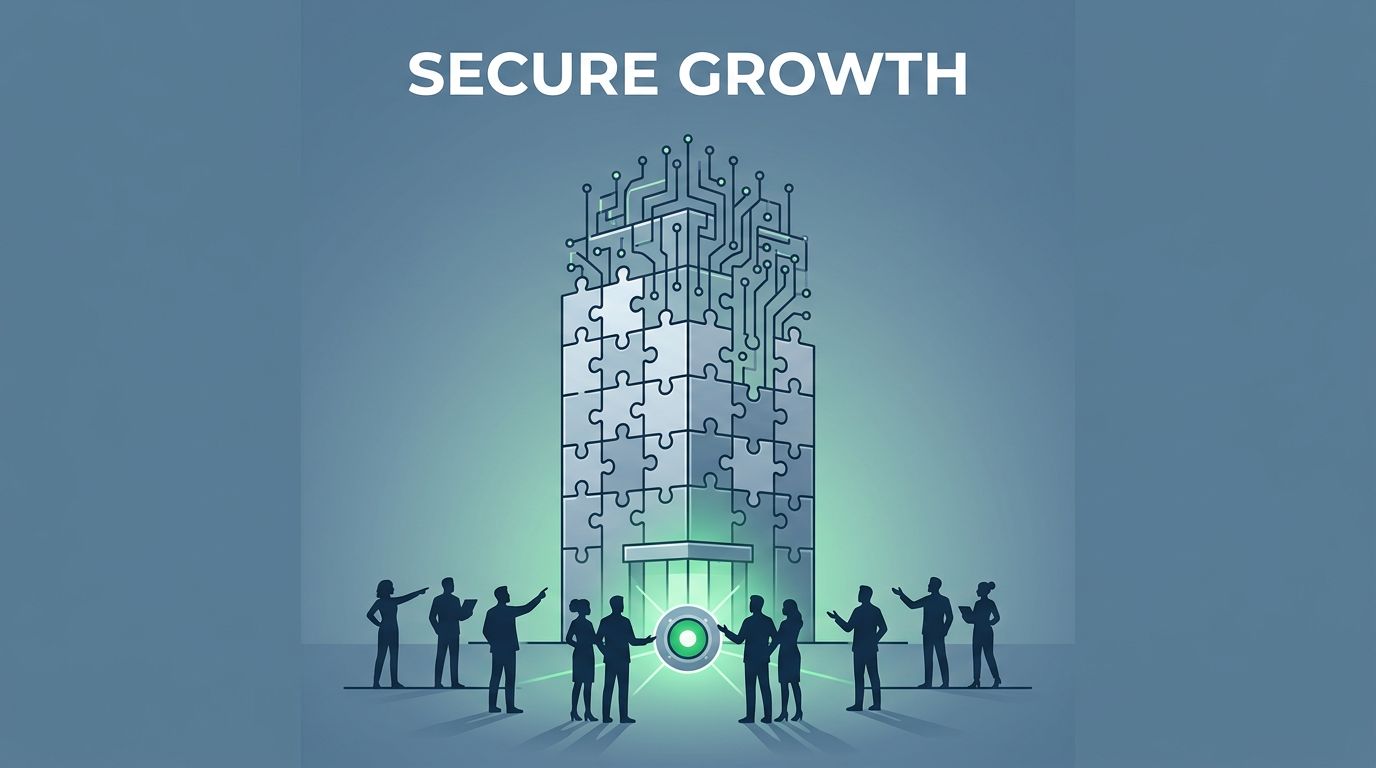
Many leaders treat security as a static cost center. They view the department as a perimeter fence that stops intruders but adds no value to the business. However, a high-performing security team structure acts as an engine for company growth. When you align your security posture with your strategic goals, you earn the trust of customers and enable faster product development.
Designing this structure requires moving beyond basic technical requirements. You must integrate security into the daily flow of your company. If you get this right, you turn potential risks into competitive advantages. It is time to look at how your team can support the business at every stage.
Designing a Security Structure That Scales
Most early-stage companies rely on a single lead or a fractional advisor to handle security. This works when the team is small and the attack surface remains manageable. As you grow, that approach eventually fails. You need to identify the moment your operational complexity outpaces your current headcount.

Growth-focused structures start with clear accountability. Even a two-person team should define who manages identity, who oversees cloud configurations, and who interfaces with the developers. As you hire, move away from generalized roles toward specialized functions like security architecture or application security.
| Company Stage | Focus Area | Primary Need |
|---|---|---|
| Seed/Series A | Baseline hygiene | Foundational policy and tool selection |
| Series B/C | Compliance and scale | Dedicated headcount and automated testing |
| Growth/Enterprise | Governance and risk | Mature risk advisory and incident response |
When you reach the growth stage, consider how the structure impacts velocity. If your security team becomes a bottleneck for every feature release, you have designed the wrong hierarchy. Instead, embed security champions within engineering squads. This creates a decentralized model where security expertise lives exactly where code is created.
Bridging the Gap Between Security and Business Units
Security does not exist in a vacuum. It interacts with every part of your business, from human resources to legal and product development. When these departments operate in silos, the company suffers from missed risks and slow responses. You need to build a structure that encourages constant communication.

Legal and compliance teams often have the most friction with technical security. Security leaders need to bridge this by focusing on shared metrics. Instead of presenting a long list of technical vulnerabilities to the board, focus on business-level risks like potential downtime, data loss, or regulatory fines. This language makes it easier for executives to sign off on necessary budgets.
HR also plays a vital role in your security structure. Your hiring practices, onboarding, and training programs are your first line of defense against social engineering. By collaborating with HR to implement regular security awareness sessions, you reduce the burden on your technical team. If you find these organizational hurdles difficult to clear, you can Book a Discovery Call with Bud Consulting to discuss how to better align your human and technical assets.
Balancing Budget Constraints and Talent Needs
Hiring is expensive, and security talent is consistently in high demand. You rarely have the budget to hire a full team of senior experts at once. Success depends on prioritizing the roles that provide the highest return on your risk investment. Early on, focus on architecture and foundational engineering.
If you struggle to fill specialized roles like cloud security or offensive security, look at managed services for secondary functions. You should keep core strategic roles in-house while using external partners for continuous monitoring or automated testing. This keeps your internal team focused on business-specific problems rather than chasing routine alerts.
Consider the following roles as you build your core team:
- Security Architect: Focuses on designing secure infrastructure that allows developers to move fast without introducing critical vulnerabilities.
- GRC Specialist: Ensures the company stays ahead of audits and regulatory requirements as you expand into new markets.
- Security Operations Lead: Manages the day-to-day responses to threats and keeps your defensive tools running effectively.
Don’t ignore the talent already working within your IT or development teams. Many employees want to transition into security. By investing in training or mentorship programs for these internal candidates, you build a loyal team that understands your company culture and unique technical environment.
Prioritizing Security Outcomes over Task Lists
A common mistake is creating a security structure that measures success by the number of tickets closed or patches applied. These metrics show activity but not progress. Instead, structure your team around outcomes that actually protect the business. Examples include reducing the time it takes to detect an incident or shrinking your external attack surface.
Focusing on outcomes forces you to align your team with the company roadmap. If the business decides to move all operations to a specific cloud provider, your security team should lead that transition, not just audit it. This proactive involvement makes your team a partner in growth.
When your team defines its success by supporting business goals, you move away from the “no” department reputation. Leaders will start viewing security as a resource that helps them build safer products. This alignment is the key to creating a sustainable, long-term security structure that grows alongside the business.
Final Thoughts on Organizational Maturity
Building a security team that supports growth is not a one-time project. It is a continuous process of reassessing your structure as your risks change. You must be willing to shift resources as your company enters new markets or changes its technology stack.
Start by auditing your current structure against your most significant business risks. Are your team members focused on the right problems? Is your communication with other departments clear and consistent? Once you answer these questions, you can adjust your strategy to ensure your security team is an asset rather than an obstacle.
Remember that security is a cultural commitment as much as an organizational one. By building a team that understands the business, you ensure that every security decision supports your company’s long-term objectives. Stay flexible, keep your goals aligned with the company mission, and evaluate your structure regularly to ensure it stays relevant.