table of contents
The hunt for a new security solution often starts with a list of requirements. You want to solve a specific problem, fill a gap, or upgrade your infrastructure. However, the market is crowded with vendors selling comprehensive platforms that promise to do everything for your organization. Many of these offerings rely on complexity to justify higher price tags.
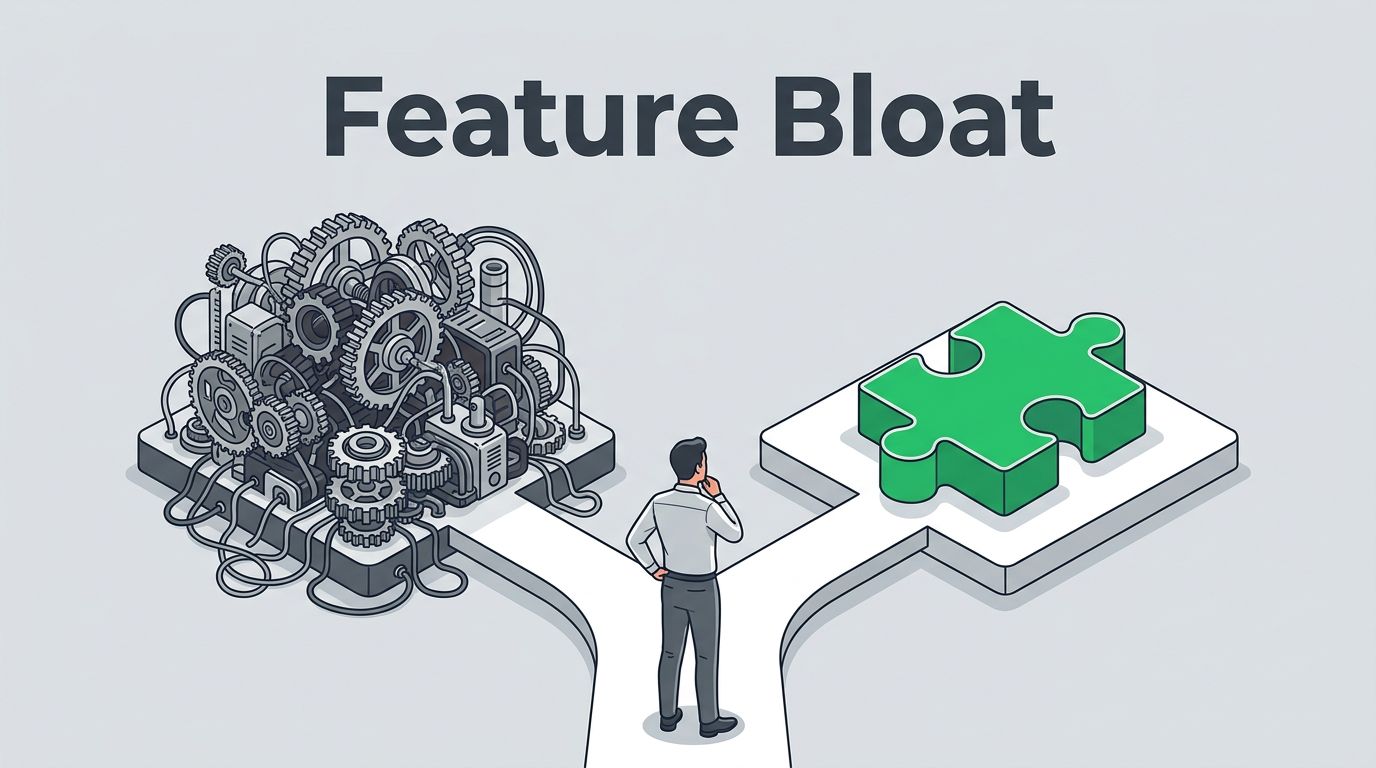
If you find yourself looking at tools with dozens of features you didn’t ask for, you are likely staring at an over-engineered product. This adds risk to your procurement process. It inflates your maintenance burden and often distracts from the core security outcomes you actually need to achieve.

Identifying Over-Engineered Solutions
Over-engineering usually reveals itself through excess. If a vendor pushes a monolithic platform while you only need a modular fix, watch out. They might highlight exotic integrations that you lack the internal resources to manage or maintain.
A common red flag is a sales pitch that focuses on the breadth of the toolset rather than the depth of your specific security use case. Ask yourself if the vendor is solving your problem or simply adding another complex layer to your environment. When a tool requires a massive configuration effort just to achieve basic visibility, it is likely more of a liability than an asset.
When you evaluate potential partners, look for signs of modularity and clear integration paths. For those interested in a more pragmatic approach to securing their environment, you can Book a Discovery Call with Bud Consulting to discuss how to keep your security strategy lean and effective.
Assessing Operational Fit and Staffing Requirements
A sophisticated tool is useless if your team cannot operate it effectively. During the evaluation, ignore the glossy brochure and look at the actual workflow. Does the interface require a dedicated engineer to manage every policy change? If so, you are buying a headcount problem along with a software license.
Many vendors build tools that demand constant attention. They expect you to monitor alerts, tune models, and manage complex rulesets daily. If your security team is already stretched thin, adding this weight will lead to burnout and poor configuration. You should prioritize tools that favor automation and intuitive design.

Ask the vendor for a realistic assessment of the time-to-value. How long does it take for a new hire to become proficient in the platform? If the training curve is months long, the tool is likely too complex for your environment. For guidance on prioritizing the right criteria, see how to choose a cybersecurity vendor to ensure your technical requirements match your team’s capacity.
The Dangers of Inflated Architecture and Customization
Complexity often hides in the promise of endless customization. Vendors may claim that their product adapts to any environment through custom scripting or unique architecture. While flexibility sounds good, it usually leads to brittle security.
Custom-built configurations are difficult to document, update, and patch. They create technical debt that compounds over time. If a vendor insists that their tool requires custom code to function within your standard network, step back. Modern security should rely on established protocols and standard APIs.
Watch for these indicators of an overly complex architecture:
- The vendor requires proprietary agents that do not play well with existing endpoints.
- The system creates massive amounts of data that you have no practical way to store or analyze.
- The setup process involves significant downtime or deep, disruptive changes to your infrastructure.
By choosing standard integration methods, you keep your environment stable and manageable. Always ensure that the security criteria for vendor selection include a deep dive into how the product fits into your current stack rather than how it forces you to change your stack to fit it.
Opaque Pricing and Hidden Operational Burdens
Pricing structures are often designed to mask the true cost of ownership. Vendors might offer an attractive base price for the core functionality, only to bundle essential features behind expensive, tiered modules. This creates a trap where you are forced to upgrade just to get the visibility you expected from the start.
Demand full transparency on licensing costs. Ask for a breakdown that includes the cost of any necessary storage, API calls, or expert support services. If they cannot provide a clear cost model, they are likely hiding the high total cost of ownership.
Furthermore, consider the hidden cost of integration. If the vendor charges for professional services just to get the product running, that is a warning sign. A well-designed tool should be easy to implement through standard documentation. For more insight on how a CISO should evaluate these risks, refer to a comprehensive guide on choosing security partners to focus on long-term value over initial sales incentives.
Practical Checklist for Your Next Vendor Demo
When you sit down for a demo or a proof of concept, go in with a list of questions that cut through the marketing noise. Focus on the tangible day-to-day experience rather than the feature list.
- Can you show me the configuration steps for a basic policy change? If it takes more than a few clicks, it is too complex.
- What are the specific staffing requirements for this tool? Ask them how many hours per week a typical administrator spends managing the platform.
- How does the tool handle updates? If you need a manual migration for every version update, your team will fall behind on patching.
- What is the average time-to-value for a company of our size? Ask for references from similar organizations and ask about their implementation hurdles.
- Are there hidden costs for data ingestion or storage? Get a clear answer on how your usage impacts your monthly bill.
Focusing on these practical questions helps you spot the difference between a high-value tool and an over-engineered one. Always prioritize systems that enhance your team’s ability to act, rather than systems that merely add to your daily workload.
Final Thoughts
Successful security is rarely about buying the most expensive, feature-dense platform on the market. It is about choosing solutions that fit your organization’s unique requirements, risk profile, and existing team capacity. You gain the most value when you avoid the temptation of unnecessary complexity.
By demanding clarity on pricing, operational requirements, and architectural impact, you protect your team from the burden of poorly scoped technology. Keep your requirements focused on measurable security outcomes. When a vendor cannot explain how their product solves a specific problem without adding massive overhead, be prepared to walk away. Your best defense is a lean, manageable, and effective security stack that supports your business goals rather than complicating them.