table of contents
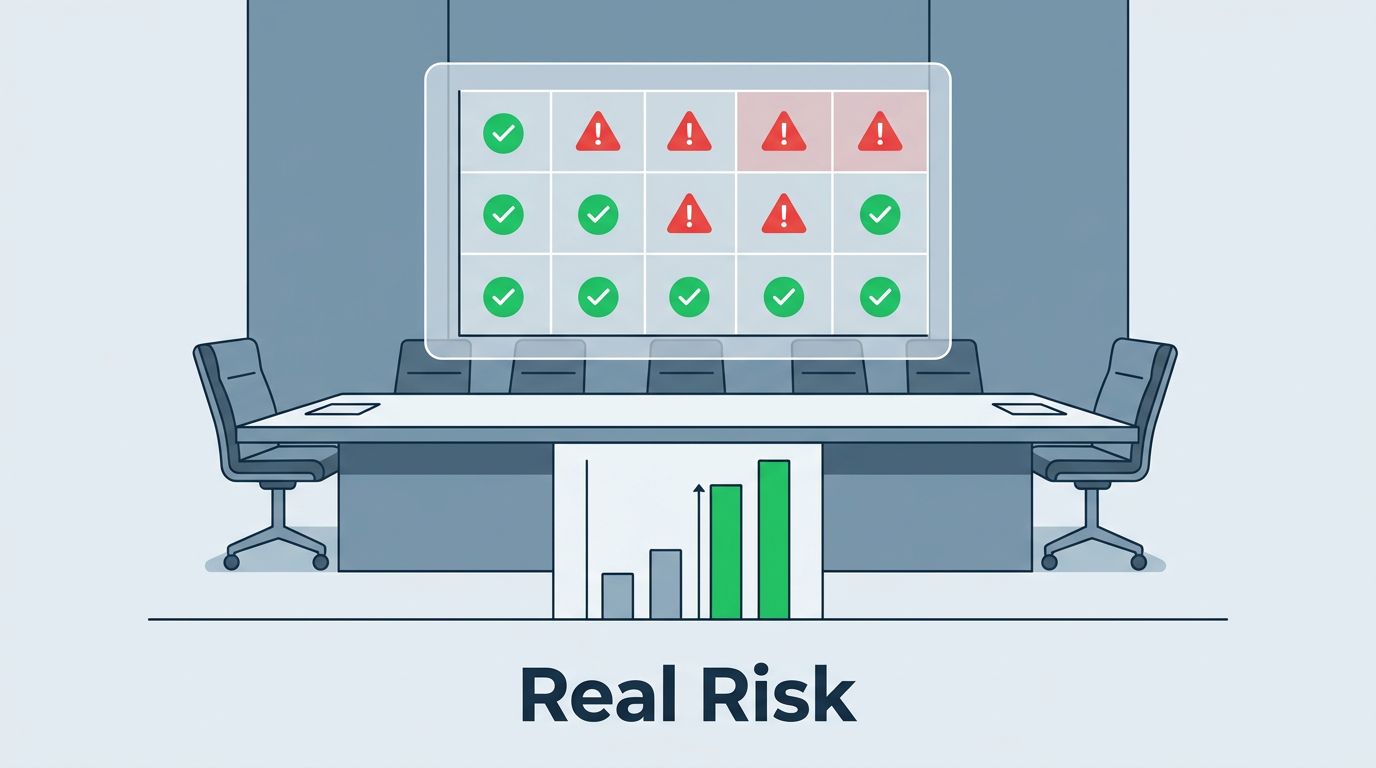
Board reports often become heavy, technical documents that mask the actual risks an organization faces. Directors frequently find themselves buried in heat maps and compliance checklists that provide a false sense of security while hiding the most pressing threats. When your reporting focuses on ticking boxes instead of explaining business impact, it loses its purpose as a decision-making tool.
You need to shift the focus from documenting process activity to highlighting outcomes. Boards do not need a summary of every security control or compliance task. They need to understand what could go wrong, how likely it is, and what the business impact will be if that threat manifests. Transforming how you frame these updates can turn passive meetings into sessions where critical decisions happen.

Moving Beyond Compliance Reporting
Many organizations treat risk updates as an administrative exercise. They generate dozens of pages detailing every internal audit finding or firewall update. This approach overwhelms directors with noise while obscuring the high-level signals that actually matter for corporate strategy. If a board member spends the majority of a meeting reading a dense report, you have already lost their attention.
Start by defining what constitutes a material risk to your specific business model. A risk that is massive for a fintech company might be negligible for a small retailer. When you frame your reporting around these specific material threats, you instantly raise the quality of the conversation. Focus on the few scenarios that could realistically stop your operations or cause significant regulatory damage.
You should simplify your visual aids. Replace static, multi-colored heat maps that lack context with simple tables or charts that show trend lines over time. Directors need to know if a risk is increasing, decreasing, or holding steady. They also need a clear view of how these risks relate to capital allocation and operational goals. If you are struggling to simplify your reporting, you can Book a Discovery Call with Bud Consulting to refine your approach.
Highlighting Materiality and Velocity
A good board report acknowledges that risks do not exist in isolation. They have speed, impact, and interdependencies that change depending on the environment. Highlighting these factors is the difference between a report that is merely informative and one that is actionable. When you present a risk, you must also provide the context of its velocity, or how quickly it could evolve into a crisis.
Consider the following table to help structure your risk updates for the board:
| Risk Factor | Current Trend | Potential Impact | Primary Owner |
|---|---|---|---|
| Supply Chain Disruption | Increasing | Revenue Loss | COO |
| Ransomware Attack | Steady | Data Exposure | CISO |
| Regulatory Non-compliance | Decreasing | Legal Fines | General Counsel |
This format forces your team to identify clear owners for every high-level risk. When an executive sees a name attached to a critical item, it shifts the tone of the meeting from abstract concern to tangible accountability. The goal is to provide enough detail for a high-level discussion without drifting into the technical weeds that belong in departmental meetings.

Making Risk Conversations Actionable
Boards often feel frustrated because they receive reports but rarely get to make definitive decisions. You can fix this by explicitly marking sections of your report as either “for information” or “for decision.” When you ask for a decision, be clear about the trade-offs. Present the cost of the intervention versus the cost of doing nothing.
Use clear language that avoids security jargon. Instead of reporting on “vulnerability patching percentages,” explain that “we have identified a gap in server updates that could delay our product launch by three weeks.” This translates technical risk into a business reality that directors understand immediately. It moves the discussion from checking boxes to managing the company’s future.
Another key tactic is focusing on interdependency. Many risks are linked, and a failure in one area can trigger a collapse elsewhere. Show the board how your risk management strategy addresses these connections. If your CRM is down, how does that affect your ability to meet sales targets? Explaining these cause-and-effect relationships demonstrates that you understand the full scope of the business.
Improving Your Communication Cadence
Frequency matters as much as content. Do not wait for the quarterly board meeting to bring up major shifts in the risk profile. If a new, significant threat emerges, share a brief update as soon as you verify the details. This prevents surprises during formal sessions and keeps the board aligned with the current reality of your operating environment.
Structure your reporting to highlight progress toward risk mitigation goals. If the board approved an investment in a new security tool last quarter, show them the measurable results today. Did it reduce the time required to detect a potential breach? Did it save the organization money on manual monitoring? Connecting investment to results builds trust and keeps the board engaged.
Ultimately, your goal is to change the culture of risk reporting. Move away from the mindset of “telling the board what they want to hear” and toward “telling the board what they need to know to protect the enterprise.” When directors have clarity on material risks, clear ownership of outcomes, and a logical path to decision-making, the entire governance process becomes more effective.
Key Takeaways for Executive Reporting
The shift from compliance-based reporting to strategic risk management requires discipline. You must be willing to cut out the noise and focus on the information that drives executive decisions. The best reports are concise, objective, and tied directly to the health of the business.
Remember that board members provide value through their experience and oversight. If you provide them with clear, actionable insights, they will provide you with better guidance and support. Prioritize simplicity, define ownership clearly, and focus your narrative on the risks that truly threaten your organization’s mission. By doing this, you turn a necessary compliance task into an essential part of your strategic planning process.