table of contents
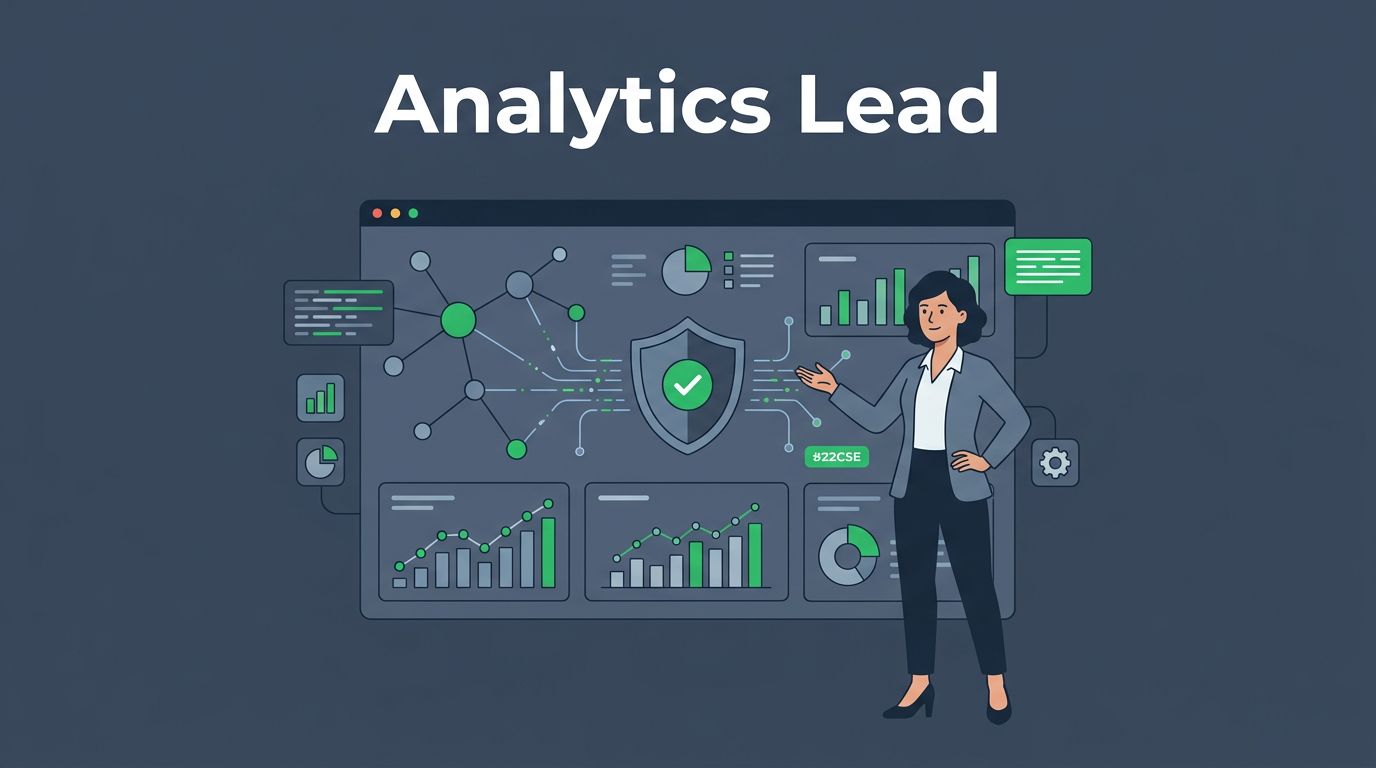
Building a robust security operation requires more than just buying the right software. You need someone who can translate raw log data into actionable intelligence. The security analytics platform lead acts as the bridge between your technical infrastructure and your security goals. Without this leadership, your team often sinks under a weight of false positives and alert fatigue.
Finding the right person for this position requires a clear understanding of what makes them different from a standard infrastructure engineer or a SOC manager. You need a blend of data engineering expertise and security domain knowledge. If you are ready to identify the right talent to own your detection strategy, you can Book a Discovery Call with Bud Consulting to start refining your search.
Defining the Role and Its Scope
A security analytics platform lead does not simply maintain a SIEM or a data lake. This person owns the health of your detection pipeline, from ingestion to alerting. While a platform engineer might focus on uptime and configuration, your analytics lead focuses on the quality of the insights you generate. They ensure that every dollar spent on data storage provides value to the security team.

This role differs significantly from a SOC manager. A SOC manager focuses on the human element, such as incident response workflows and analyst productivity. A detection engineering lead focuses primarily on the logic behind alerts. The platform lead sits in the middle. They manage the underlying architecture that allows detection engineers to work efficiently and analysts to investigate effectively. They are the architect of your visibility strategy.
Essential Qualifications and Skills
When vetting candidates, look for a background that combines software engineering with security operations. A strong lead understands how to scale data pipelines without sacrificing performance. They should know how to optimize log ingestion, query performance, and long-term storage costs. You want someone who treats security data as a product.

Technical proficiency with modern log management stacks is non-negotiable. Look for experience with tools such as Splunk, Elastic, or cloud-native solutions like Chronicle or Sentinel. However, the best candidates also understand the underlying data science. They know how to identify noise and reduce it. They should understand the MITRE ATT&CK framework and how to map data sources to specific threat coverage.
Core Competencies to Evaluate
- Data Pipeline Architecture: Can they design systems that ingest massive volumes of telemetry from diverse sources?
- Query Optimization: Do they understand how to write and tune queries that run efficiently across massive datasets?
- Infrastructure as Code: Are they comfortable using tools like Terraform or Ansible to automate the deployment of security infrastructure?
- Cost Management: Can they balance the need for comprehensive logging with the reality of cloud storage and compute costs?
Identifying Strong Candidate Signals
The most impressive candidates demonstrate a history of improving security outcomes, not just uptime. Ask them about a time they significantly reduced alert noise or improved the time-to-detect for a specific threat class. You want evidence of their ability to prioritize data sources based on risk, rather than just logging everything by default.
Look for candidates who speak clearly about the relationship between data volume and security efficacy. A strong lead avoids the trap of thinking that more logs equal more security. Instead, they focus on finding the specific telemetry that matters most for detecting real attacker behavior. They should also possess strong communication skills, as they will need to work with both IT operations teams and security analysts to define requirements.
Avoiding Common Hiring Mistakes
Many hiring managers make the mistake of looking for a specialized expert in a single vendor’s toolset. While knowing a specific platform helps, it’s more important to find someone who understands the fundamentals of security data engineering. Tools change, but the principles of log management, data normalization, and threat coverage remain consistent over time.
Another pitfall is focusing too heavily on security certifications at the expense of engineering experience. Certifications demonstrate interest, but they rarely prove an ability to build and maintain high-performance platforms. Prioritize candidates who have built systems that support large teams and complex, distributed environments. A candidate who has spent years in the trenches of DevOps or SRE is often a better fit than someone who only has experience in a traditional SOC environment.
A Quick Hiring Scorecard
| Skill Area | Must-Have | Nice-to-Have |
|---|---|---|
| Cloud Infrastructure | AWS/Azure/GCP proficiency | Multi-cloud architecture experience |
| Data Engineering | SQL and KQL proficiency | Proficiency in Python or Go |
| Security Context | MITRE ATT&CK mapping | Experience with Threat Hunting |
| Automation | CI/CD pipeline management | Containerization and Kubernetes |
Use this table as a starting point, but adapt it to the specific needs of your current infrastructure. If your organization relies heavily on cloud-native tools, weight the cloud infrastructure category more heavily. If your focus is primarily on-premise, prioritize legacy log management experience and network security architecture.
Setting Your New Lead Up for Success
Once you have hired your new lead, give them the autonomy to challenge existing assumptions. They will likely identify inefficiencies that have been ignored for months. Ensure they have access to the stakeholders who control the data sources, such as cloud architects and network engineers. Collaboration is vital, as the security platform lead cannot succeed in a silo.
Support their focus on data quality. Early in their tenure, encourage them to audit existing logs to eliminate redundancy. This creates immediate value and frees up resources for more complex security projects. If they propose changes to your architecture, weigh the technical benefits against the disruption to existing workflows. A balanced approach will yield the best results for your security posture.
Final Thoughts
Hiring the right person for your security analytics operations is a long-term investment in your defensive capabilities. Focus on finding someone who understands the intersection of data, infrastructure, and threat detection. By prioritizing engineering experience alongside security knowledge, you build a foundation that scales with your organization.
When you define the requirements clearly and look for evidence of real-world problem-solving, you cut through the noise of the job market. You gain a leader capable of turning your raw logs into a powerful engine for security, allowing your team to focus on what matters most: identifying and responding to real threats.