table of contents
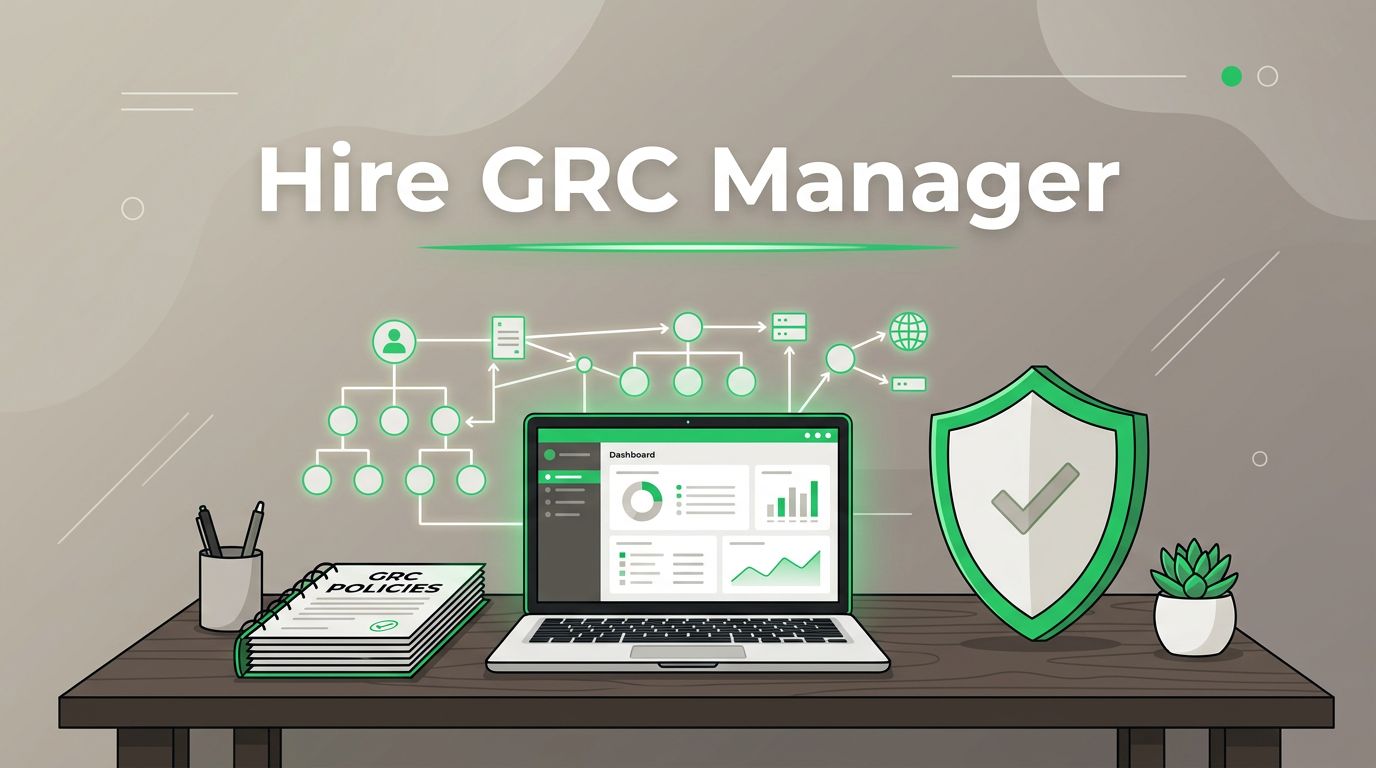
Audit work gets messy fast when no one owns it. A strong GRC manager gives structure to risk reviews, policy updates, evidence collection, and board reporting, so the work doesn’t live in scattered spreadsheets.
In 2026, the job also reaches into AI governance, third-party risk, cloud controls, and privacy requests. If you’re ready to hire, the real question is not whether you need GRC support, but how much ownership this person should carry. Start with the scope.
What a GRC Manager Actually Owns
A good GRC manager connects governance, risk, and compliance into one working system. They track risks, map controls, support audits, update policies, and keep leaders informed.
For a baseline on scope, ISACA’s GRC manager profile is useful because it covers strategy, frameworks, stakeholder reporting, and tools. Forrester’s role profile adds the enterprise view, which matters when the role has to work across security, legal, finance, and operations.
The best people do more than collect evidence. They turn scattered tasks into a repeatable process. That means one risk register, one policy rhythm, one audit calendar, and one clear path for escalation.
Signs It Is Time to Hire One
Many companies wait too long. Then the work spills across the CISO, compliance lead, legal team, and whoever can spare an afternoon.
You likely need to hire a GRC manager when one or more of these are true:
- Audit prep keeps pulling senior security staff off their real jobs.
- Risk reviews live in separate files with no single owner.
- Customers are asking for SOC 2 details, privacy answers, and vendor proof.
- AI tools are entering the business, but no one owns review and approval.
- Third-party risk checks keep slowing down deals.
- Leadership wants consistent reporting on control health and open risk.
If the role only appears when an audit is near, the company already needs it.
In smaller teams, this hire may report to the CISO or compliance leader. In larger firms, the role often sits between security, legal, and enterprise risk. Either way, the job works best when it has a clear lane and a clear decision maker.
Writing a Job Description That Pulls in the Right Candidates
A strong job description does not bury the role in jargon. It explains the company’s risk profile, the systems involved, and what success looks like in the first year.
Use plain language and name the real work. For example, say whether the person will own audit evidence, policy maintenance, vendor reviews, risk registers, or board reporting. If the company uses cloud services or AI tools, include that too.
A useful posting usually covers these points:
- the reporting line and key partners
- the frameworks in play, such as SOC 2, ISO 27001, NIST, GDPR, or PCI DSS
- the systems or tools they will manage
- the level of ownership for audits, controls, and policies
- the types of risks they will see, including privacy, vendor, cloud, and AI risk
- the business outcomes expected in the first 6 to 12 months
If you need help shaping the scope before you post the role, Book a Discovery Call with Bud Consulting.
A vague posting attracts vague candidates. A clear one tells strong candidates that the company knows what it needs.
Qualifications That Matter Most in 2026
Framework names matter, but they are not enough. The best GRC managers combine judgment, communication, and follow-through.
Look for people who can do the following:
- spot real business risk, then rank it well
- design controls that are practical and testable
- write policies people can follow
- explain risk to leaders without turning it into a lecture
- work with security, IT, legal, finance, HR, and product teams
- handle audit evidence and reporting without losing detail
- understand cloud basics, vendor risk, privacy, and AI governance
- use spreadsheets, dashboards, and GRC tools without help
The strongest candidates also know when to slow down. They don’t confuse activity with progress. They know which issue needs attention now and which one can wait until next quarter.
Certifications can help, especially when the person has to work with mature programs. Still, the interview should focus on how they think, not just what they have studied.
How to Evaluate and Select the Right Candidate
Interviewing for GRC is where many teams miss the mark. A polished resume can hide weak judgment, and a long list of frameworks can hide poor execution.
Use a short scorecard and test three things: practical skill, business judgment, and influence. Then ask for proof.
A good interview process might include:
- a short written exercise on how they would respond to an audit request
- a mock vendor risk review
- a scenario where an AI tool needs approval fast
- a request to explain a policy change to a non-technical leader
- a review of how they would prioritize ten open risk items
Ask for a real example from their past work. How did they handle missing evidence? What did they do when a control failed? How did they bring other teams along when they had no direct authority?
The best answer is usually calm and concrete. Weak candidates lean on buzzwords. Strong ones talk about decisions, tradeoffs, and results.
A short work sample often tells you more than three interview rounds. It shows how they write, think, and organize messy details.
How the Role Differs from Other Security Jobs
The titles overlap, but the work is not the same. A useful way to see the difference is to compare the day-to-day focus.
| Role | Main focus | Best fit when |
|---|---|---|
| GRC manager | Governance, risk, compliance, audits, policies, reporting | You need one owner for the full program |
| Compliance manager | Regulatory obligations and control evidence | The main pressure comes from audits and regulations |
| Risk manager | Enterprise risk, business impact, treatment plans | You need broader risk oversight across the company |
| Security leader | Protection of systems, data, and response | Technical defense and incident response are the priority |
A GRC team roles guide is a useful reminder that this work touches more than one department. The GRC manager often sits in the middle, linking security controls to legal needs, finance reporting, and operational follow-through.
If your biggest problem is technical defense, hire for security leadership. If your biggest problem is evidence, ownership, and cross-team order, hire for GRC.
Common Hiring Mistakes to Avoid
Many hiring teams make the same mistakes when they try to fill this role fast.
A vague GRC role usually turns into an admin role.
Watch out for these problems:
- hiring for framework knowledge but ignoring judgment
- writing a posting that says “wear many hats” without naming the real work
- overlooking privacy, AI governance, and third-party risk
- placing the role too far from the people who hold evidence
- skipping a work sample or case exercise
- expecting one person to replace an entire program
The biggest mistake is scope drift. If the company keeps adding tasks without changing support or authority, the role will stall. Good candidates notice that quickly.
A better approach is simple. Define what the GRC manager owns, what they influence, and what stays elsewhere. Then back that scope with the right reporting line and enough access to leaders.
Conclusion
Hiring a GRC manager works best when the role has a clear purpose. The goal is to connect risk, compliance, and daily operations before problems pile up.
In 2026, that means more than audit prep. It includes privacy, AI governance, vendor risk, cloud controls, and reports leaders can use. When you hire for judgment, clear writing, and steady follow-through, the role becomes a stabilizer for the whole business.