table of contents
Cloud incidents move fast. Logs roll over, SaaS admins change settings, and short-lived workloads disappear before a traditional evidence plan can catch up.
That is why hiring the wrong digital forensics lead can hurt more than leaving the role open. A strong endpoint examiner may still miss the trail in AWS, Azure, Google Cloud, Okta, Microsoft 365, or Snowflake.
The right hire preserves evidence, works cleanly with incident response, and keeps findings usable for legal, audit, and compliance review. The first step is knowing what this role must own.
Define the role around cloud evidence, not old habits
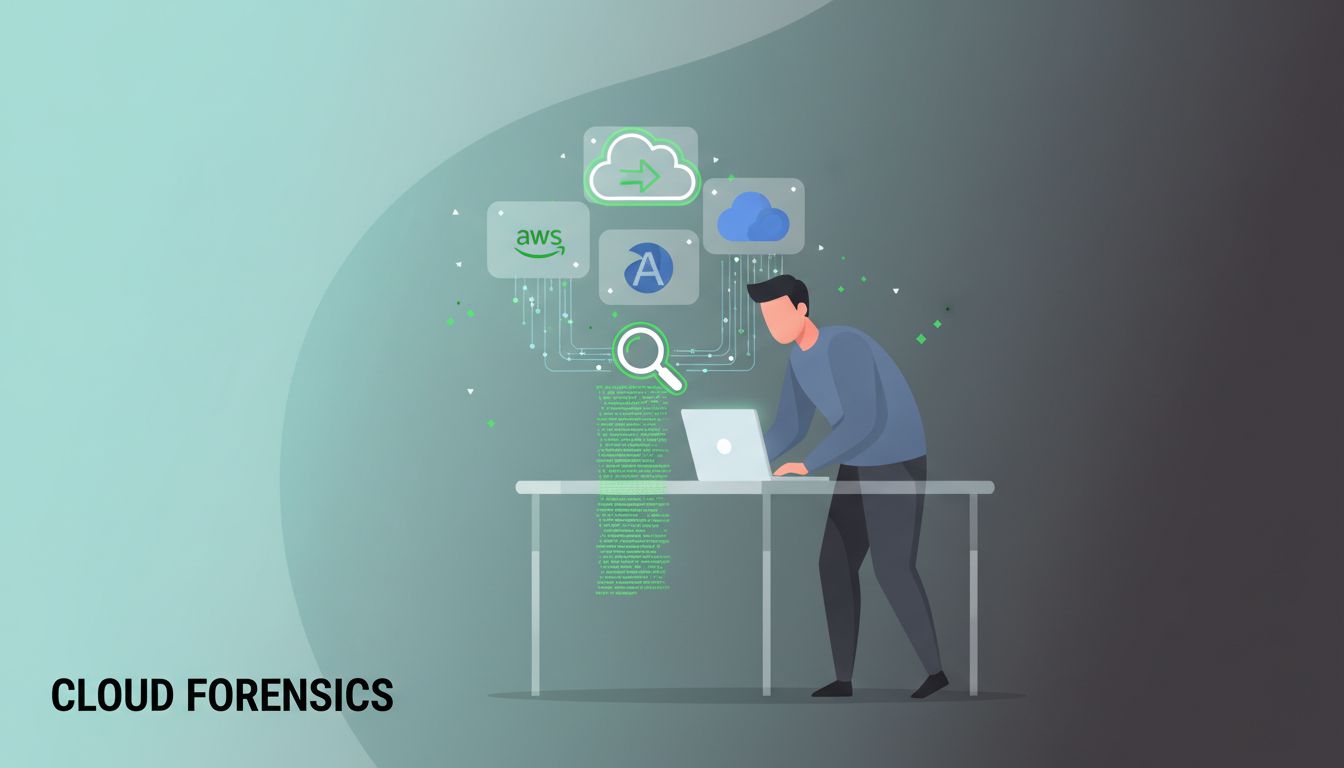
A cloud incident forensics lead does not spend the day imaging drives. Their job is to reconstruct what happened across control planes, identity systems, SaaS apps, and ephemeral compute.
That means collecting audit logs, snapshots, API activity, session data, and admin actions before retention windows close. It also means working with responders while containment is still in motion, because cloud evidence can disappear if the wrong change happens at the wrong time.

A good hire understands how identity ties together the whole event. In cloud cases, the attacker often moves through tokens, roles, service principals, federated access, and SaaS admin sessions before touching a workload. If the lead cannot trace those paths, the investigation stays incomplete.
This is the main split from traditional forensics. Endpoint work still matters, but it is no longer the center of gravity in many environments. If your estate is cloud-heavy, remote-first, or built on SaaS, you need a lead who treats cloud telemetry as the primary scene.
Here is a simple way to compare the two profiles:
| Hiring need | Cloud incident forensics lead | Traditional forensics lead |
|---|---|---|
| Main evidence | CloudTrail, Azure logs, IAM events, SaaS audit trails, snapshots | Disk images, memory captures, registry, local file artifacts |
| Pace of work | Fast-moving, with short retention windows | Slower, tied to stable endpoints or servers |
| Core questions | Who accessed what, from where, through which identity path? | What happened on the device or server itself? |
| Common blind spot | Treating cloud activity like a local machine case | Ignoring control planes and identity logs |
The takeaway is simple. Hire for the environment you actually run, not the one your old playbook describes.
Cloud evidence gets brittle fast. If your lead cannot preserve it in the first hours, the rest of the case may be missing key facts.
Look for skills that fit cloud, SaaS, and identity
A strong digital forensics lead for cloud incidents needs a mix of technical depth and calm coordination. Tool names matter, but process matters more.
Start with cloud logging. The candidate should know how to use evidence from AWS CloudTrail, Azure Activity Logs, Entra ID, Google Cloud audit logs, and SaaS admin trails. They should also understand retention gaps, delayed ingestion, and how to export data without breaking trust in the record.
Identity work is just as important. Many cloud intrusions look like valid sign-ins until you trace MFA changes, token use, conditional access shifts, delegated permissions, or service account abuse. If the person has never investigated identity as the attack path, they will miss the center of the event.
Remote evidence collection matters too. In 2026, the lead may need to preserve evidence from laptops, cloud workloads, browser sessions, collaboration tools, and managed devices across multiple time zones. They should know how to coordinate with endpoint teams, SaaS admins, and cloud engineers without slowing containment.
A strong candidate usually shows these traits:
- They can explain evidence preservation in cloud terms, not only disk imaging terms.
- They know where identity logs fit into the timeline.
- They can write clear findings for legal, executive, and technical readers.
- They work well with incident commanders and SOC analysts.
- They understand privacy, retention, and cross-border data issues.
- They can say when a question needs counsel or compliance review.
Certifications can help, but they are not the answer by themselves. The better test is whether the person has handled real incidents where systems were short-lived and evidence was spread across services.
Ask interview questions that show how they think
A polished resume can hide weak judgment. The interview should test sequence, priorities, and clarity under pressure.
For more prompt ideas, the set at Cyber Forensics Interview Questions (2026 Edition) is a useful starting point, but your questions should still match your own cloud stack. If your team supports remote investigations, this remote digital forensics hiring guide can help shape the process.
Use questions that force the candidate to explain what they would preserve first, what they would ignore, and why.
| Competency | Interview question | What a strong answer includes |
|---|---|---|
| Evidence preservation | “An attacker touched an AWS workload that may vanish in minutes. What do you preserve first?” | A clear order of operations, snapshots, logs, IAM data, and a reason for each step |
| Identity investigation | “How do you trace admin abuse in Entra ID or Okta?” | Token and session review, MFA changes, role changes, and related audit sources |
| Cloud-specific thinking | “Which logs matter most when the workload itself is ephemeral?” | Control-plane logs, identity events, API calls, and service activity outside the host |
| Cross-functional work | “How do you stay useful while containment is still active?” | Close coordination with IR, clear handoffs, and awareness of investigation risk |
| Reporting | “How do you brief executives when facts are still changing?” | Short, accurate updates, knowns vs unknowns, and no technical clutter |
A good answer does not need fancy vocabulary. It needs a clean sequence, solid evidence priorities, and a practical view of what survives in cloud environments.
If a candidate talks only about tools, that is a warning sign. If they can explain how they would preserve evidence, defend it later, and still support response, you are closer to the right hire.
Use a scorecard, not gut feel
Senior hires can get messy when every interviewer uses a different yardstick. A simple scorecard keeps the decision tied to the work.
Use a 1 to 5 scale for each area, then apply the weight you assign. The goal is not mathematical perfection. The goal is to make sure the strongest person wins on evidence, not charisma.
| Category | Weight | Strong evidence looks like this |
|---|---|---|
| Cloud evidence preservation | 30% | Knows what to capture first, and why cloud evidence disappears quickly |
| Identity and SaaS fluency | 20% | Can trace abuse through IAM, SSO, admin tools, and audit trails |
| Incident response partnership | 20% | Works cleanly with responders and does not slow containment |
| Reporting and communication | 15% | Writes concise findings for leaders, counsel, and engineers |
| Compliance and legal coordination | 15% | Understands retention, privacy, and cross-border evidence issues |
A candidate who scores high on tools but low on communication will struggle in a live incident. The same is true for a strong writer who cannot explain cloud artifacts or identity paths.
Set your pass mark before interviews begin. For a senior lead, weak scores in evidence preservation or IR partnership should stop the process, even if the person sounds impressive.
Find candidates in the right talent pools
The best candidates often come from adjacent work, not from the exact title you posted. That matters because the cloud forensics market is still small.
Start with DFIR people who already work with cloud-heavy clients. They usually understand evidence handling and can adapt faster than a pure endpoint examiner. Cloud security engineers can also be strong candidates if they have supported incident review, logging, or response. Identity specialists are another good source, especially those who have investigated abuse of SSO, conditional access, or admin roles.
Managed detection and response teams often produce solid leads too. So do consultants who have seen many environments, because pattern recognition matters in fast cases. The best people can explain how attacks move across cloud control planes, collaboration tools, and endpoints without losing the thread.
When hiring remote, ask how they run investigations across time zones and tool stacks. A lead who can only work when everyone is in the same office may slow the whole program down. If you need a targeted search brief or help framing the role for your environment, Book a Discovery Call with Bud Consulting and build the search around the incidents you actually face.
Avoid the mistakes that create weak investigations
The most common hiring mistake is assuming endpoint forensics experience transfers cleanly to cloud incidents. Sometimes it does. Often it does not.
Another problem is overvaluing tool lists. A candidate can name three platforms and still miss the attack path if they do not understand identity, retention, and evidence order. Cloud investigations fail when people trust the tool more than the method.
Teams also forget about legal and data boundaries. Evidence may live in different regions, under different privacy rules, or inside SaaS apps controlled by another business unit. The lead does not need to act as counsel, but they do need to work in lockstep with counsel and compliance so evidence stays usable.
A few mistakes show up again and again:
- Hiring for disk imaging skills when the environment is mostly cloud and SaaS.
- Skipping identity investigations because the team already has EDR data.
- Ignoring snapshot timing, log retention, and export methods.
- Failing to test how the candidate writes findings for non-technical readers.
- Leaving cross-border data handling out of the interview.
If the lead cannot explain log retention, snapshot timing, and data residency, the team may lose evidence before it knows what to ask for.
The best way to avoid these errors is to build the role around real incidents, not generic forensics language.
Shape the job description around incident outcomes
A strong job post does more than list tools. It tells candidates what kind of incidents they will handle, who they will work with, and what success looks like.
Use this outline as a starting point:
- The purpose of the role, focused on cloud and SaaS incident investigations.
- The main environments, such as AWS, Azure, Google Cloud, Microsoft 365, Okta, Snowflake, or Kubernetes.
- The evidence sources they will own, including logs, snapshots, audit trails, and identity data.
- The response partners they will support, such as IR, SOC, cloud security, legal, privacy, and compliance.
- The communication expectations, including executive updates and written findings.
- The required experience, with clear mention of cloud incidents, not only endpoint forensics.
- The nice-to-have skills, such as scripting, SIEM queries, or prior consulting work.
- The working model, on-call needs, and any regional data or residency requirements.
Keep the wording tight. A candidate should read the posting and know whether they can do the job.
A useful trick is to write the role around outcomes. For example, say the lead will preserve cloud evidence during active incidents, support root cause analysis, and produce reports that stand up to internal review. That language attracts people who think in real investigations, not people who want a title.
Conclusion
Cloud incidents punish vague hiring. If the digital forensics lead cannot preserve evidence quickly, trace identity activity, and work with responders in real time, the investigation will lose ground fast.
The strongest hire is usually part investigator, part communicator, and part evidence steward. They know cloud logs, SaaS trails, and cross-functional response, and they understand when legal and compliance need to be in the loop.
When the role is built around cloud reality, the interview gets easier too. You are no longer asking who knows forensics in general. You are asking who can protect the case when the evidence lives across services and disappears in hours.