table of contents
Hiring a threat modeling lead is harder than filling a typical AppSec role. You need someone who can read architecture, guide engineers, and turn risk conversations into better design decisions.
That mix matters even more in cloud-native environments. APIs, microservices, identity flows, and CI/CD pipelines create more attack paths, so the person you hire has to think clearly and work well across teams.
The right search starts with a clear job scope, not a pile of buzzwords. Once that scope is real, the interview process gets much easier.
Define the role before you post it
A threat modeling lead should do more than run workshops. This person needs to shape how teams think about risk during design, development, and change management.
That usually means owning architecture reviews, building repeatable modeling practices, and helping engineers choose fixes they can ship. In a strong team, they also help product leaders see which risks matter most and which ones can wait.
OWASP gives a practical starting point. The OWASP Threat Modeling Process explains how to identify and handle security risks in a structured way, while the OWASP Threat Modeling Cheat Sheet offers useful guidance for day-to-day work. NIST SP 800-154 takes a similar risk-based view, which makes it a good reference if your team already speaks in controls and governance terms.
A strong job scope usually includes work like this:
- reviewing new product designs and major changes
- mapping assets, trust boundaries, and likely abuse cases
- turning findings into fixes, patterns, or guardrails
- helping teams reuse what they learn instead of starting over each time
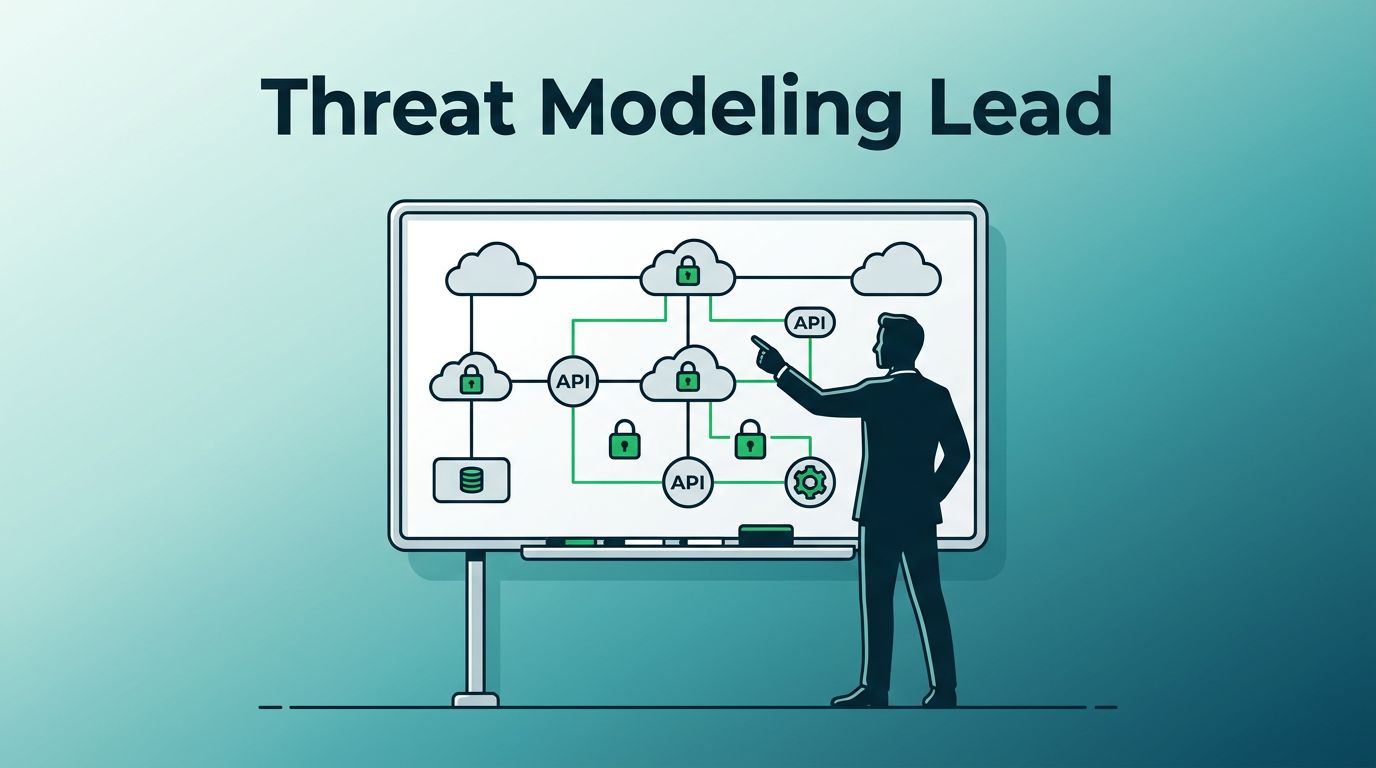
This is the kind of work that often starts with a whiteboard, then becomes a shared habit.

A good threat modeling lead changes how teams design software, not just how they document risk.
Write a profile that matches modern application security
Many hiring teams describe a role that sounds like a blend of architect, auditor, and policy owner. That usually attracts the wrong candidates.
A better profile names the systems this person will protect. For most employers, that means SaaS platforms, APIs, containers, serverless services, identity providers, and infrastructure as code. If your environment includes regulated data or shared tenants, say that too.
The strongest candidates understand secure SDLC work, not only one-off reviews. They know how to fit threat modeling into design reviews, sprint planning, and release decisions. They also know that a model only matters if engineers can use it.
That is where developer enablement comes in. A great lead creates reusable patterns, short guidance, and office hours. They make secure choices easier, not harder.
When you write the posting, make room for these signals:
- experience with cloud-native architecture and distributed systems
- comfort with OWASP methods and common threat categories such as STRIDE
- ability to explain risk in plain language, not only security jargon
- a track record of helping engineers fix issues without slowing them down
For a broader frame, the W3C Threat Modeling Guide fits well with NIST’s risk-based thinking. It helps you look for a candidate who can repeat the process across teams, not just impress people in one meeting.
Interview for judgment, not memorization
The best interviews use a scorecard. That keeps the panel from hiring on confidence, charisma, or a polished list of tools.
A simple scorecard also helps you compare candidates fairly. Use the same criteria for everyone, then ask for real examples from past work.
| Criterion | What strong looks like | Watch out for |
|---|---|---|
| Scope framing | Starts with assets, trust boundaries, and business impact | Jumps straight to tools or templates |
| Cloud-native depth | Understands APIs, identity, containers, IaC, and shared services | Talks only about monoliths or on-prem systems |
| SDLC fit | Knows how to place threat modeling inside the design and release flow | Treats it like a one-time review |
| Mitigation quality | Recommends controls engineers can ship and maintain | Lists fixes without tradeoffs |
| Leadership | Coaches teams and resolves conflict without constant escalation | Depends on security management for every decision |
Use a 1 to 5 scale for each row. A 4 should mean the candidate has done this work in a real environment.
Then ask scenario questions that mirror your systems. A few strong prompts are:
- How would you model a new multi-tenant file upload service?
- How would you keep threat modeling from becoming a bottleneck?
- What would you do if engineering disagreed with your recommended fix?
Strong answers sound practical. For the file upload example, you want to hear about data classification, storage isolation, signed URLs, malware checks, access controls, and logging. You also want the person to ask where the trust changes happen.
For the bottleneck question, a good candidate will talk about reusable patterns, async pre-work, office hours, and clear decision rules. They should see threat modeling as a service to engineering, not a gate.
For disagreement on a fix, listen for tradeoff thinking. The right answer usually includes options, compensating controls, and a path to escalate only when risk is high.
Good candidates explain what they would do next. Great candidates also explain how they would help the team do it again.
Look for cross-functional leadership, not just security depth
A threat modeling lead lives in the space between product, engineering, and security. If they cannot work across those groups, the role will stall.
The best people know how to speak with engineering directors about risk, then turn around and help developers with a concrete fix. They can also talk to product managers about user impact, release timing, and the cost of delay.
That cross-functional skill matters because threat modeling is part of a larger operating model. It should connect to architecture review, incident lessons, secure coding standards, and control ownership. The lead does not need to own every control, but they do need to know how the pieces fit.
Look for signs that the candidate can build programs, not just complete reviews. Good signs include:
- reusable threat patterns for common services
- metrics on review volume, fix time, or repeat findings
- training or mentoring for engineers and architects
- a clear way to track risk decisions over time
You want someone who can raise the floor for the whole team. If they only produce findings, the work will pile up. If they can change how teams design software, the program will grow on its own.
If you need help shaping the search or screening finalists, Book a Discovery Call with Bud Consulting.
Conclusion
Hiring a threat modeling lead works best when you treat it as a leadership search, not a narrow technical hire. The role needs architecture judgment, cloud-native fluency, and the ability to teach teams better habits.
Start with a clear scope, score candidates on real scenarios, and look for people who can move across functions with ease. That is how threat modeling becomes part of everyday engineering, not a once-a-quarter exercise.