table of contents
Managing a hybrid infrastructure creates constant operational friction. On-premises data centers, private cloud environments, and public cloud platforms run on entirely different security models. Organizations frequently discover that traditional security tools fail when extended across disparate environments. Finding the right partner for cloud security consulting services determines whether an enterprise successfully secures its architecture or simply accumulates more unmanaged risk.
Choosing external advisors requires looking past generic marketing pitches. Enterprise IT directors and CISOs need specialized expertise in identity sprawl, misconfigurations, and fractured logging. Evaluating firms objectively keeps technical projects on track.
Key Takeaways
- Hybrid complexity demands specialized advisory: Standard IT security firms often lack deep expertise in multi-cloud governance and container security architectures.
- Advisory differs from managed services: Consulting partners design strategies, perform assessments, and architect controls, whereas managed service providers handle ongoing operations.
- Identity sprawl remains the primary risk: Unifying on-premises Active Directory with multi-cloud IAM models prevents unauthorized privilege escalation.
- Actionable evaluation criteria matter: Asking prospective consultants specific questions about data residency and SOC integration exposes capability gaps before contracts are signed.
Navigating Hybrid Cloud Complexity
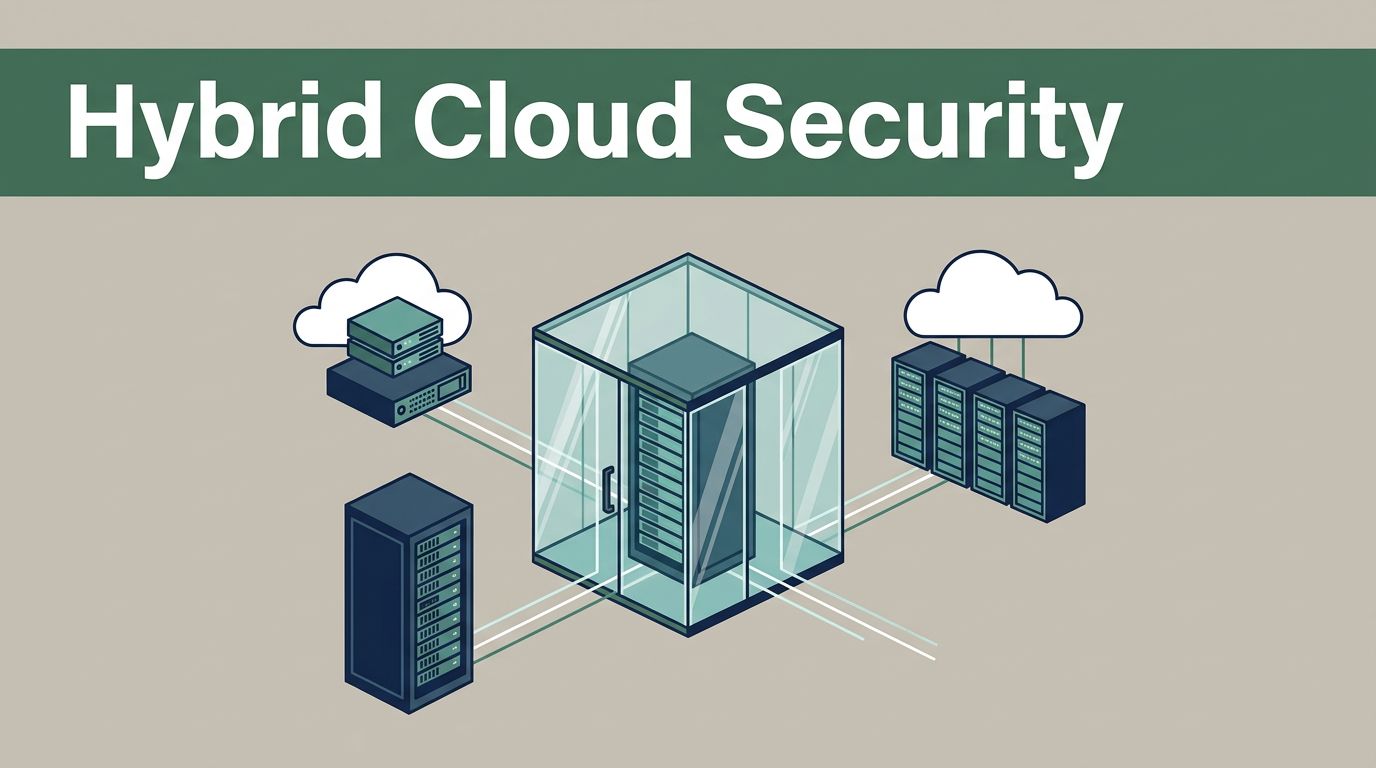
Enterprise organizations rarely migrate entirely to a single public cloud provider. Most retain legacy data centers while operating workloads across AWS, Microsoft Azure, and Google Cloud. This distributed architecture introduces severe visibility gaps. Security teams struggle to maintain consistent policy enforcement when each environment uses proprietary security controls and disparate logging formats. Recent industry data shows that a vast majority of enterprises operate in hybrid models, with tool sprawl and visibility gaps standing as primary factors limiting effective defense.
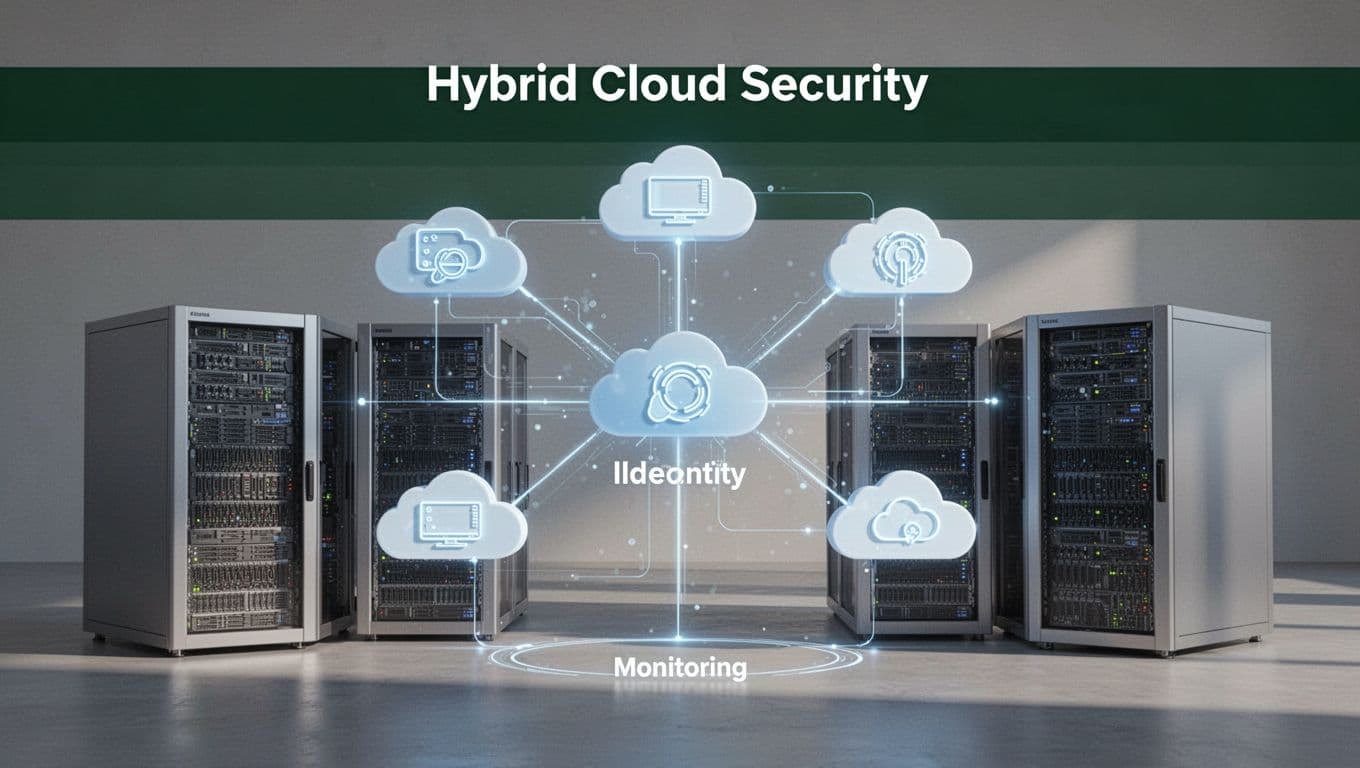
Advisors must address these foundational fractures immediately. A competent consulting partner maps existing assets across every hosting tier. They identify where encryption lapses occur and where administrative privileges overlap. Without a clear inventory of hybrid assets, internal teams remain blind to shadow IT and unpatched cloud storage buckets. Effective guidance aligns with established benchmarks like CIS Benchmarks and Controls to establish baseline hardening across both legacy hardware and cloud-native instances.
Distinguishing Advisory from Managed Security Services
Procurement teams often confuse strategic consulting with managed security service providers. Advisors design the architecture, write the policies, and validate the posture. Managed service providers watch the alerts and answer incidents at two in the morning. Enterprises building a hybrid strategy need clear advisory services first. Bringing in managed services before fixing structural misconfigurations only automates existing flaws.
Consultants should deliver architectural blueprints, risk prioritization matrices, and compliance mappings. They establish the governance models that internal engineering teams follow. Once the guardrails are active, organizations can decide whether to retain external operations teams or handle monitoring internally. Understanding this division prevents wasted spend on outsourced SOC retainers when the core problem is structural design.
Tackling Identity Sprawl and Access Control
Identity management in a hybrid environment resembles a fragmented puzzle. Active Directory runs on-premises, while separate IAM consoles govern cloud resources and SaaS applications. Attackers exploit these seams through credential stuffing and privilege escalation. Effective cloud security consulting services focus heavily on centralizing identity governance and enforcing least-privilege access across every tier.
Consultants should audit orphaned accounts and excessive service permissions. They help implement multi-factor authentication across all administrative interfaces. Modern deployments benefit from zero-trust architecture principles that verify user identity continuously. A qualified partner designs federation models that bridge legacy directories with cloud identity providers without creating single points of failure.
Bridging Shared Responsibility Gaps
The cloud shared responsibility model confuses many internal security teams. Public cloud providers secure the underlying infrastructure, but the enterprise remains responsible for data, workloads, and configurations. In a hybrid setup, these boundaries shift depending on whether a workload sits in a private rack or a public container cluster. Misconfigurations occur when internal teams assume the provider handles data protection.
Advisors evaluate how data moves between on-premises storage and cloud buckets. They verify that encryption keys remain under enterprise control. Regulatory compliance adds further pressure to these workflows. Organizations handling sensitive data must ensure their architectures satisfy sector-specific mandates without slowing down software delivery pipelines. Frameworks such as the CSA Cloud Controls Matrix provide structured guidance for mapping controls across complex environments.
Evaluating Prospective Consulting Partners
Selecting the right advisory firm requires a structured procurement process. Technical leaders must ask pointed questions during vendor pitches to separate proven specialists from generalist IT shops. General IT consultants often apply rigid on-premises rules to cloud-native workloads, which stifles engineering velocity.
| Evaluation Area | What to Look For | Red Flag to Avoid |
|---|---|---|
| Framework Expertise | Direct experience with NIST CSF 2.0 and CSA CCM | Vague promises of generic compliance |
| Hybrid Architecture | Proven capability spanning on-prem and multi-cloud | Exclusive focus on a single cloud vendor |
| Tool Integration | Experience unifying existing SOC and SIEM tools | Insistence on replacing all current software |
| Staff Credentials | Named senior practitioners with cloud certifications | Reliance on junior contractors for delivery |
Enterprises should request case studies involving similar hybrid setups. Asking how the firm handles legacy system integration exposes their practical capabilities. If a provider avoids technical specifics, internal teams should look elsewhere. Book A Call With Us to discuss your specific infrastructure requirements and evaluate potential consulting partnerships.

Integrating Security Operations with Existing Tools
Tool sprawl remains a constant headache for enterprise security teams. Implementing separate security monitoring tools for every cloud provider creates data silos. Security analysts waste time jumping between consoles during an active investigation. Consultants must design unified observability pipelines that feed telemetry from hybrid environments into a central SIEM or XDR platform.
Advisors evaluate existing log collection mechanisms and identify coverage gaps. They ensure that API logs, network flow logs, and endpoint telemetry reach the security operations center reliably. Centralized visibility reduces mean-time-to-detect metrics significantly. A strong consulting engagement leaves internal teams with automated monitoring rather than manual checklists.
Measuring Success and Outcomes
Consulting engagements must produce verifiable operational improvements. Vague reports filled with high-level summaries waste budget and leave systems vulnerable. Enterprise leaders should establish clear key performance indicators before signing advisory contracts. Successful projects yield measurable reductions in attack surface exposure and faster incident triage times.

Look for concrete deliverables like automated compliance reporting and reduced misconfiguration rates. The final assessment should include prioritized remediation roadmaps that internal engineers can execute without external hand-holding. When advisory firms transfer knowledge effectively, internal security posture improves permanently.
Conclusion
Securing a hybrid infrastructure requires specialized knowledge that general IT providers rarely possess. Identifying the right partner depends on verifying their practical experience with multi-cloud governance and identity unification. Focus on advisors who deliver actionable architectural blueprints rather than generic slide decks. Evaluating prospective partners with rigorous technical questions ensures your enterprise builds a resilient defense across every operating environment. Take time to vet firms thoroughly before committing budget to your next hybrid security initiative.