table of contents
Hiring an AppSec engineer without structure is like reviewing code with the screen dimmed. You might spot something, but you won’t trust the result.
A strong AppSec engineer interview should show how a candidate thinks under real constraints. That means testing threat modeling, secure SDLC judgment, code review, vulnerability triage, cloud and container awareness, and how they work with developers. If you score those areas the same way every time, hiring gets a lot less noisy.
Start with the work the role actually needs
Many teams open an interview with OWASP trivia. That’s fast, but it doesn’t tell you who can improve a shipping team. Start by defining the job in plain terms instead.
Is this person joining a startup with one security hire, or a larger team with clear lanes? Will they review architecture, tune pipelines, handle exceptions, or coach developers? Those details should shape the interview.
Frameworks help here. For threat modeling examples, the OWASP Threat Model Library gives useful patterns. If you’re mapping maturity versus verification depth, this short guide on using SAMM and ASVS together is a practical reference.
A simple interview plan works well for most teams:
- A system-design scenario focused on threats and controls
- A code review or vulnerability triage exercise
- A discussion about trade-offs, delivery pressure, and developer communication
That structure works even if you don’t have a big security bench. One strong interviewer can cover two areas, as long as every candidate gets the same prompts.
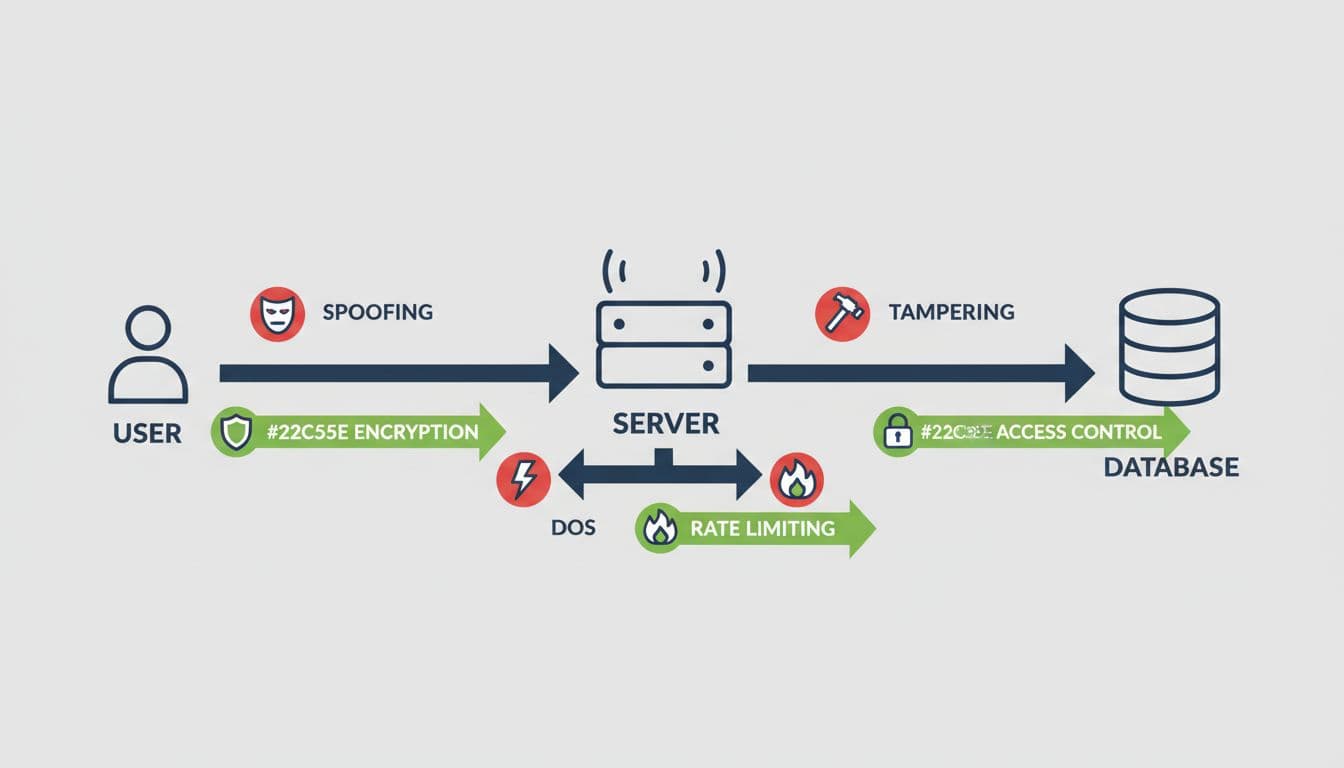
Keep the scenario close to your stack. A public API, a SaaS admin panel, or a containerized service says more than a whiteboard puzzle. The goal isn’t perfect coverage. It’s to see whether the candidate identifies assets, trust boundaries, abuse paths, and controls in a calm, ordered way.
Ask scenario questions that expose real AppSec skill
The best interview questions sound like real work because they are. Ask for decisions, not definitions.
Threat modeling and secure SDLC:
Try this: “A team is launching a customer-facing API in two weeks. Walk me through your first AppSec pass.”
A strong answer identifies assets, data flows, auth paths, trust boundaries, likely abuse cases, and quick controls such as rate limits, logging, secret handling, and test cases. A weak answer jumps straight to tool names or lists the OWASP Top 10 without applying it.
Then ask: “Where would you add security checks if this team deploys daily?”
Look for practical steps, not maximalism. Good candidates place lightweight checks early, such as secret scanning, dependency review, code review guidance, and risk-based gates. They also talk about exceptions, false positives, and who owns fixes.
The strongest candidates reduce risk without slowing every release to a crawl.
Code review and vulnerability triage:
Use a short scenario instead of live coding. For example: “A scanner reports SQL injection, an exposed secret, medium XSS in an internal admin page, and an outdated package with no known exploit. What do you do first?”
Strong candidates validate findings, weigh exposure, check compensating controls, and explain business impact. They may mention CVSS, but they won’t treat scanner severity as the final answer. Weak candidates sort by tool output alone or try to fix everything at once.

Cloud and container awareness:
Ask: “A Kubernetes service runs as root, pulls a public base image, and stores secrets in environment variables. What worries you most?”
A good answer covers image provenance, secret storage, least privilege, service account scope, admission controls, and runtime limits. A weak answer stays at the network edge and misses workload risk.
Communication and risk decisions:
Ask: “A developer says a finding is theoretical and release is tomorrow. What do you do?”
Strong candidates explain exploit path, likely impact, temporary controls, and who accepts risk if the fix waits. Weak ones either block the release on instinct or give in without evidence.
If you want more prompts, this community-maintained question set is a useful starting point. Still, tailor your final questions to your own environment.
Build a simple scorecard to reduce bias
Without a rubric, interviews drift toward confidence, shared background, or who sounds polished. A scorecard keeps the focus on evidence.
Score each area on a 1 to 5 scale. Ask every interviewer to write notes before the debrief. Also, score behavior you observed, not what you assume the candidate could do later.
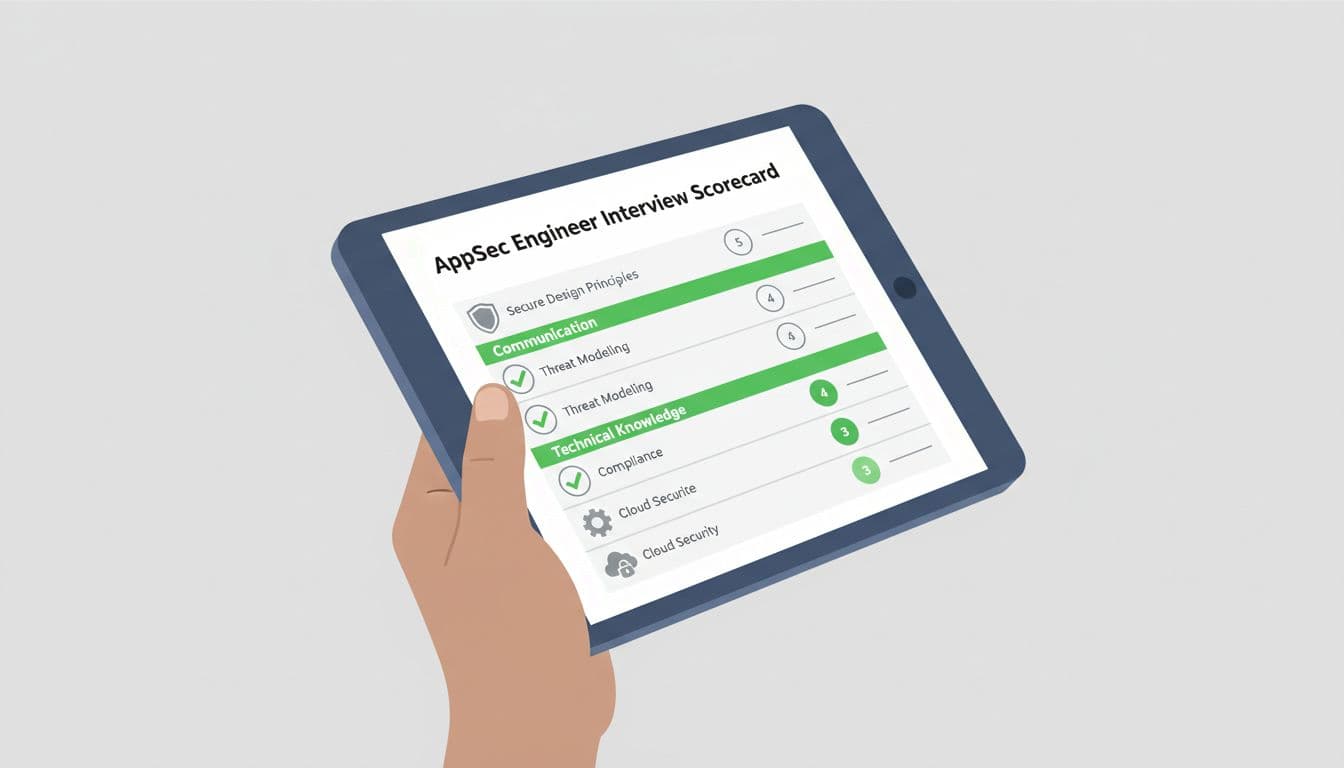
Here’s a compact rubric you can adapt:
| Area | Weight | What strong looks like |
|---|---|---|
| Threat modeling | 20% | Finds assets, boundaries, abuse cases, sensible controls |
| Secure SDLC | 20% | Adds checks that fit team speed and ownership |
| Code review and triage | 20% | Separates noise from risk, explains priority clearly |
| Cloud and container security | 15% | Understands identity, secrets, images, runtime limits |
| Communication and judgment | 25% | Works well with developers, frames trade-offs, documents risk |
The takeaway is simple: consistency beats intuition. A candidate may not know every acronym, yet still be the better hire if they reason well, communicate clearly, and make sound trade-offs. For senior roles, raise the bar on influence, program design, and how they shape engineering habits over time.
Conclusion
A good AppSec interview doesn’t need guesswork. It needs realistic scenarios, clear scoring, and interviewers who reward judgment over jargon. If your process can show how a candidate thinks, prioritizes, and works with builders, you’ll make better hires with far less noise. That’s the kind of signal security teams need.