table of contents
Hiring a security leader feels a bit like buying office space. Too little, and growth gets cramped. Too much, and you pay for empty rooms.
That’s why fractional CISO vs full-time CISO is not just a hiring question. It’s a timing question. For founders and operators, the right choice depends on workload, risk, and how often security shows up in key decisions.
The real difference is operating model, not prestige
A fractional CISO brings senior leadership on a part-time basis. They usually set strategy, guide risk decisions, lead compliance work, and coach internal owners. A full-time CISO does all of that, but also lives inside the company every day.
In other words, one model buys focused executive judgment. The other buys daily leadership depth. That difference matters more than the title.
This quick comparison helps frame the choice:
| Factor | Fractional CISO | Full-time CISO |
|---|---|---|
| Typical cost in 2026 | $5,000 to $15,000 a month, sometimes $20,000+ in regulated work | $250,000 to $550,000+ a year with benefits, bonus, and often equity |
| Hiring speed | Often faster, because you can start on a retainer | Usually slower, because search, interviews, and onboarding take time |
| Best use | Strategy, compliance, board updates, early program build | Daily leadership, team management, major incidents, cross-company decisions |
The cost gap is real. Current 2026 pricing reports, including this vCISO cost breakdown, show fractional support costs far less than a permanent CISO.

Buy the leadership you need now, not the org chart you hope to need next year.
When a fractional CISO makes sense
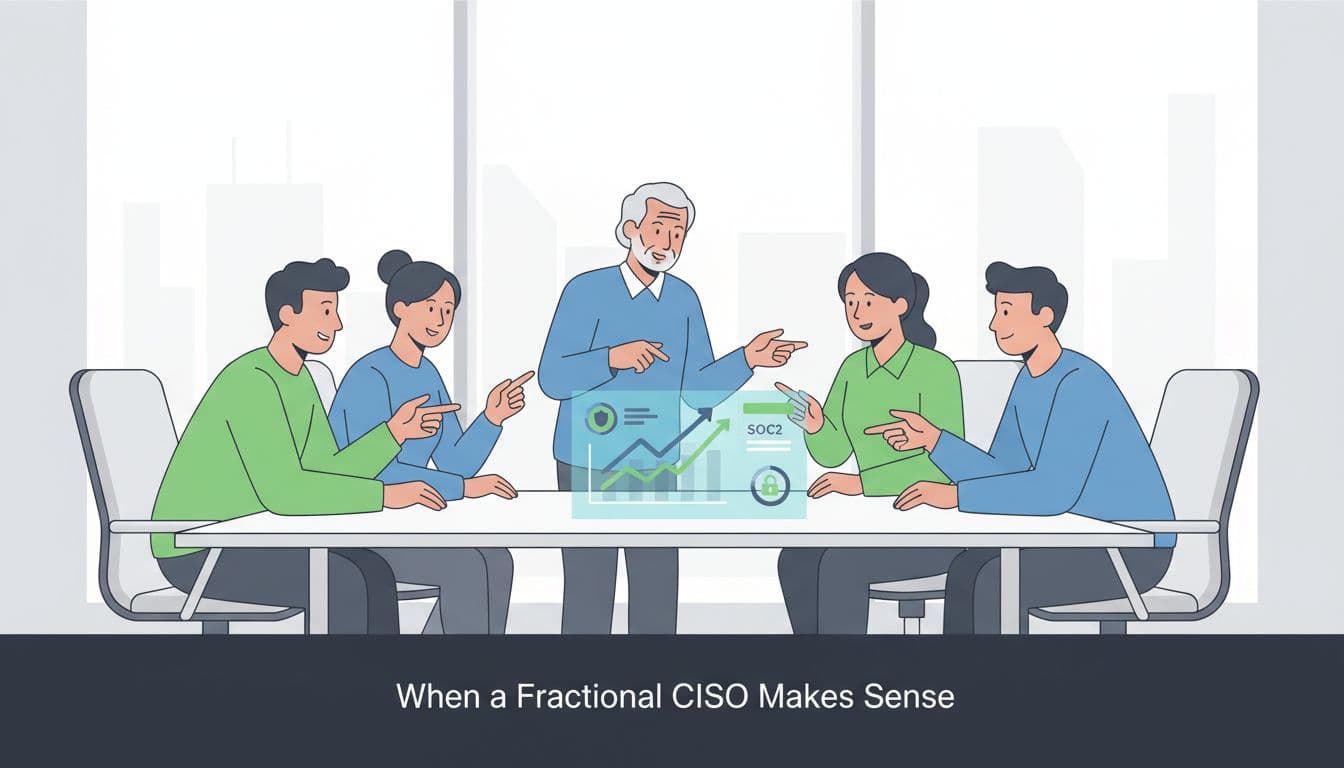
For many startups and SaaS firms, a fractional CISO is the right first move. In 2026, many smaller companies still start here because they need direction more than daily oversight.
Picture a Series A SaaS company with 70 employees. Sales wants bigger enterprise deals. Prospects ask for a SOC 2 report, a risk register, and answers to long security questionnaires. Engineering can fix gaps, but no one owns the roadmap. A fractional CISO fits that gap well, and the faster start matters when sales can’t wait six months for a hire.
They can set policy, lead a risk review, prepare the board, and guide audit readiness for SOC 2 or ISO 27001. They can also run a tabletop exercise, review vendors, and give the CTO a plan that fits budget and stage. Many teams pair that work with outside audit help or one of the SOC 2 compliance partners active in 2026.
A fractional model usually works best when three things are true:
- The workload is part-time: Security leadership fits into 1 or 2 days a week.
- Your team can execute: IT, engineering, or ops can carry out the plan.
- You need senior judgment fast: Hiring a permanent executive would slow you down.
It also suits companies with enough leadership maturity to assign owners and hit deadlines. That matters more than company size alone.
This model can work for regulated businesses too. A healthcare startup getting ready for HIPAA reviews may not need a resident CISO yet. Still, it does need someone who understands PHI risk, vendor oversight, and incident planning. If strong internal owners exist, part-time leadership can be enough for a while.
When a full-time CISO is the better move
A full-time CISO starts to make sense when security becomes a daily operating function, not a quarterly project.
That point often arrives earlier in regulated or enterprise-heavy businesses. A 250-person healthcare SaaS firm handling PHI, BAAs, customer audits, and third-party risk each week is already past part-time leadership. The same is true for fintech firms, companies with several product lines, or teams facing regular incident work.

Full-time leadership usually wins when the company needs someone to set budgets, manage staff, push product tradeoffs, speak with customers, and sit in leadership meetings every week. A part-time advisor can guide those moments. A full-time executive owns them.
Watch for a few clear signals. Security work now fills 40 or more hours a week. You are juggling SOC 2, ISO 27001, HIPAA, customer addenda, and cyber insurance renewals at the same time. You have security engineers already, or you need to hire them soon. Most of all, business leaders need an in-house partner, not a visiting expert.
Still, moving too early has a cost. Recruiter fees, benefits, bonus, and equity push first-year spend much higher. That’s why many companies use a fractional CISO as a bridge. Recent 2026 cost and capability comparisons show why this approach remains common. The fractional leader builds the roadmap, defines the role, and helps hire the permanent CISO once the workload is clearly there.
Move to full-time when security stops supporting the business and starts shaping daily decisions.
Choosing between fractional CISO vs full-time CISO comes down to fit. Start with the level of leadership your company can use today, then recheck the decision every quarter or two. If a part-time leader can set direction and your team can follow through, start fractional. If security already touches every major choice, full-time ownership is usually the smarter bet.