table of contents
The fastest way to lose a strong security hire is to post a vague role. In 2026, candidates read job ads like analysts read alerts, they scan for signal, and weak signal gets ignored.
That matters because the market is still tight. Current workforce reporting points to roughly 4.8 million unfilled cybersecurity jobs worldwide, and many employers still say qualified applicants are hard to find. Better cybersecurity job descriptions won’t solve the shortage, but they will bring in a better match.
Why generic security postings fail in 2026
Too many postings still describe a fantasy hire. They ask one person to monitor alerts, secure cloud, pass audits, review code, and lead incident response. That’s not one role. That’s five jobs wearing one badge.
The problem is sharper now because security work is more specialized. A SOC analyst triages alerts and follows playbooks. A cloud security engineer hardens AWS, Azure, or GCP. GRC teams map controls to policy and audit needs. AppSec engineers work with developers to fix risk in code. Incident responders move fast when things go wrong. If your posting blurs those lines, good candidates opt out early.
Recent cybersecurity workforce trends for 2026 show the hiring gap is still wide, and many teams report that qualified applicants are scarce. So clarity is no longer a nice touch. It’s basic screening.
Strong candidates also expect context. They want to know the team size, reporting line, tools, on-call load, cloud stack, and whether the role is hands-on or policy-heavy. Without that detail, your ad feels risky. People assume the work is chaotic, under-scoped, or unsupported.
If one posting could describe five security jobs, it will attract none of them well.
Titles matter too. “Cybersecurity Analyst” is often too broad. “SOC Analyst II,” “Cloud Security Engineer,” “GRC Manager,” or “AppSec Engineer” gives candidates a fast yes or no. That helps your team filter better from the start.
What better cybersecurity job descriptions include
Start with outcomes, not filler. The best postings explain what the person will own and what success looks like in the first six to 12 months. That gives candidates something concrete to picture.
For example, a strong SOC role might own alert triage quality, investigation speed, and detection tuning. A cloud security role might own IAM reviews, misconfiguration reduction, and guardrail adoption. A GRC role might own risk reviews, policy updates, and audit readiness. Those are real outcomes, not vague promises to “protect the business.”
Next, cut the requirement list hard. A skills-first approach works especially well in cybersecurity, where great operators often come from IT, military, consulting, labs, or self-taught paths. If the role needs someone who can write detection logic in Sentinel or Splunk, say that. Don’t default to a degree, eight years of experience, and a stack of certs unless the work truly demands it.
Simple language helps too. So does inclusive job description language, especially when you’re trying to widen a narrow talent pool. Keep must-haves short, separate nice-to-haves, and state the basics clearly: pay range, location, clearance needs, remote policy, travel, and interview steps.
Small wording changes can change who applies. Here are a few examples:
| Weak language | Stronger language |
|---|---|
| Monitor security alerts and respond to incidents. | Triage SIEM and EDR alerts, escalate high-risk findings, and lead containment for priority incidents. |
| Need cloud and compliance experience. | Secure AWS workloads, review IAM changes, and partner with GRC on ISO 27001 and customer audit evidence. |
| Must have 10+ years, CISSP, and all major tools. | Need hands-on skill with one major cloud platform and one detection or automation tool. Certs are welcome, not required. |
The stronger version does one thing well. It tells the reader what the job looks like on a real Tuesday.
A quick checklist and framework your team can reuse
Before you publish, run the job description through a simple filter. If it fails here, fix it before you spend money driving traffic to it.
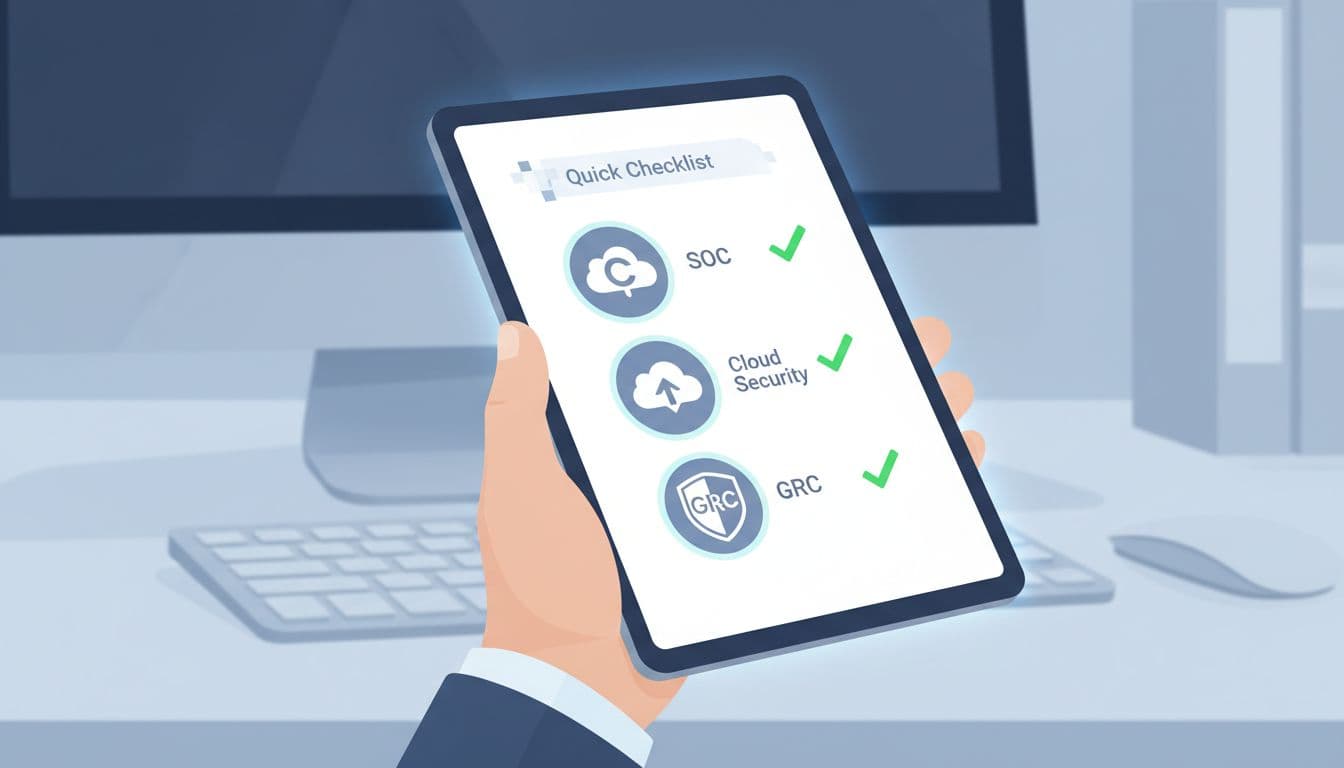
Quick checklist
- One clear role: The title matches the actual work.
- Three to five core outcomes: Each duty connects to a business need.
- Must-haves only: Nice-to-haves sit in a short, separate section.
- Real environment: Name the cloud platform, tools, team setup, and on-call expectations.
- Transparent conditions: Include pay range, location, clearance, and travel if needed.
- Simple hiring process: State interview stages, practical exercise, and likely timeline.
Sample cybersecurity job description framework
Use this structure and adapt it by role.
Title and team: Name the exact role, level, team, and reporting line. For example, “Cloud Security Engineer, reporting to the Head of Security Engineering.”
Role purpose: Give one sentence on why the job exists. Example, “Own cloud security controls across AWS and Azure and reduce exposure from misconfigurations.”
First-year outcomes: Add two or three measurable goals. Think “cut noisy alerts,” “improve audit readiness,” or “build secure CI/CD checks for high-risk apps.”
Core responsibilities: List three to five tasks that match the real week. Keep them role-based. SOC, cloud, GRC, AppSec, and incident response each need different verbs.
Must-have skills: Focus on proven ability, not pedigree. Ask for the tools, platforms, and working style the job needs right away.
Nice-to-have skills: Keep this short. Optional should mean optional.
Work conditions and support: State pay, remote setup, pager or shift work, travel, and whether the team has coverage, budget, and executive backing.
Hiring process: Tell candidates what happens next. That removes friction and builds trust.
A clean framework like this works because it respects the market. It tells strong candidates, “We know what this job is, and we know how to assess it.”
Better cybersecurity job descriptions don’t need more hype. They need sharper scope, fewer fake must-haves, and language that shows people where they fit.
Think of your next posting like a detection rule. If it filters noise and surfaces the right signal fast, your hiring process gets better before the first interview even starts.