table of contents
A queue full of critical findings doesn’t tell you what to fix first. It only shows that your tools found a lot of problems.
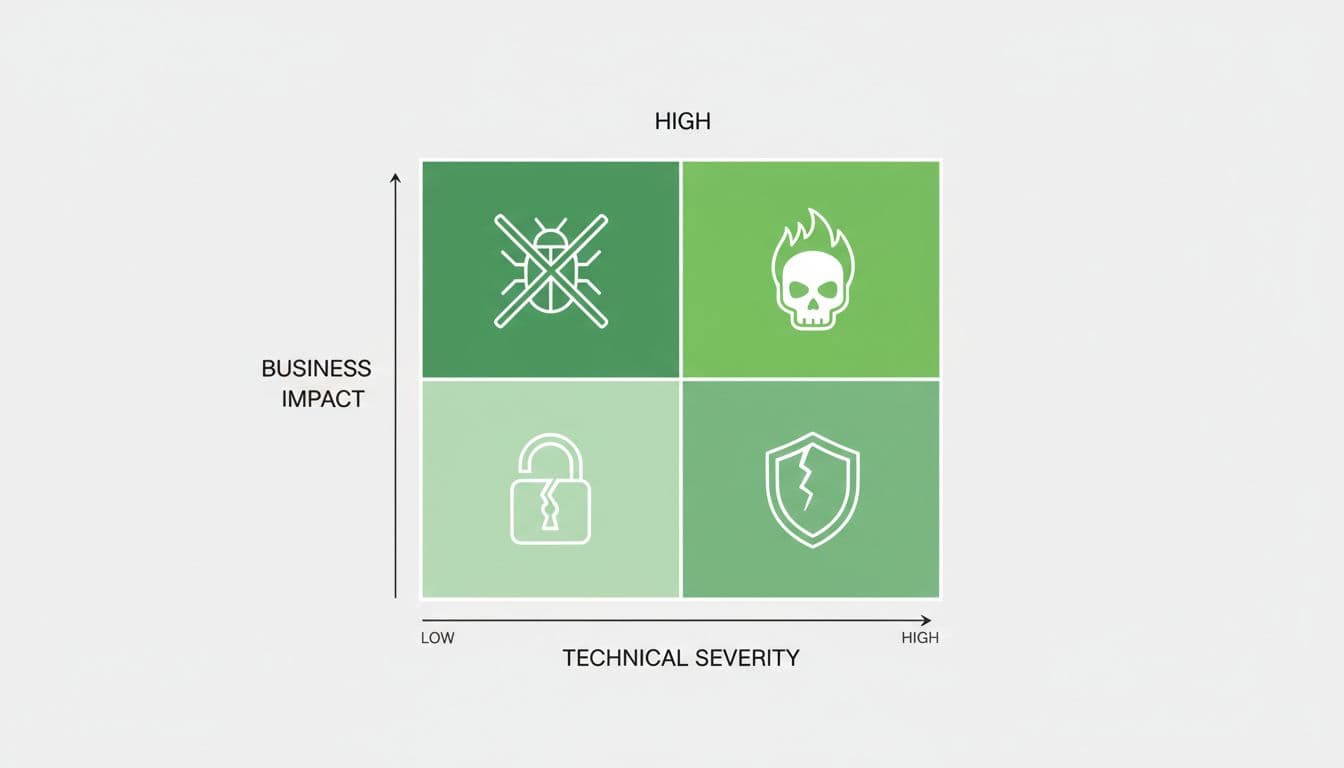
Security leaders need a better filter. Exposure prioritization works when you connect technical findings to revenue, uptime, data sensitivity, and the systems the business can’t afford to lose. Think like an ER, not a checklist, then the fix order gets much clearer.
CVSS tells you heat, not harm
CVSS still matters. It gives teams a common severity scale. However, it doesn’t know whether an asset is internet-facing, tied to payroll, or wrapped in strong controls.
That’s why not all critical CVSS findings are equally important to the business. A 9.8 on an isolated test server rarely outranks a 7.5 on a public identity gateway that supports customer logins. The raw score may look worse on paper, but the business impact is often much higher on the lower-scored finding.
Modern advice on vulnerability prioritization best practices and broader exposure management points to the same truth: context decides real risk. Reachability, privilege, exposed credentials, data sensitivity, and attack path matter as much as severity, sometimes more.
CVSS is a temperature reading. It helps you spot a problem, but it doesn’t tell you which patient needs the bed first.
When teams skip business context, they often patch the loudest items instead of the most dangerous ones. As a result, low-value systems get attention while a smaller flaw in a core service sits open. Dashboards may look busy, yet business risk barely moves.
So the goal is simple. Treat severity as one input, then add exposure context and business consequence before you set priority.
Build a scoring model that reflects business impact
A practical model doesn’t need to be fancy. Keep it simple, use a 1 to 5 scale, and apply it the same way across infrastructure, cloud, and apps.
This kind of scorecard works well in most teams:
| Factor | What to score | Weight |
|---|---|---|
| Technical severity | How damaging the flaw is | x2 |
| Exploitability | Ease of abuse, exploit code, active attacks | x2 |
| Exposure | Internet-facing, lateral path, reachable by users | x3 |
| Asset criticality | Importance to revenue, operations, identity, or safety | x3 |
| Business consequence | Outage, data loss, fraud, legal, or customer harm | x4 |
That weighting keeps the model honest. Severity matters, but business consequence matters more. For a more formal decision method, many teams borrow ideas from CISA’s SSVC guide, then tune the criteria to fit their environment.
Here’s a simple comparison. An internal training server with CVSS 9.8 might score low on exposure, criticality, and consequence. Meanwhile, a customer SSO service with CVSS 8.1 may score high across all three. Even with a lower base score, the SSO issue should move to the front of the queue.
The key is ownership. Security can score technical factors, but business owners should help score criticality and consequence. Without that input, teams often guess, and guesses create noise.
Turn scores into a fix queue your teams can run
A scoring model only helps if it changes action. So once you score findings, map them to response bands with clear deadlines and owners.
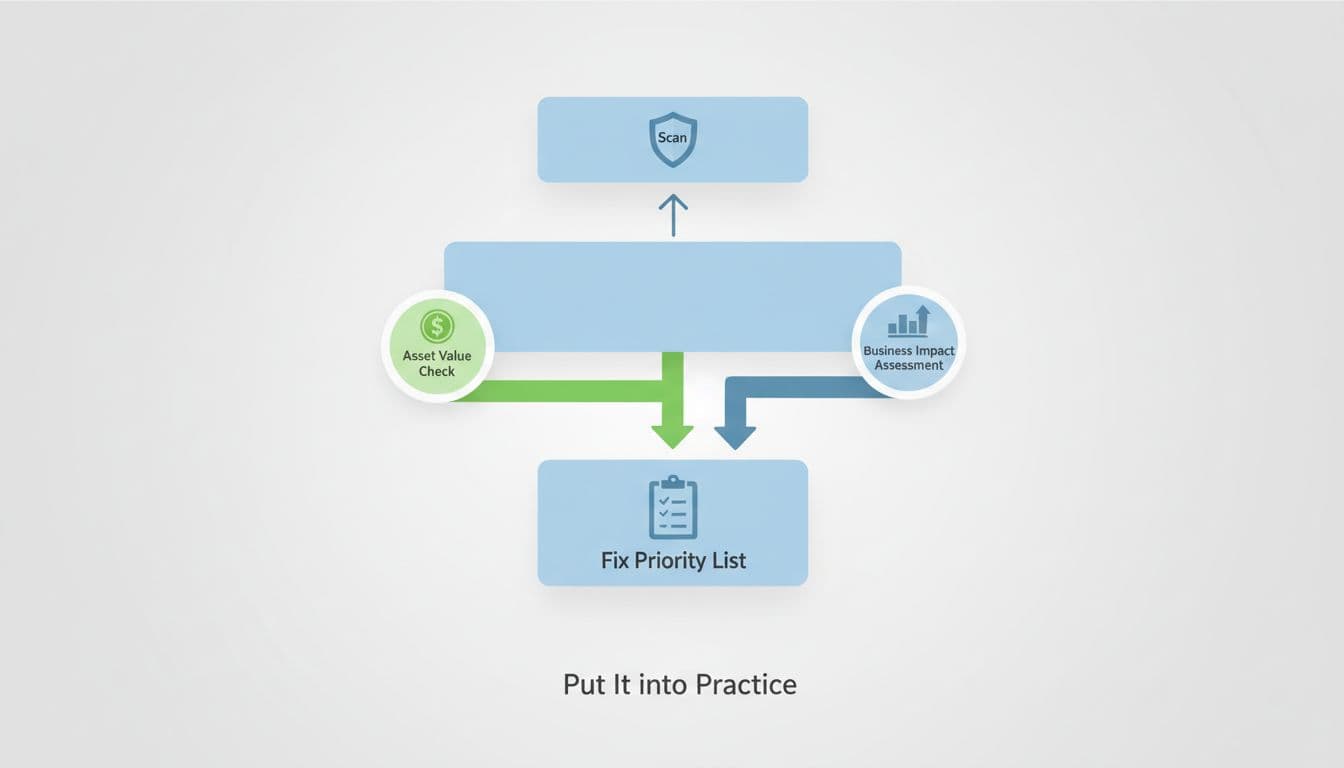
A simple operating model often looks like this:
- P1: High score, active exploitation, or direct path to crown-jewel assets. Fix within 72 hours, track daily.
- P2: Meaningful risk, but no immediate breach path. Fix in the current sprint or next approved window.
- P3: Lower consequence or well-contained exposure. Defer, bundle with planned change, or accept with review.
That structure helps security, IT, and application teams speak the same language. It also makes executive reporting better. Instead of saying, “We closed 400 criticals,” you can say, “We reduced high-impact exposure on customer identity, finance, and production cloud assets.”
Each remediation ticket should explain four things in plain English: what is exposed, why it matters, which business service it affects, and what happens if an attacker abuses it. Guidance like prioritizing vulnerabilities by business risk is useful here because it pushes teams to tie technical work to likely business loss.
Review the top exposures every week with service owners. Then tune the model every month. If incidents, pen tests, or threat intel show your weights are off, adjust them. A model that never changes will drift away from reality.
When everything is critical, nothing is. The whole point of exposure prioritization is to send time, people, and budget to the places where failure hurts most.
Start small. Score the top 20 open findings for one business service this week, then compare the new order with your current patch queue. The best program isn’t the one that closes the most tickets, it’s the one that cuts the most business risk.