table of contents
Bad tech hiring often starts with a simple mistake: teams test what is easy to ask, not what the job needs. If your interview loop feels like a mix of resume screens, trivia, and whiteboard puzzles, you’re not alone.
The best technical hiring resources give everyone the same map. They turn gut feel into evidence, help non-technical interviewers ask better questions, and make final decisions easier to defend. Start with structure, then choose tools that match the role.
Why technical applicant reviews break down
Many teams still run interviews backward. They start with a favorite test, then try to fit every candidate into it.
That creates noise. One interviewer rewards speed, another rewards polish, and a third looks for culture fit. Meanwhile, nobody agrees on what “good” means for the role.
In March 2026, the clearest hiring trend is skills-first evaluation. Teams want proof of work, not pedigree alone. Portfolios, job-like tasks, and structured rubrics now carry more weight than degrees or brainteasers.
If a test looks nothing like the job, it won’t predict the job.
Whiteboard coding is the clearest example. It can show raw problem solving, but it often punishes nerves, favors people who practice puzzles, and misses how engineers work with docs, tests, and teammates. The same problem shows up in data, DevOps, and QA hiring when interviews focus on memorized terms instead of decisions made under real constraints.
Good evaluation starts with a short role brief: what the person will do in 90 days, which skills are must-have, and what proof would count as strong evidence.
Build a practical evaluation stack
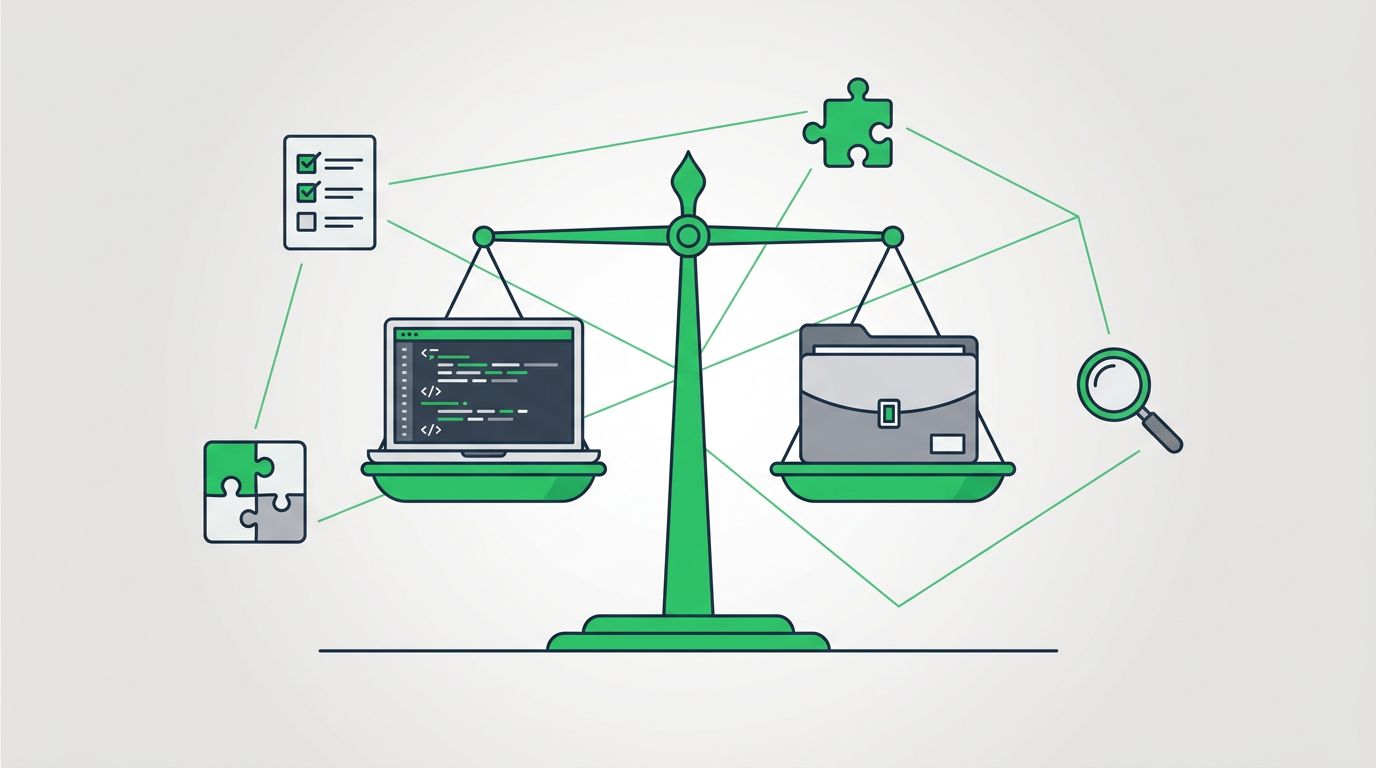
A strong process doesn’t need ten tools. It needs a few repeatable ones that each answer one hiring question.

A lean stack usually includes:
- Interview question banks: Use role-based questions by skill, not random trivia. For example, keep separate prompts for debugging, system thinking, communication, and security awareness.
- Work-sample assessments: Ask candidates to do a small piece of the job. That could be a code review, SQL exercise, pipeline fix, or test case design task.
- Portfolio review criteria: Score GitHub repos, dashboards, automation scripts, or test suites against the same standards each time.
- Structured scorecards: Give every interviewer the same rubric, scale, and written evidence fields. A simple starting point is this interview scorecard checklist.
- Competency matrices: Map each interview stage to a skill. If collaboration is tested in one round, don’t test it vaguely in four others.
Keep the rubric short enough that interviewers will use it. Five to seven scored criteria are plenty for most roles.
A four-point scale works well because it removes the easy middle. Ask interviewers to score evidence, then write a short note before the debrief.
Match the resources to the role
Using the same test for every technical hire is like using the same wrench for every bolt. It feels efficient, but it slips when the job changes.
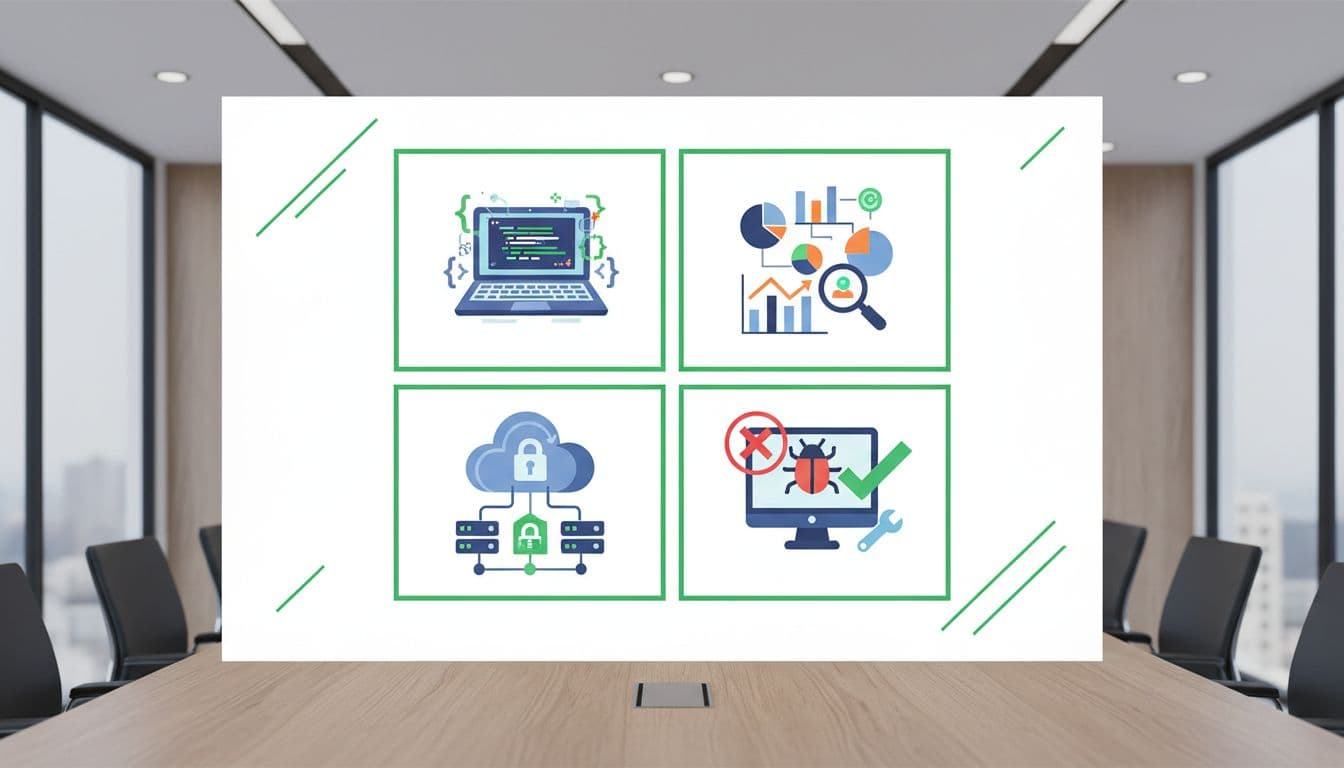
This quick matrix shows which resource types fit best.
| Role | Best assessment mix | Strong evidence |
|---|---|---|
| Software engineer | Code review, pair session, take-home task | Clear logic, tests, trade-off thinking |
| Data analyst | SQL task, dataset case, dashboard review | Accurate queries, business framing, clean charts |
| DevOps engineer | Incident scenario, pipeline task, IaC sample | Automation habits, reliability thinking, security basics |
| QA candidate | Bug hunt, test strategy exercise, automation sample | Repro steps, risk focus, coverage judgment |
For software engineers, a good question bank should cover debugging, architecture choices, and collaboration. This set of software engineering interview questions can help teams build a balanced screen.
For data analysts, use a small dataset and ask for a recommendation, not only a query. These data analyst interview questions and answers are useful when you need prompts across SQL, stats, and business sense.
For DevOps, test how candidates think about failure, rollback, and change control. A role-based bank of DevOps interview questions can keep panels focused on real operating work.
QA hiring needs the same discipline. Ask candidates how they’d isolate a bug, write a test plan, and decide what not to test first. That tells you more than asking them to define terms from memory.
Coding assessments that reflect the real job
The best assessments feel like a small slice of work, not a stage performance. That matters even more now, because remote and hybrid hiring has widened the talent pool and candidate expectations have changed.
At the top of the funnel, blind resume review can also reduce school-name and employer-name bias.

If you use coding platforms, pick ones that support job-like tasks, time limits that respect working adults, and accessible formats. A current roundup of skills-based hiring platforms can help when you’re comparing options.
Keep these rules in place:
- Use the same rubric for every candidate: Score outcomes, reasoning, and communication, not style points.
- Offer accessible formats: Give clear instructions, allow assistive tech, and provide alternatives for whiteboard or live-only tasks.
- Don’t punish normal tools: If the job uses docs, IDEs, or AI copilots, a controlled exercise should allow them. Score how the candidate checks output.
- Debrief from notes first: Discuss written evidence before anyone says, “I liked them.”
Also, pay candidates for long take-home projects, or keep the task short enough to finish in under an hour. Respect is part of assessment quality.
The resources matter less than the discipline
Most hiring problems aren’t caused by a missing platform. They come from loose criteria, uneven interviewers, and tests that don’t match the work.
The fix is plain: choose a few technical hiring resources that give you consistent evidence, then train the team to use them the same way. One scorecard, one work sample, and one role-based question set will beat a messy six-stage process.
Audit your current loop this week. If every stage can’t point to a skill and a fair way to measure it, it’s time to rebuild it.