table of contents
A role opens, pressure builds, and the search starts outside the company. Sound familiar? For many teams, that habit feels normal, but it’s often the reason hiring stays slow, costly, and stressful.
When you lack an internal candidate pipeline, every vacancy becomes a fresh scramble. Good people leave because they can’t see a path forward, while recruiters spend time chasing talent they may already have. That’s where the real fix begins.
Why external-only hiring gets expensive fast
Relying on outside hiring for every role is like refilling a bucket with a hole in it. You keep pouring in time and money, yet the gap never closes. Sourcing fees, job ads, interview time, onboarding, and slower ramp-up all add up.
There’s also a hidden cost. When employees see outsiders win role after role, they stop raising their hands. Some disengage. Others leave. As PeopleScout’s shadow pipeline view points out, many companies overlook talent already inside the business.

A simple comparison makes the gap clear:
| Hiring approach | What usually happens | Business impact |
|---|---|---|
| External-first | New search every time | Higher spend and longer time-to-fill |
| Internal pipeline | Known talent mapped in advance | Faster movement into open roles |
| External-only promotions | Employees guess at career paths | Lower trust and weaker retention |
| Internal mobility plus external hiring | Roles filled by best-fit source | Better balance and less hiring risk |
The takeaway is simple. An internal pipeline doesn’t replace outside hiring. It stops external hiring from becoming your only move.
That matters even more in hard-to-fill areas. In cybersecurity, for example, waiting for a perfect external cloud security engineer or IAM lead can stall projects for months. Yet a strong internal mobility plan may reveal someone with adjacent skills who can step up faster. A solid internal candidate strategy helps teams spot that option before the search becomes urgent.
What an internal candidate pipeline changes
A strong pipeline changes hiring from reactive to planned. Instead of asking, “Who can we find?” you start asking, “Who is already close?” That shift improves three things fast: retention, time-to-fill, and workforce agility.
First, it helps retention because employees can see movement ahead. People stay longer when growth feels real, not vague. A posted role is helpful, but a visible path is better. Skill maps, career talks, and manager support turn interest into action.
Second, it shortens time-to-fill. Internal candidates know the systems, the culture, and the work. They still need support, of course, but their ramp time is often shorter. That matters when a team loses a manager, engineer, or security lead during a busy quarter.
If employees can’t see how to grow inside your company, they’ll look outside it.
Third, it gives the business more room to move. A healthy internal candidate pipeline lets leaders respond faster to change. If a new product launches, regulations shift, or a merger creates new needs, you already know who has transferable skills. That makes workforce planning less fragile.
Think about a security team that needs an AppSec lead. An external search might take weeks. Meanwhile, a senior software engineer with secure coding experience could be six months away from readiness. With mentoring, training, and a clear target role, that person becomes part of the pipeline now, not later. Resources on the benefits of internal talent pipelines show how this kind of mobility improves both business outcomes and employee growth.
How to build an internal candidate pipeline step by step
Building an internal candidate pipeline doesn’t need a huge system rollout. It starts with a simple operating rhythm. HR, TA, and business leaders need one shared view of roles, skills, and readiness.
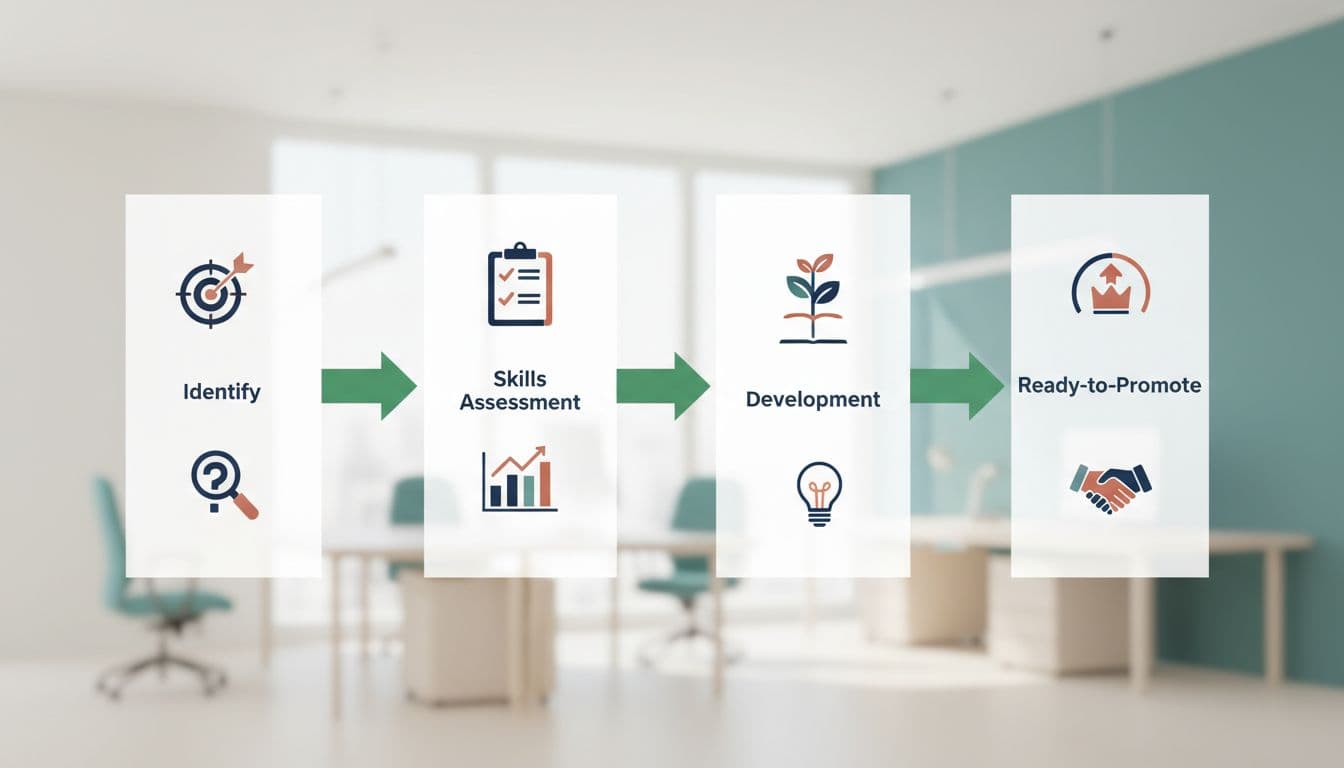
Use this four-step framework:
- Pick the roles that hurt most: Start with positions that stay open too long, create delivery risk, or are hard to hire for. In many firms, that means team leads, niche technical roles, and people managers.
- Map adjacent skills: Don’t search only for exact matches. Look for employees who have 60 to 80 percent of the role already. A SOC analyst may grow into threat hunting. A systems engineer may move toward cloud security.
- Create short development paths: Tie each target role to a few concrete actions, such as stretch work, mentoring, certifications, or shadowing. Keep plans practical. Most people need direction more than a giant learning library.
- Make mobility visible and fair: Post roles internally, talk about them early, and train managers not to hoard talent. Then track who applies, who moves, and where people get stuck.
This only works if managers take part. HR can design the process, but leaders must spot potential and support movement. TA also needs a seat at the table, because recruiters often know where external searches keep failing.
A monthly talent review helps. Keep it short. Review open roles, likely openings, ready-now talent, and ready-soon talent. Then decide what support each person needs. If you want a broader planning model, this six-step talent pipeline strategy offers a useful frame for turning talent data into action.
The best part is that progress shows up quickly. Even one successful internal move can cut hiring time, raise morale, and show managers the model works.
An empty pipeline doesn’t stay empty by accident. It reflects what the company rewards, tracks, and talks about. If every answer starts with external hiring, internal mobility never gets a real chance.
Build the internal candidate pipeline before the next urgent vacancy lands on your desk. The teams that do this well don’t wait for talent to appear, they grow it on purpose.