table of contents
Your SaaS product faces constant threats. Customers expect ironclad security, especially with AI features and cloud scaling. A product security engineer embeds protection right into development.
Hiring one can prevent breaches that cost millions. These experts shift security left, so issues never reach production. They collaborate with engineers daily.
This guide walks you through the process. You’ll learn skills to seek, interview tactics, and stage-specific tips for your team.
Define What a Product Security Engineer Does in SaaS
Product security engineers own security for your core product. They work inside engineering teams, not as outsiders. Developers trust them because they code alongside.
In SaaS, they secure APIs, user data flows, and cloud setups. They review code for flaws, model threats early, and automate checks in CI/CD pipelines. For example, they ensure secrets like API keys stay hidden.
Expect them to handle vulnerability scans too. They triage findings from tools like Snyk or Trivy. Then they guide fixes without slowing releases.
Their scope grew in 2026. AI-assisted code gen needs defenses against prompt injections. Cloud-native apps demand identity controls like zero-trust.
Check detailed responsibilities at Wiz’s product security engineer overview. It matches SaaS needs perfectly.
Startups hire for speed; enterprises for compliance depth. Either way, they reduce breach risks by 40% through early integration.
Key Skills Every Product Security Engineer Needs
Look for hands-on coders with security chops. They must thrive in fast SaaS cycles. Prioritize secure SDLC experience first.
They build pipelines that scan code on every commit. AI tools now flag risks in generated code automatically. Cloud-native CI/CD knowledge is table stakes; think Kubernetes secrets and IAM roles.
Threat modeling stands out. Good candidates map attacks on features like user auth. They use STRIDE or PASTA methods tailored to your stack.
Vulnerability management follows. They prioritize CVEs based on exploitability, not just score. Identity and secrets management rounds it out; tools like HashiCorp Vault or AWS Secrets Manager.
A strong hire collaborates across teams. They teach devs secure patterns without gatekeeping.
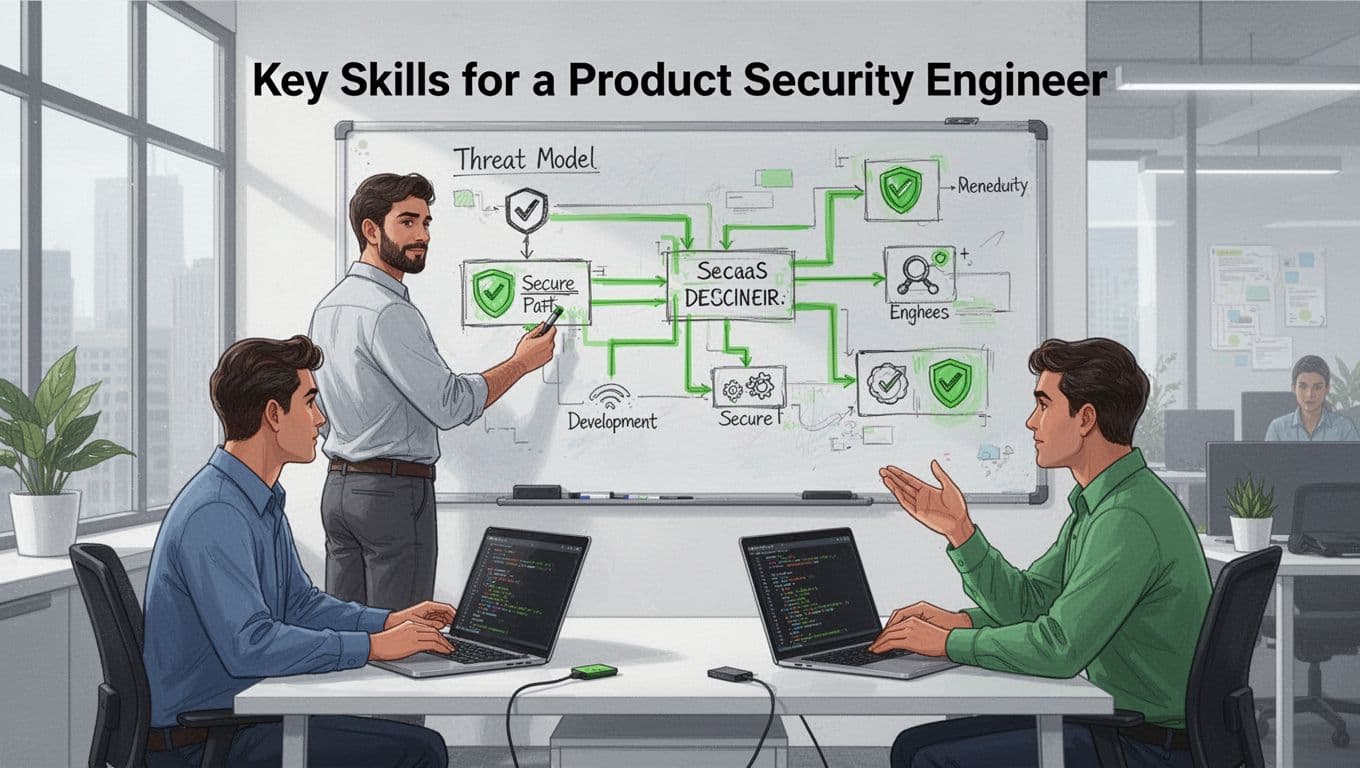
This image shows that teamwork in action. Notice the threat model focus.
From 2026 trends, salaries hit $175K-$300K base for mid-level. Equity boosts total comp in startups. See CyberSN’s role breakdown for more.
Test these skills early. Ask about past wins, like blocking a supply chain attack.
Match the Hire to Your SaaS Growth Stage
Needs shift as your company scales. Tailor your search accordingly.
Seed teams want versatile players. They handle basic CI/CD secures and secrets rotation. One person covers threat modeling for MVP features. Budget around $160K-$220K total comp.
Growth-stage SaaS adds volume. Hire for scaled vuln management and cloud identity. They automate scans across repos. Pay rises to $200K-$280K because attacks spike here.
Enterprises demand compliance pros. They integrate with platform and legal teams. Full secure SDLC includes AI defenses and continuous monitoring. Comp tops $250K-$400K+.
| Stage | Core Focus | Salary Range (2026 Total Comp) |
|---|---|---|
| Startup | Quick secures, secrets | $160K-$220K |
| Growth | Scaled CI/CD, vulns | $200K-$280K |
| Enterprise | Compliance, AI/cloud depth | $250K-$400K+ |
This table pulls from recent benchmarks. Growth arrows show progression.
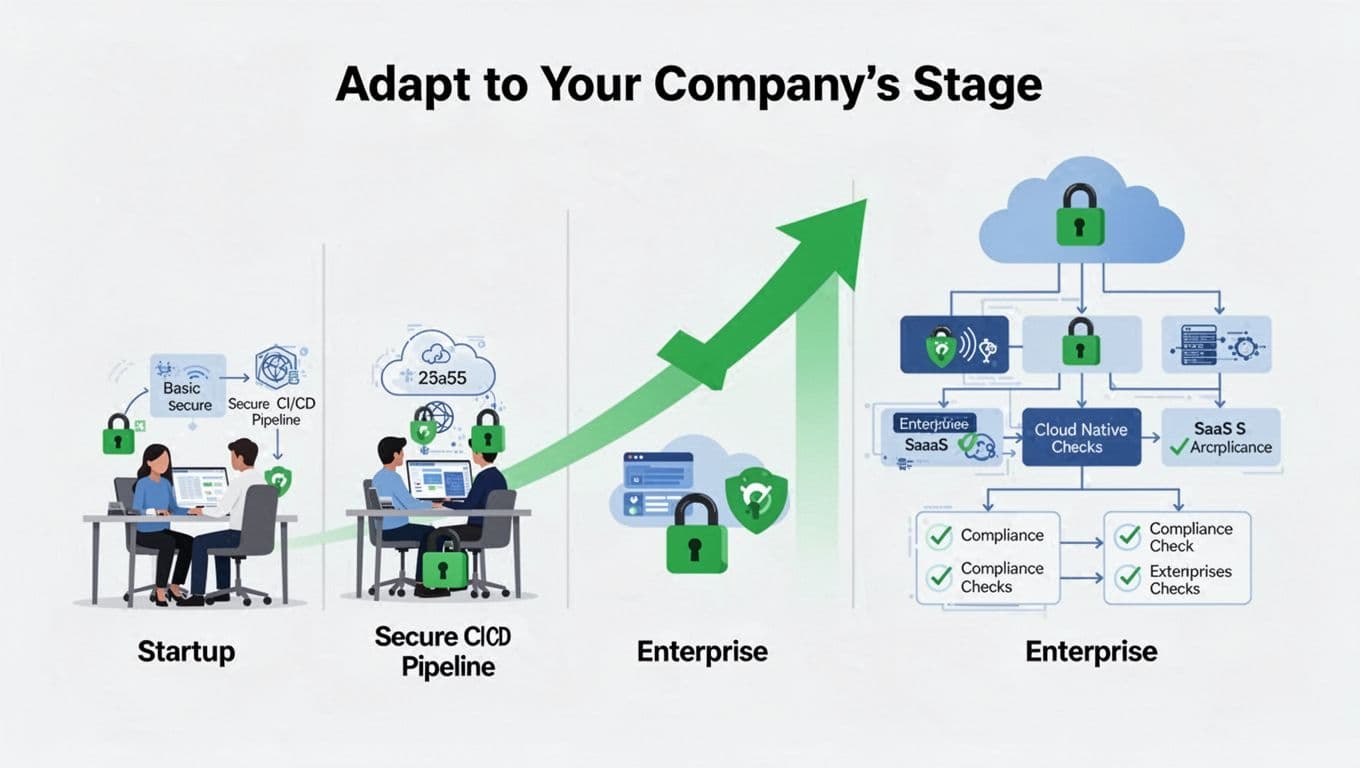
Adapt postings to your phase. Startups stress speed; enterprises list SOC 2 must-haves.
Craft a Targeted Interview Process
Structure interviews to reveal fit. Start with a 30-minute screen on basics.
Send a take-home: Fix vulns in sample SaaS code. Limit to 4 hours. Look for clean patches and explanations.
Live rounds test collaboration. Pair with an engineer for code review. Then threat model a feature together.
End with cross-team chats. Platform folks gauge cloud alignment; compliance checks regs knowledge.
Use a scorecard. Rate on scale of 1-5 for skills like SDLC integration.
| Criterion | Strong Answer Example | Score Weight |
|---|---|---|
| Threat Modeling | “I map data flows, flag auth gaps using OWASP.” | 25% |
| CI/CD Security | “Added SAST in GitHub Actions; caught 80% issues pre-merge.” | 20% |
| Collaboration | “Paired daily with devs; reduced findings 50%.” | 20% |
Score post-interview. Top candidates hit 4+ averages.
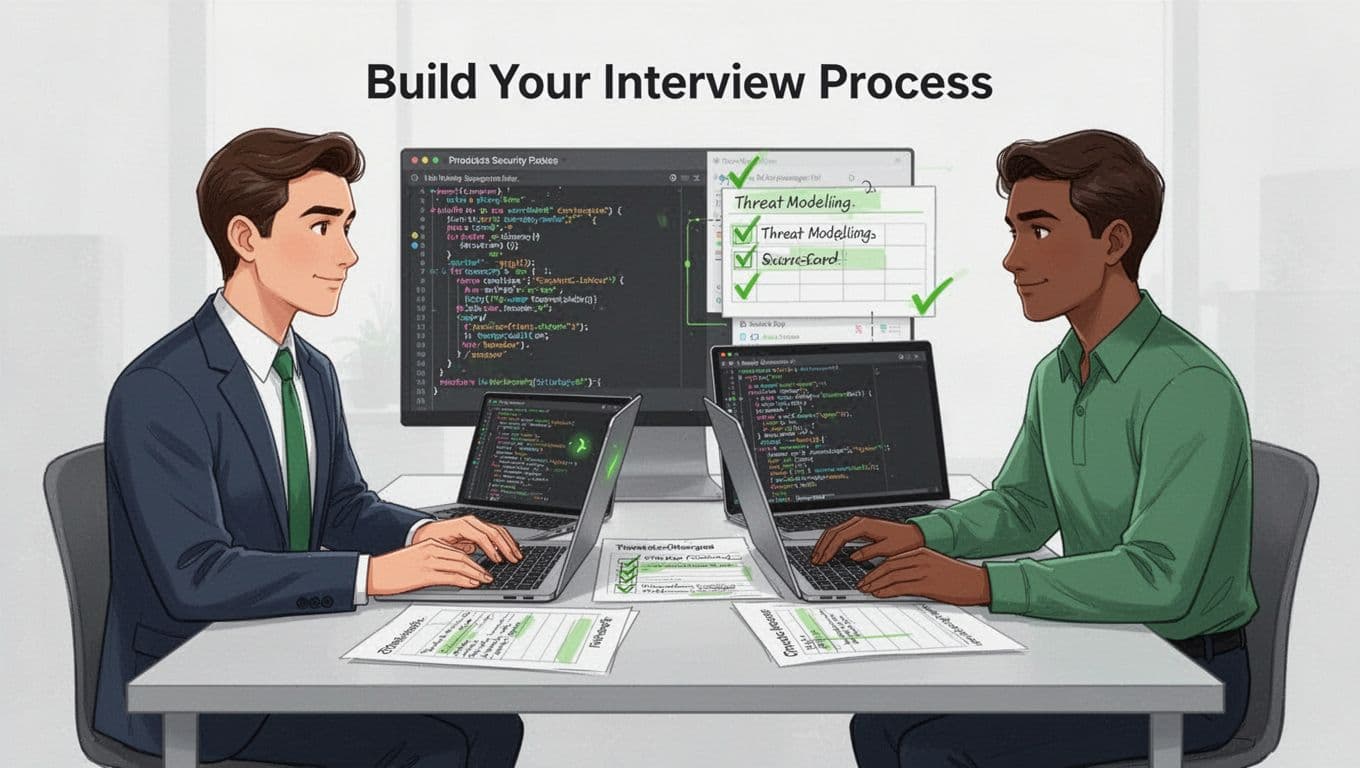
This setup weeds out talkers. For questions, try Exponent’s security prep guide.
Spot Top Candidates and Avoid Pitfalls
Probe real experience. Ask: “Walk me through securing an AI feature end-to-end.” Strong replies detail input validation and model protections.
Test vuln prioritization: “CVSS 9 in dev lib vs. low in prod path?” They pick prod impact first.
Watch for red flags. Pure auditors lack code skills. Silo thinkers ignore team input.
Reference deep. Past managers confirm collab wins.
In 2026, skills beat tenure. Versatile hires with AI/cloud proof shine.
Check salary data at Founderpath’s SaaS benchmarks before offers.
Secure Your SaaS Future Today
Pick a product security engineer who codes, models threats, and teams up. Match to your stage for best results.
Start screening now. Your next hire blocks breaches before they hit.
Reach out to specialists like Bud Consulting for vetted talent. What’s your biggest security gap?