table of contents
Hiring top cybersecurity talent feels like a constant battle. You post a job for a cloud security engineer, but resumes flood in from mismatched candidates. Candidate expectations set the tone from day one. They help you filter noise and attract fits.
Most teams skip this step. As a result, interviews drag on with poor matches. You waste time and frustrate everyone. This guide shows you how to build clear baselines. You’ll hire faster and build stronger teams.
Why Baseline Candidate Expectations Drive Smarter Hiring
Baseline candidate expectations act as your hiring filter. They outline minimum skills, experience, and traits for success. Without them, you chase unicorns or settle for less.
Think of it like a recipe. Skip ingredients, and the dish fails. In cybersecurity, roles demand specific tools like IAM or DevSecOps knowledge. Baselines ensure candidates meet those basics.
Teams benefit too. Recruiters align on standards. Hiring managers avoid bias. For example, a junior SOC analyst needs monitoring basics. A senior architect requires blueprint design.
Consistency matters in 2026’s tight market. Data from Hire Success on employee benchmarking shows baselines cut bad hires by 30%. You predict performance better.
Start simple. Gather input from top performers. List must-haves versus nice-to-haves. This keeps decisions fair and fast.
Fairness boosts candidate experience. Applicants know the bar upfront. They self-select out if unfit. So, your pipeline fills with qualified leads.
Core Elements of Baseline Expectations
Every baseline needs three pillars: skills, experience, and fit. Skills cover technical musts, like AWS security certifications. Experience means years in relevant threats. Fit checks culture and soft skills.
Build yours step by step. First, audit past hires. What made stars shine? A cloud engineer thrived with Terraform scripts and incident response.
Next, quantify. Use levels like “3+ years in AppSec.” Avoid vague terms. This clarity speeds screening.
Culture fit rounds it out. Does the candidate adapt to hybrid teams? Cybersecurity demands collaboration amid breaches.
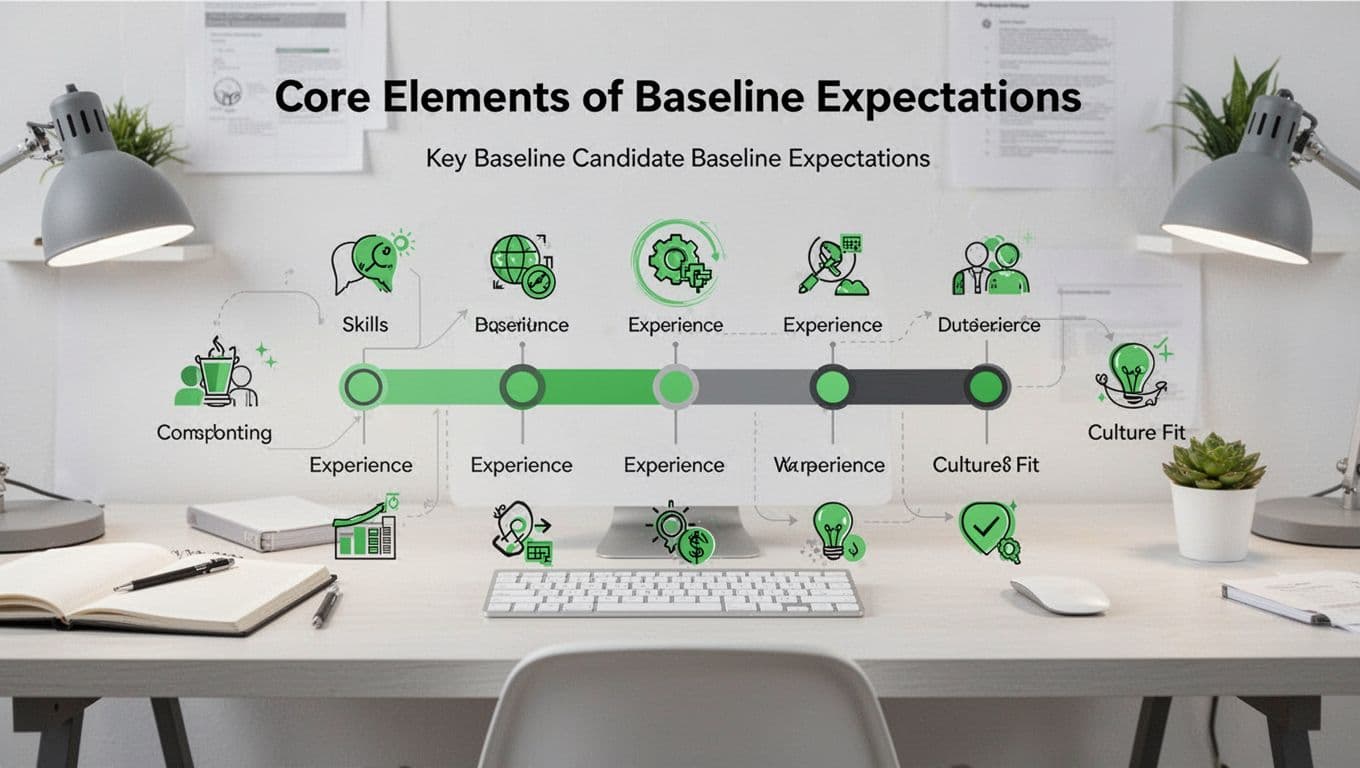
Visualize these components together. They form a checklist for every role.
Test baselines in practice. Track hire success rates. Adjust as threats evolve, like AI-driven attacks.
In short, strong baselines save weeks. You focus on top talent, not tire-kickers.
Communicate Expectations Clearly from the Start
Job posts set first impressions. Bury requirements in jargon, and good candidates ghost you. Spell out baselines upfront.
Use bullet points for skills. Add experience ranges. For a PAM specialist, note “5+ years in privileged access, Okta expertise.”
Personalize outreach. Reference their LinkedIn in emails. “Your Zero Trust work matches our needs.” This builds trust.
During calls, reinforce. Ask, “How does your IAM background align?” Listen actively. Candidates feel heard.

Clear talks like this prevent surprises. Both sides align early.
Follow up fast. Share scorecards post-interview. Recruiterflow’s tips on candidate expectations highlight transparency’s role in retention.
As a result, offers convert higher. Candidates commit because they know the fit.
Tailor Expectations by Role and Seniority
One size never fits all. Junior roles stress learning. Seniors deliver strategy.
For juniors, like offensive security analysts, expect certifications and projects. “CompTIA Security+ plus GitHub red-team sims.” Hands-on beats years.
Mid-level architects need proven impact. “Led 2+ cloud migrations, reduced vulnerabilities 40%.” Metrics prove value.
Senior leaders, CISOs, focus on vision. “10+ years, built teams from scratch, C-suite advisory.” They align security with business.
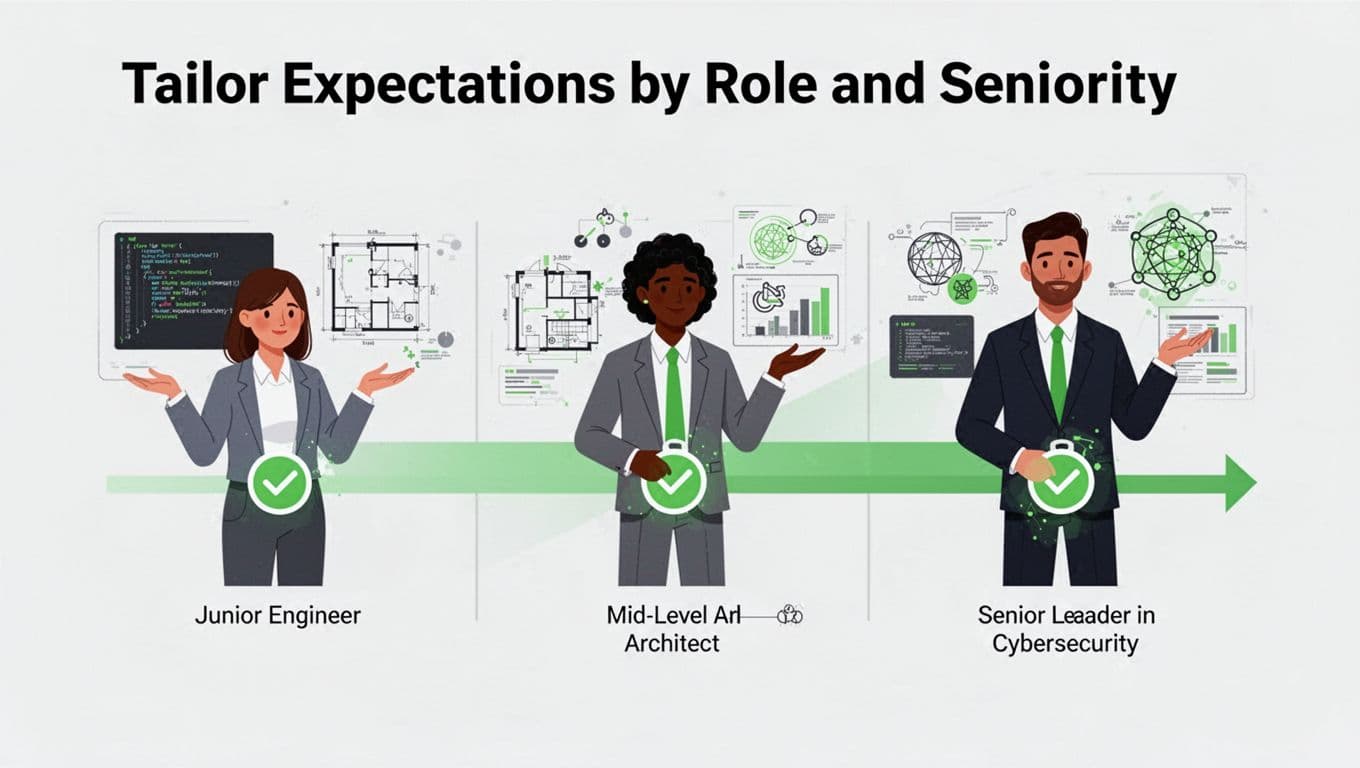
See the progression? Expectations scale with impact.
Cybersecurity trends shift this. Abnormal AI’s CISO insights note passion over certs for entry. Adjust for 2026 demands like AI threats.
Document per level. Share across teams. This ensures fairness.
Measure Success and Refine Your Baselines
Baselines aren’t set forever. Track them quarterly. Measure time-to-hire, retention at 90 days.
Use simple metrics. Quality of hire: promotion rates, output scores. If baselines miss, tweak.
Survey new hires. “Did expectations match reality?” Feedback loops improve.
Compare against benchmarks. Everworker on candidate ranking offers tools for accuracy.
Refine often. New threats demand updates, like quantum-resistant crypto.
Photo by Tima Miroshnichenko

Interviews reveal if baselines hold.
Avoid These Common Baseline Mistakes
Vague descriptions kill pipelines. “Team player” means nothing. Specify “collaborates on cross-team drills.”
Overloading must-haves chases away talent. Limit to 5-7 core items.
Ignoring diversity. Baselines must stay neutral. Focus on outcomes, not backgrounds.
Bias creeps in without checks. Review with HR. Standardize scoring.
Fix these, and your process strengthens.
Bud Consulting sees this daily. Clients with tight baselines fill CISO roles in weeks.
Baseline candidate expectations transform hiring. You attract cybersecurity pros who deliver. Start today: draft one for your next role. Share in comments: what’s your biggest baseline win?