table of contents
You’ve just onboarded a new team member. Excitement fades fast when performance lags. Recruitment mistakes like this hit hard. They drain budgets and morale. Most hiring managers know the fear all too well.
Bad hires cost more than salary. They disrupt operations and slow growth. You worry about repeating past errors. This guide shows real impacts and simple fixes. Let’s break down the costs first.
The Real Costs of Recruitment Mistakes
One wrong hire can cost 30% of first-year salary or more. Think bigger. Replacement searches add up quick. Training time vanishes too.
Financial hits go beyond paychecks. Lost productivity piles on. Teams pick up slack. Deadlines slip as a result.
A 2026 report on bad hire costs pegs averages at $240,000 for mid-level roles. Executives? Multiply that. Hidden fees include overtime and temp hires.
Operational drags hurt most. New staff miss targets. Projects stall. Customers notice delays.
Culture suffers next. Frustration spreads. Good performers leave. Turnover spikes because resentment builds.
Productivity drops sharp. One study shows teams lose 5-7 months output per bad hire. Morale tanks. Engagement scores fall.

These losses compound. Small firms feel it worst. Resources stay thin. Recovery takes longer.
You see the pattern. Early signs matter. Spot them to cut risks.
Spot Common Recruitment Mistakes Before They Happen
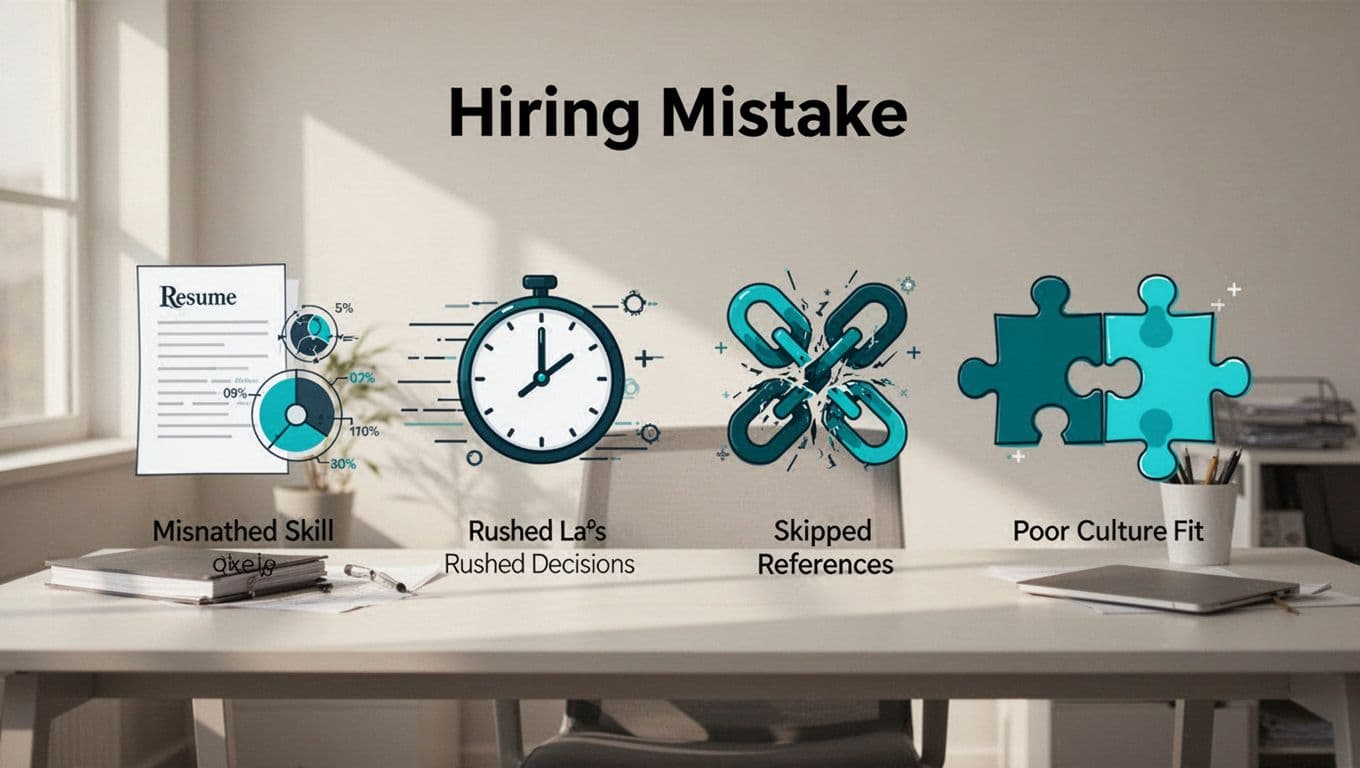
Rushed decisions top the list. Pressure to fill seats leads to skips. Gut feelings replace facts. Resumes dazzle but skills don’t match.
Mismatched skills fool many. Candidates shine on paper. Reality hits later. They struggle with daily tasks.
Ignoring culture fit creates rifts. Puzzle pieces don’t connect. Teams clash. Quiet conflicts brew.
Skipped references leave gaps. Past bosses reveal red flags. You miss them otherwise.
Poor job specs confuse everyone. Vague postings attract wrong fits. Expectations clash from day one.
A guide to common hiring errors notes these pitfalls repeat. Solo interviews bias results. No team input skews views.
Stakeholders misalign too. Departments pull different ways. New hire pleases one. Others resent.
Examples abound. Tech firm hires fast coder. Culture ignores collaboration. Project fails. Everyone pays.
Sales role goes to smooth talker. No closing skills show up. Quotas miss. Revenue dips.
Catch these early. Define needs clear. Test claims. Involve the group.
Next, build processes that stick.
Build a Bulletproof Hiring Process
Start with clear job requirements. List must-haves. Skills first. Behaviors second. Vague wants confuse.
Use structured interviews. Everyone asks same questions. Score answers uniform. Bias drops.
Criteria Corp’s structured interview guide outlines steps. Prep questions tied to roles. Rate on scales.
Skills assessments prove fit. Tasks mirror real work. Code tests for devs. Simulations for sales.
Reference checks dig deep. Ask behavior examples. Skills-aligned questions work best, per Harver’s retention tips.
Align stakeholders upfront. Meet before sourcing. Agree on criteria. Vote post-interview.

Train your team. Role-play interviews. Review past hires. Adjust as needed.
Track metrics. Time-to-hire. Retention rates. Feedback loops improve.
For tough roles like cybersecurity engineers, partners help. Book a Discovery Call with Bud Consulting to source vetted talent.
These steps cut mistakes. Confidence grows. Hires stick.
Bad hires drain resources and morale. You now know the toll. Common traps wait everywhere.
Shift to structured ways. Clear reqs. Tests. Checks. Team buy-in.
Act today. Refine your process. Watch costs drop. Teams thrive.
Your next hire sets the pace. Make it count. What’s one change you’ll try first?