table of contents
Struggling to spot risks before attackers do? Many teams run periodic scans, but threats evolve fast. Continuous Threat Exposure Management (CTEM) changes that with ongoing discovery and fixes.
You need tools that fit your setup, whether cloud-heavy or hybrid. This roundup covers leading curated options based on current data. It highlights strengths, limits, and picks for your needs.
Let’s break down what CTEM means first.
What Is Continuous Threat Exposure Management?
CTEM follows Gartner’s cycle: scope assets, discover exposures, prioritize risks, validate fixes, and mobilize teams. So, it beats one-off vulnerability checks.
Organizations using CTEM cut attack surfaces effectively. Yet, only 16% fully implement it, per recent reports. That gap leaves many exposed.

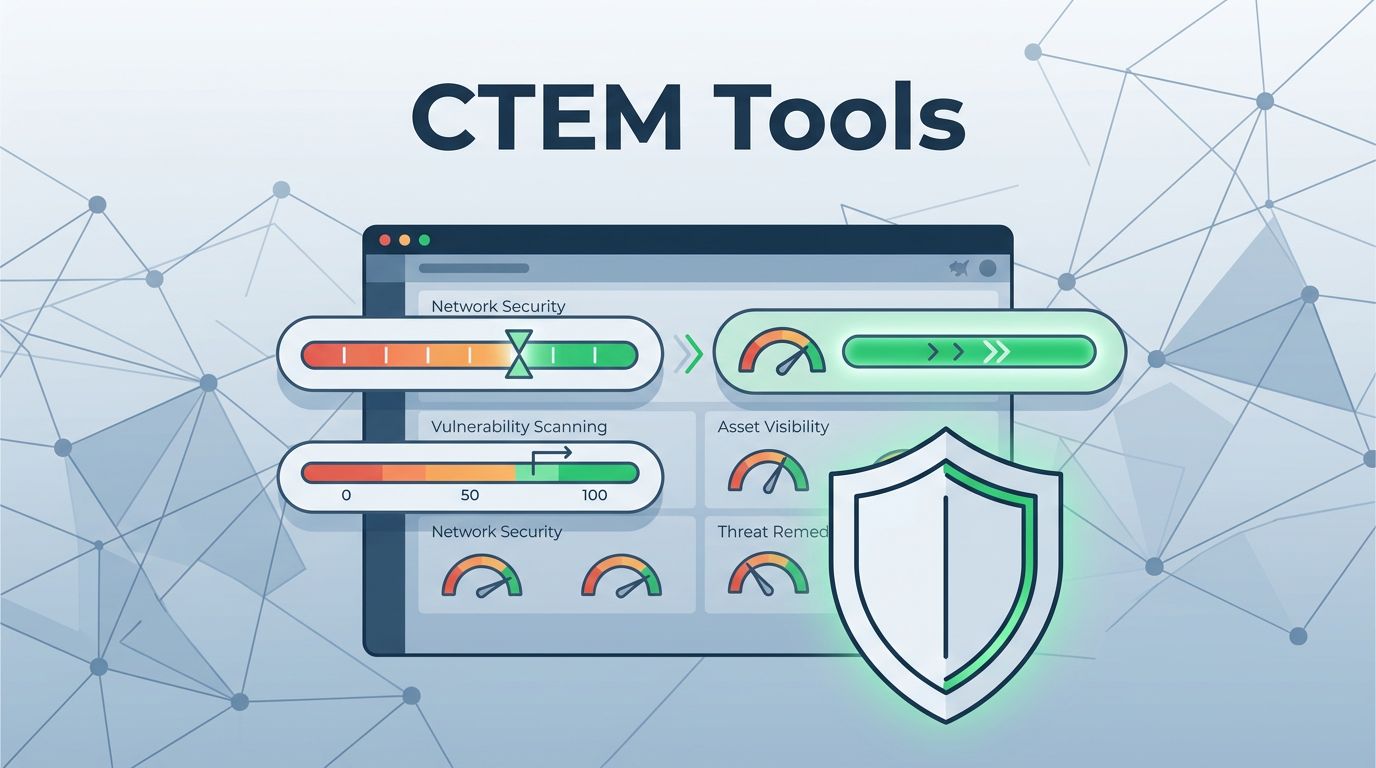
Picture a pro watching risks shift from red alerts to green safety in real time. Tools like these provide that visibility. For a full explanation of Gartner’s stages, check Vectra AI’s CTEM guide.
In short, CTEM tools scan continuously. They rank threats by exploit likelihood. Then, they suggest or automate responses.
Top Curated CTEM Options
These picks stand out in April 2026 reviews. Each excels in specific areas, like cloud or simulations. Prices start from $5,000 yearly for basics; enterprises pay more.

Dashboards like this make complex data simple. Here’s a quick view of key players:
| Tool | Best For | Key Strengths | Limitations | Approx. Starting Price (Yearly) |
|---|---|---|---|---|
| Tenable One | Full asset visibility | Unified views; strong cloud and identity tools; TruRisk scoring | Complex setup; no simulations | $5,000 |
| CrowdStrike Falcon | Real-time response | Fast intel; pairs with endpoint suite | Weak identity coverage | $10,000 |
| Wiz | Cloud environments | Misconfig detection; remediation tips | Cloud-only | $20,000 |
| Check Point | Legacy systems | Patchless fixes; broad coverage | Lacks simulations | $15,000 |
| Cymulate | Defense testing | Breach simulations | No patchless options | $25,000 |
Tenable One suits large teams needing end-to-end scans. It maps attack paths accurately. Users rate it 4.5/5 for precision, though learning takes time.
CrowdStrike shines if you use their ecosystem. It prioritizes risks quickly. Reviews hit 4.7/5 for speed. However, it skips deep identity checks.
Wiz dominates cloud security. Devs love its dashboards (4.8/5). It auto-flags AWS or Azure issues. Still, it ignores on-prem assets.
Check Point helps ops teams fix old apps without patches. Solid 4.4/5 feedback. Broad scope covers cloud too.
Cymulate tests if fixes work via simulations. That’s rare; most tools skip it. Scores 4.7/5 for validation.
Others like Vicarius offer patchless for unfixable software. Brinqa unifies multi-tool data. XM Cyber details breach paths deeply.
For more on emerging platforms, see IT Security Guru’s 2026 watchlist.
How These Options Compare
Cloud focus? Pick Wiz; it handles misconfigs best. Need simulations? Cymulate validates defenses like no other.
Full-stack teams prefer Tenable or CrowdStrike. They cover assets widely. Legacy-heavy shops lean Check Point or Vicarius for quick mitigations.
Pricing scales with size. Small biz starts low with Tenable. Enterprises budget $50,000-plus for advanced features.
User reviews favor integration and speed. CrowdStrike leads there. Wiz wins for ease.
Only 16% of teams run full CTEM. Start small to build momentum.
Match your gaps: hybrid? Brinqa integrates sources. Simulations matter? Add Cymulate later.
Quick Decision Guide
Assess your stack first. Cloud-dominant gets Wiz. Endpoint users choose CrowdStrike.
Test demos. Check CyCognito’s 2026 CTEM overview for framework tips.
Budget under $20,000? Tenable or Vicarius fit. Over that, layer simulations.
Bud Consulting helps pick and implement. Book a Discovery Call with Bud Consulting to close skills gaps too.
These curated options reduce exposures steadily. Pick one, scope your assets, and iterate. Your defenses strengthen as a result.
Which tool matches your setup? Test it soon. Threats wait for no one.