table of contents
You just landed a cybersecurity consulting gig. The client expects results fast, but scope creep or misaligned teams could derail everything. A solid cybersecurity project plan template keeps you on track.
This template covers essentials like scope, roles, timelines, and risks. It draws from standards such as NIST CSF and ISO 27001. You’ll adapt it for assessments, remediations, or compliance projects. Let’s build one step by step.
Define Scope, Objectives, and Assumptions
Start with clear boundaries. Clients often overlook this, so spell it out first.
Project scope lists what’s in and out. For example, include a gap analysis against CIS Controls but exclude full network redesigns. Use bullet points for clarity:
- In-scope: Vulnerability scans, policy reviews, NIST CSF mapping.
- Out-of-scope: Hardware procurement, ongoing monitoring.
Next, set objectives. Make them SMART: specific, measurable, achievable, relevant, time-bound. A sample: “Identify top 10 risks via assessment; deliver report in 4 weeks.”
List assumptions to avoid surprises. Common ones include client access to systems or staff availability. Document them early. If an assumption fails, revisit the plan.
This foundation prevents disputes. Teams align because everyone sees the same page.
Outline Deliverables and Acceptance Criteria
Deliverables give clients tangible value. Break them into phases.
Common ones for cybersecurity projects:
- Kickoff deck with scope and timeline.
- Assessment report with findings and priorities.
- Remediation roadmap aligned to SOC 2 controls.
- Final presentation and handover docs.
Pair each with acceptance criteria. This removes ambiguity. For the assessment report:
| Deliverable | Acceptance Criteria |
|---|---|
| Assessment Report | Covers NIST CSF functions; includes risk scores; client approves within 5 days. |
| Remediation Roadmap | Prioritizes top risks; assigns owners; feasible within budget. |
Use this table as a copy-paste starter. It ensures clients sign off before you move on. As a result, payments flow smoothly.
Short paragraphs like this keep your template scannable. Clients appreciate the structure.
Assigning Roles and Responsibilities
Confusion over who does what kills projects. A RACI matrix fixes that.
RACI means Responsible, Accountable, Consulted, Informed. It maps tasks to roles like consultant, client sponsor, IT lead.
Here’s a sample RACI matrix for a consulting engagement:
| Task | Consultant | Client Sponsor | IT Team | Security Team |
|---|---|---|---|---|
| Scope Definition | R/A | C | I | C |
| Vulnerability Scan | R | A | C | R |
| Report Delivery | R/A | C | I | I |
| Remediation Support | C | A | R | R |
Copy this into your tool of choice. Adjust rows for your project.
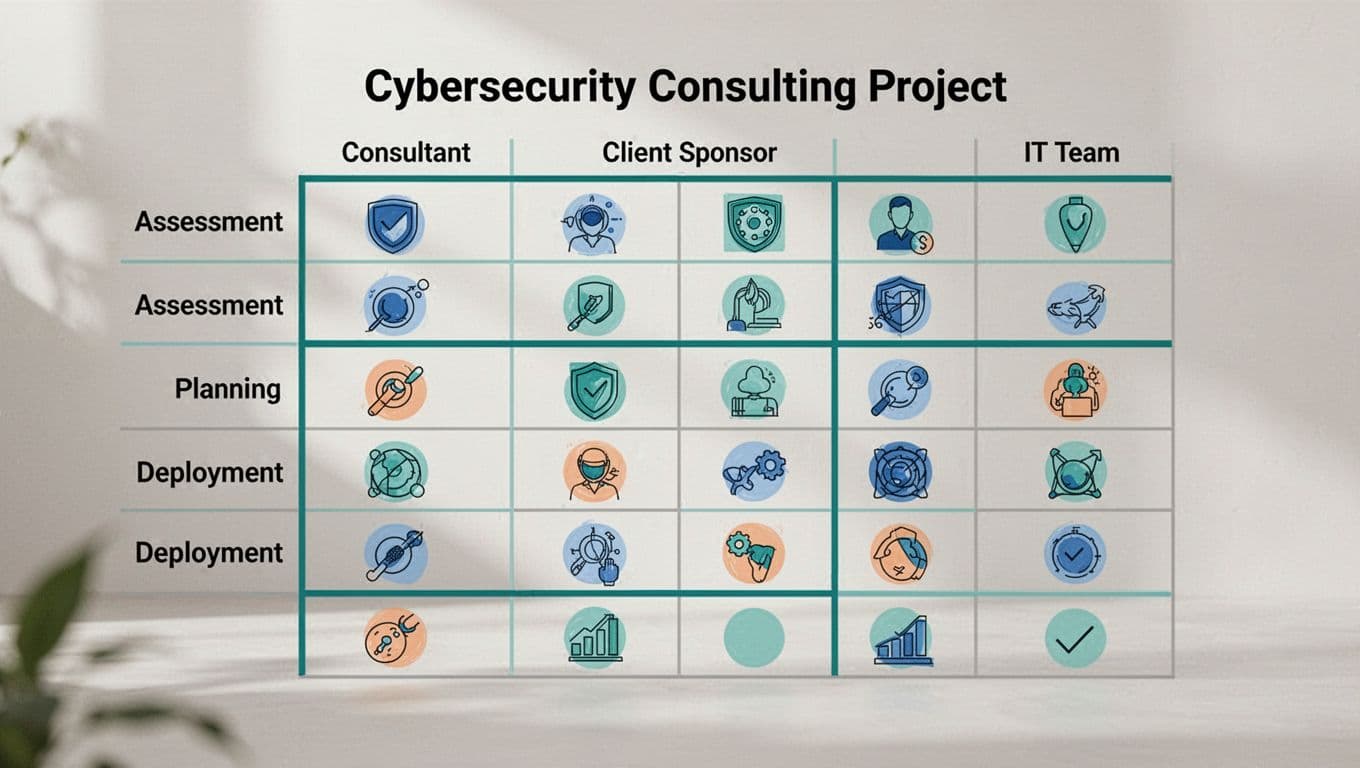
This visual clarifies duties at a glance. IT teams execute faster when roles stay clear.
Building Your Project Timeline
Timelines show progress visually. A Gantt chart works best for dependencies.
Break into phases: assessment (weeks 1-2), planning (3), implementation (4-6), testing (7), review (8).
Note dependencies. Scans need IT access first. Delays cascade if you ignore them.
List milestones:
- Kickoff meeting (day 1).
- Draft report (week 3).
- Client review (week 4).
- Go-live (week 8).
Tools like Microsoft Project or Asana handle this. Start simple in Excel.
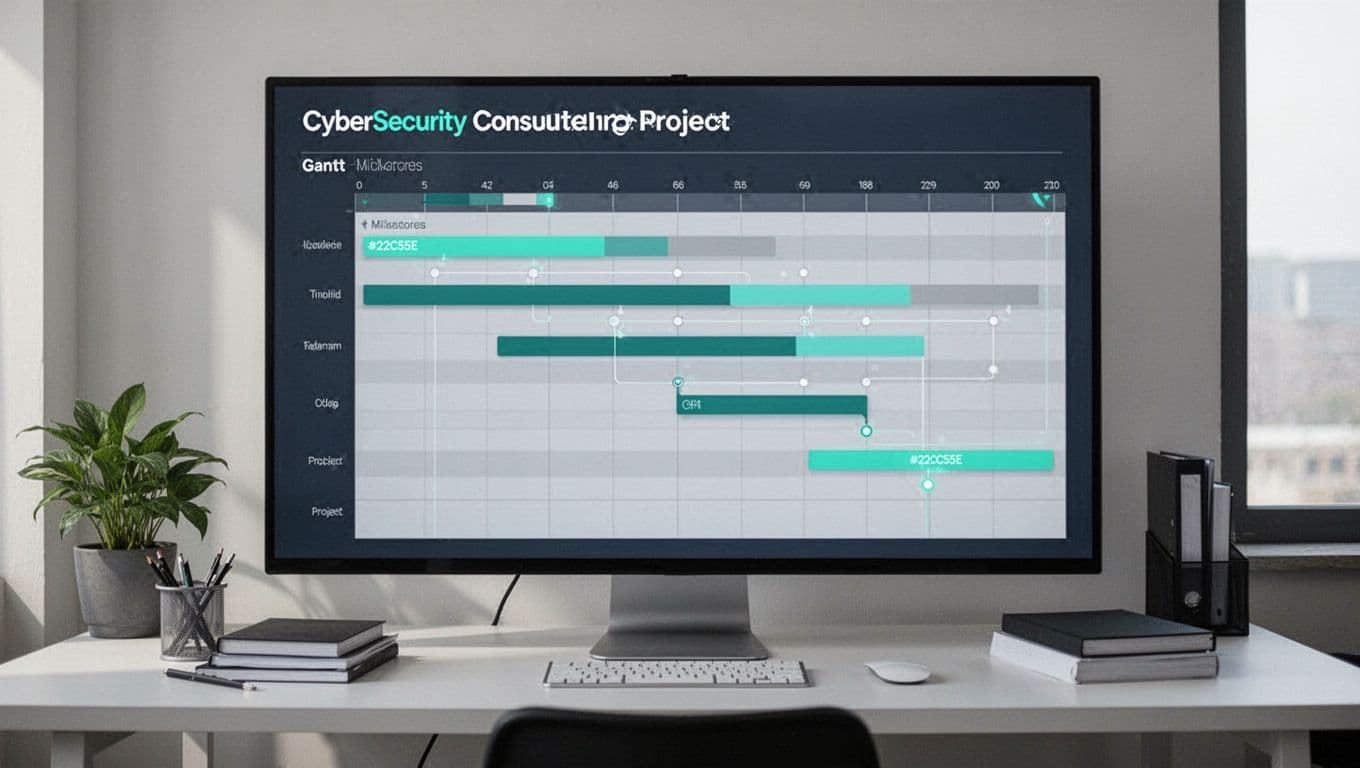
This setup tracks delays early. Clients trust you more when they see steady movement.
Managing Risks Effectively
Risks lurk in every project. A risk register spots them upfront.
Track risk description, probability (low/medium/high), impact, and mitigation.
Sample register:
| Risk | Probability | Impact | Mitigation |
|---|---|---|---|
| Delayed client access | Medium | High | Escalate weekly; have backup data sources. |
| Scope changes | High | Medium | Change control process; approve in writing. |
| Team turnover | Low | High | Cross-train; document everything. |
Review bi-weekly. Update as needed.
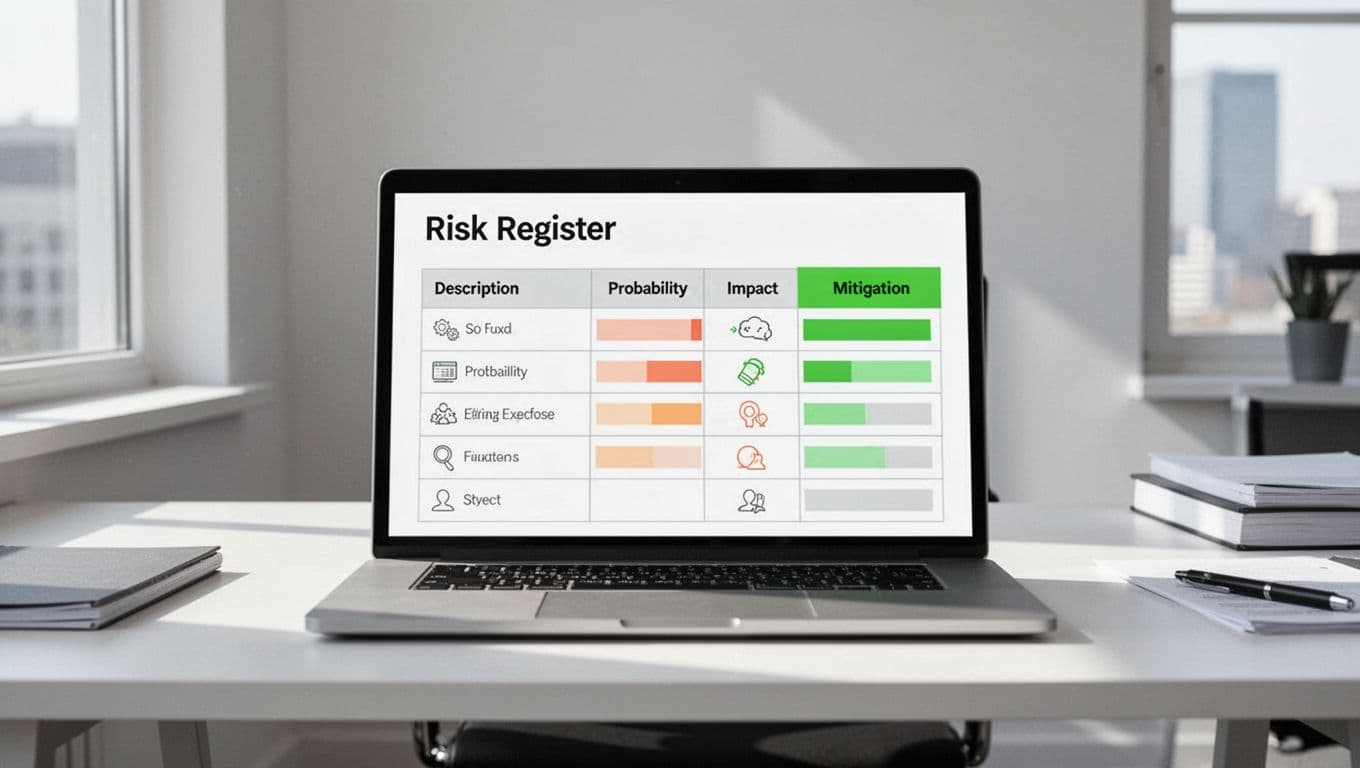
Proactive mitigation keeps projects on budget. It also builds your reputation.
Set Communication Cadence, Reporting, and Reviews
Keep stakeholders looped in. Set a communication plan from day one.
Weekly status emails cover progress, issues, next steps. Monthly steering calls handle big decisions.
Reporting includes dashboards for risks and milestones. Use simple charts.
For post-project review, schedule a closeout meeting. Ask: What went well? What to improve? Measure against objectives.
Document lessons learned. Share with your team.
This closes loops cleanly. Clients often extend contracts because communication shines.
A cybersecurity project plan template like this saves time and boosts success rates. Grab the sections above and customize for your next gig. Need help scaling your practice? Book a Discovery Call with Bud Consulting. What’s your biggest project challenge right now?