table of contents
Cyber threats hit businesses every day. You spot a suspicious email or a compliance gap. Now what? Do you bring in a cybersecurity consultant vs MSSP for help?
Many IT leaders face this choice. Consultants offer targeted advice. MSSPs deliver round-the-clock protection. The right pick depends on your needs. Let’s break it down so you decide with confidence.
What a Cybersecurity Consultant Brings
Cybersecurity consultants act as expert advisors. They dive into your setup for a short time. Then they hand over a clear plan.
These pros assess risks. They run audits and penetration tests. You get strategies for compliance like HIPAA or NIST. For example, they map your vulnerabilities and suggest fixes.
Consultants shine in one-off projects. They train your team on best practices. Or they build a security roadmap. Because they focus deeply, results come fast for specific issues.
In 2026, consultants help with talent gaps too. Firms outsource niche expertise instead of hiring full-time. Check Asher Security’s breakdown on roles like vCISO.

This setup shows a typical session. One expert guides your team directly.
How MSSPs Operate Around the Clock
Managed Security Service Providers, or MSSPs, run your defenses daily. They monitor threats 24/7 from their security operations center.
Teams hunt attacks in real time. They use AI to spot anomalies and respond fast. Predictable fees cover tools, staff, and updates. No surprises in costs.
MSSPs handle scale. They manage firewalls, endpoint detection, and incident response. In addition, they provide threat intelligence from global data. This beats solo efforts.
Trends show MSSPs growing in 2026. Talent shortages push companies to them. AI automates alerts, so responses match attack speeds. See Vancord’s comparison for daily ops details.

Analysts here watch your network non-stop. Green alerts flag issues early.
Core Differences in a Side-by-Side View
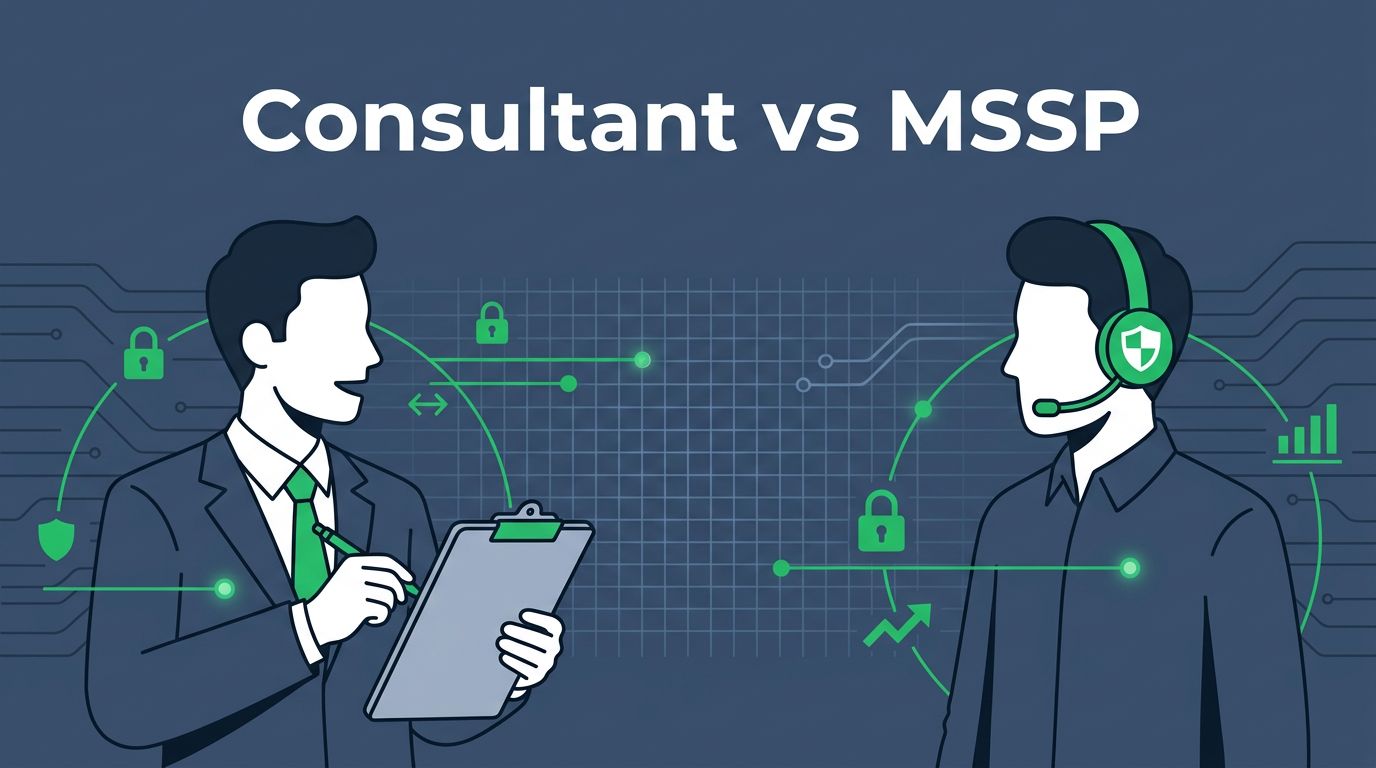
Consultants and MSSPs serve different roles. One gives advice. The other executes protection.
Here’s a quick comparison based on 2026 trends:
| Aspect | Cybersecurity Consultant | MSSP |
|---|---|---|
| Engagement | Project-based, short-term | Ongoing, 24/7 monitoring |
| Focus | Strategy, audits, training | Threat detection, response |
| Cost | Hourly or fixed project | Monthly subscription with SLAs |
| Expertise | Deep in one area like compliance | Broad team with AI tools |
| Best Use | Risk assessments, program setup | Continuous defense, scaling |
MSSPs win for speed against AI-driven attacks. Consultants excel at custom plans. This table highlights why hybrids often work best.
Pros and Cons of Each Option
Consultants offer flexibility. Pros: Tailored advice fits your gaps. Quick starts mean fast insights. Lower commitment suits tight budgets. Cons: No daily oversight. Knowledge leaves after the project.
MSSPs provide reliability. Pros: Always-on coverage fills skills gaps. Shared intel spots threats early. Compliance reporting comes standard. Cons: Higher ongoing costs. Less customization for unique setups.
Both reduce risks. Pick based on your operations.
Scenarios by Company Size and Maturity
Small businesses with basic needs lean toward consultants. A 50-person firm runs a quick audit. They fix phishing holes and train staff. Budget stays under $20K. Maturity low? Start here.
Mid-size companies mix both. Say 500 employees chase growth. A consultant builds the strategy. Then an MSSP runs SOC services. This handles rising threats without a full team.
Enterprises demand MSSPs. Over 1,000 staff face regulations. Internal capacity lacks? MSSPs scale with AI. High risk profile needs 24/7 eyes. For hybrids, SkyTerra compares MSPs too.
Newer firms prioritize consultants for foundations. Mature ones add MSSPs for endurance.
Factors to Guide Your Choice
Budget matters first. Consultants cost less upfront. MSSPs pay off long-term with fewer breaches.
Compliance drives decisions. Strict rules like CMMC? Consultants prep you. Ongoing audits? MSSPs report automatically.
Team capacity counts. No security staff? MSSPs cover basics. Growing internal team? Consultants upskill them.
Risk profile seals it. High exposure to ransomware? Go MSSP. Low threats? Consultant suffices.
Assess these. Then align with goals.
Many leaders book a discovery call with Bud Consulting for tailored advice.
Make the Right Call for Lasting Protection
You need security that matches your reality. Consultants fix spots and plan ahead. MSSPs guard the fort daily.
In 2026, blend them if possible. This covers advice and action. Your business stays safe amid talent shortages and AI threats.
What fits your setup? Test one step today. Strong defenses build trust and growth.