table of contents
Cybersecurity breaches cost companies millions each year. You know the drill: alerts pile up, teams stretch thin, and threats slip through. Cybersecurity staffing shortages make it worse, with 4.8 million global roles unfilled.
Direct hire offers a fix. It places full-time experts straight into your team, skipping temp agencies. This approach cuts turnover and boosts loyalty right away.
Let’s break down how it works for employers like you.
Why Direct Hire Beats Other Staffing Models
Direct hire means you own the full process. Recruiters source, screen, and present top fits for permanent spots. No middleman takes a cut after placement.
Costs stay upfront. You pay a fee based on salary, often 20-25% of first-year pay. Compare that to contract-to-hire, where temps cost 50% more hourly and risk leaving early.
Speed matters too. Agencies handle sourcing, so you focus on interviews. Retention hits 90% in year one, per industry benchmarks, because candidates commit long-term.
Limitations exist. It takes longer than agency temps, about 45-90 days total. You commit budget early, without trial periods.
Still, for roles needing deep trust like incident response, direct hire shines. Candidates align with your culture from day one.
High-Demand Roles Ready for Direct Hire
Teams scramble for SOC analysts first. They monitor alerts 24/7 and triage threats. Expect mid-level pay at $80K-$110K.
Security engineers build firewalls next. They code defenses and patch systems. Salaries run $120K-$150K, higher with AI skills.
Cloud security engineers top lists now. Cloud use hits 90% of firms, so they secure AWS or Azure setups. Pay reaches $130K-$170K.
GRC analysts handle compliance. They map risks to NIST standards. IAM specialists lock down access; both pull $140K-$180K due to shortages.
Incident responders contain breaches fast. Penetration testers probe weaknesses. CISOs lead strategy at executive levels.

These roles face acute gaps. For details on trends, check Gartner’s top cybersecurity trends for 2026.
The Direct Hire Timeline Step by Step
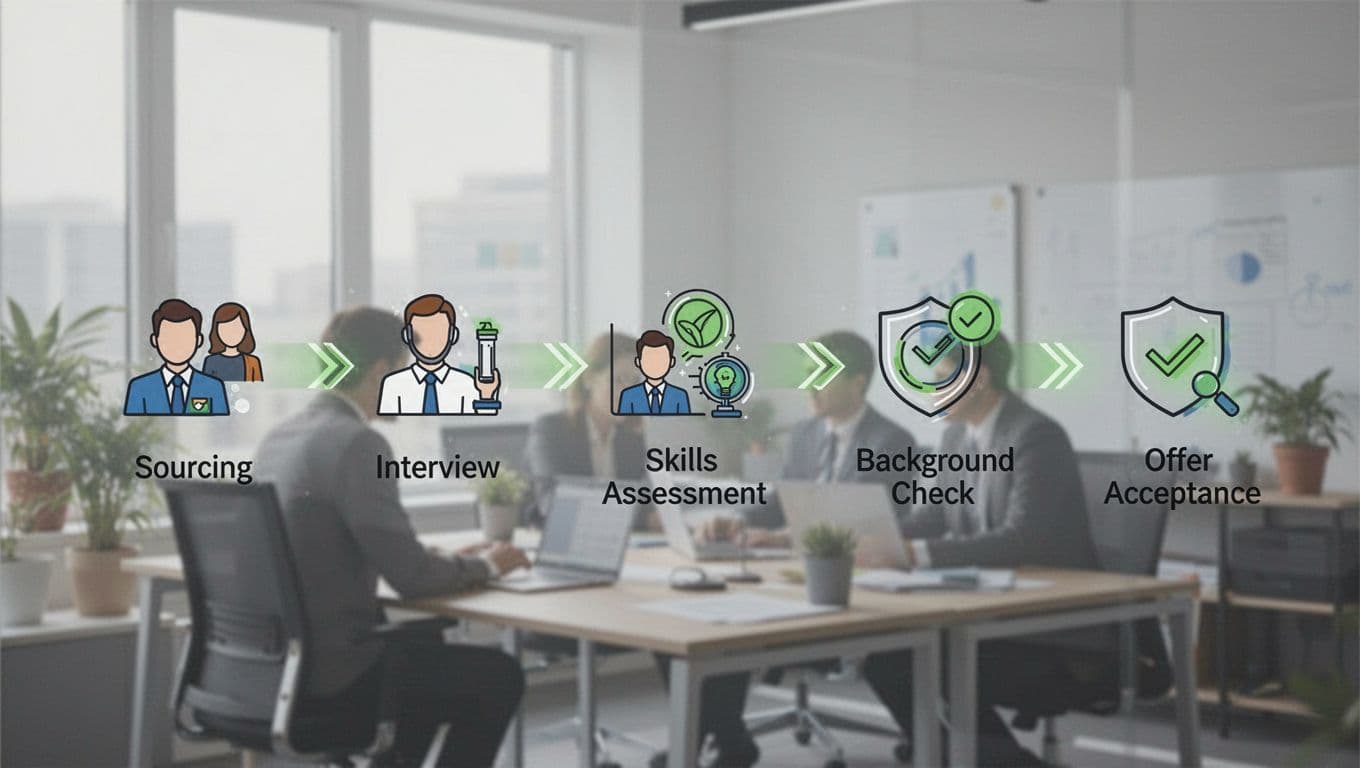
Direct hire unfolds in clear phases. It starts with sourcing, where recruiters tap networks for passive talent.
Interviews follow, usually two rounds: technical then cultural. Skills tests verify hands-on ability, like simulating breaches.
Background checks clear hurdles next. They cover clearances and references. Offers close the loop, with negotiation on pay and perks.
Total time averages 60 days. Agencies speed it by pre-vetting candidates.
Faster than posting jobs alone, because pros avoid public boards.
How to Evaluate Cybersecurity Candidates
Look beyond resumes. Check hands-on skills first. Ask for proof of tools like Splunk or Wireshark.
Experience counts most. Seek 3-5 years in similar roles. For CISOs, probe leadership in past crises.
Certifications help, like CISSP or CCSP. However, real projects trump paper creds.
Culture fit seals it. Test teamwork in panel interviews. Behavioral questions reveal stress handling.
Use structured scoring. Rate technical (40%), experience (30%), soft skills (20%), and fit (10%).
This method cuts bias and spots stars.
2026 Market Factors Driving Cybersecurity Demand
Talent shortages persist. U.S. employs 457K pros, but openings grow. Globally, gaps hit 4.8 million.
Cloud and AI fuel it. Firms migrate fast, needing constant guards. Regs like ISO 27001 spike GRC needs.
Salaries climb. Here’s a quick view:
| Role | Mid-Level Salary (USD) | Key Driver |
|---|---|---|
| SOC Analyst | $80K-$110K | Volume demand |
| Security Engineer | $120K-$150K | Broad application |
| Cloud Security | $130K-$170K | Migration boom |
| IAM Specialist | $140K-$180K | Zero-trust shift |
Data from recent reports shows AI widens skills gaps. See the SANS 2026 workforce study for more.
Hiring challenges mount with remote work. Yet, direct hire thrives here, targeting precise fits.

Key Takeaways for Your Next Hire
Direct hire fills cybersecurity staffing gaps with committed pros. It demands patience but pays off in retention and fit.
Focus on high-need roles like IAM and cloud security. Use clear criteria to pick winners amid 2026 shortages.
Ready to build your team? Book a Discovery Call with Bud Consulting to discuss your needs.