table of contents
A weak statement of work can sink a cybersecurity project before the first scan runs. Scope creep starts small, then turns into extra meetings, unplanned testing, and billing disputes.
In 2026, the pressure is higher. AI tools, cloud change, and tighter privacy rules all need cleaner scope and firmer guardrails.
This cybersecurity consulting template keeps the contract clear, so the work stays useful.
Table of Contents
- Why a Solid SOW Matters in 2026
- What Every Cybersecurity Consulting SOW Should Cover
- A Cybersecurity Consulting Template You Can Adapt Today
- Common Mistakes That Lead to Scope Creep
- FAQ
- What a Strong 2026 SOW Really Does
Why a Solid SOW Matters in 2026
A strong SOW does more than list tasks. It sets the rules for access, evidence, timelines, and sign-off.
When the work includes assessments, vCISO support, or ongoing monitoring, vague wording creates risk on both sides. For a public-sector style reference, NIST’s sample statement of work shows how clear duties reduce confusion.

If you want outcomes to read more clearly, NIST CSF 2.0 examples can help. They turn security goals into plain language that clients can follow.
What Every Cybersecurity Consulting SOW Should Cover
A generic Docusign’s SOW template gives you the shell. The cybersecurity version needs sharper edges.
Start with the basics, then make each part measurable:
- Objective: State the business problem in one line.
- Scope: Name the systems, teams, and sites.
- Exclusions: Say what stays out.
- Deliverables: List reports, workshops, or remediation plans.
- Acceptance: Define who approves and how.
- Dependencies: Cover access, contacts, and client tasks.
- Data handling: Explain storage, retention, and deletion.
- Change control: Require written approval for extra work.
This is where most strong consulting work starts. It keeps everyone looking at the same map.
A Cybersecurity Consulting Template You Can Adapt Today
A usable template should read cleanly and leave little room for debate.
If it’s not in the SOW, it turns into a debate later.
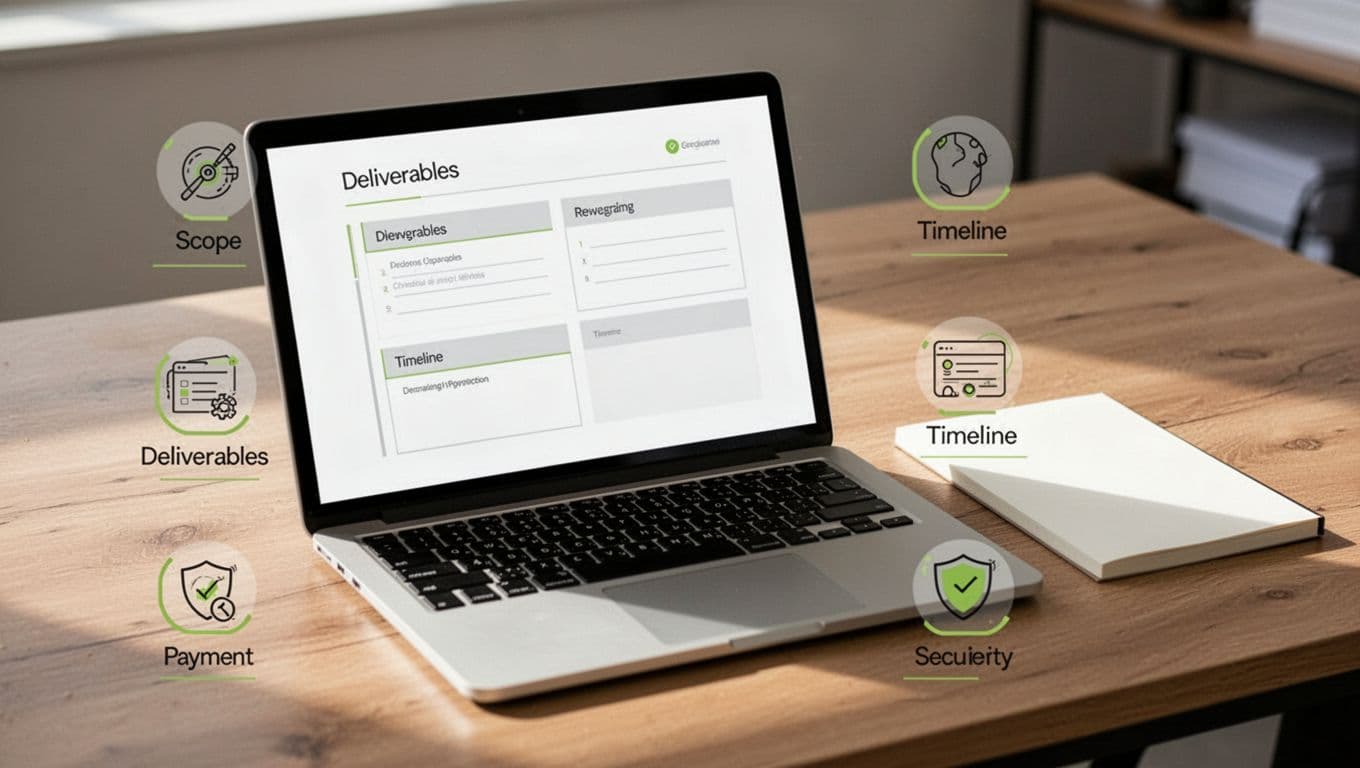
Here’s a simple clause set you can reuse for most engagements.
| Clause area | Sample clause | Why it matters |
|---|---|---|
| Purpose | Assess identity, cloud, and endpoint controls for the listed business units. | Keeps the work focused. |
| Scope | In scope are the named systems, locations, and log sources. | Names the exact target. |
| Deliverables | Client receives findings, a risk list, and a review meeting. | Makes the handoff clear. |
| Acceptance | Deliverables are accepted in writing within five business days. | Ends the project cleanly. |
| Client duties | Client supplies access, contacts, and test windows. | Prevents delays. |
| Data handling | Evidence stays in approved storage and is deleted after sign-off. | Protects sensitive data. |
| Change control | Work outside scope needs a signed change order. | Stops unpaid extras. |
For penetration tests, add a rules-of-engagement appendix and a retest date. If the work includes AI tools or shadow AI, define data use and model access up front.
If you want help turning this into a working engagement for vCISO, advisory, or exposure management work, Book a Discovery Call with Bud Consulting.
Common Mistakes That Lead to Scope Creep
Scope creep usually starts with one vague sentence. “Review the environment” sounds harmless, but it leaves room for argument later.
The other common miss is leaving out client duties. If the client must provide access, logs, or contacts, say so in writing.
Also, don’t skip the evidence rules. Security artifacts need storage, retention, and deletion terms. Without change control, small extras turn into unpaid work fast.
FAQ
What makes a cybersecurity SOW different?
It needs security clauses, data handling rules, and clear acceptance terms. Generic consulting templates usually miss those details.
Should I include SLAs?
Include them only when you promise response times or fix windows. If not, keep the wording simple.
Do pentest projects need extra clauses?
Yes. Add authorization, rules of engagement, evidence handling, and retest terms.
Can one template work for vCISO and assessment work?
Yes, but the deliverables differ. A vCISO SOW should cover cadence and advisory limits, while an assessment SOW should name outputs and dates.
What a Strong 2026 SOW Really Does
A good SOW protects time, budget, and trust. It cuts out guesswork before work starts, which matters more in 2026, when AI, cloud change, and privacy pressure can turn small gaps into bigger disputes.
Keep the language plain. Define scope, acceptance, and change control, then update the template for each client. That’s what makes a cybersecurity consulting template useful in the real world.