table of contents
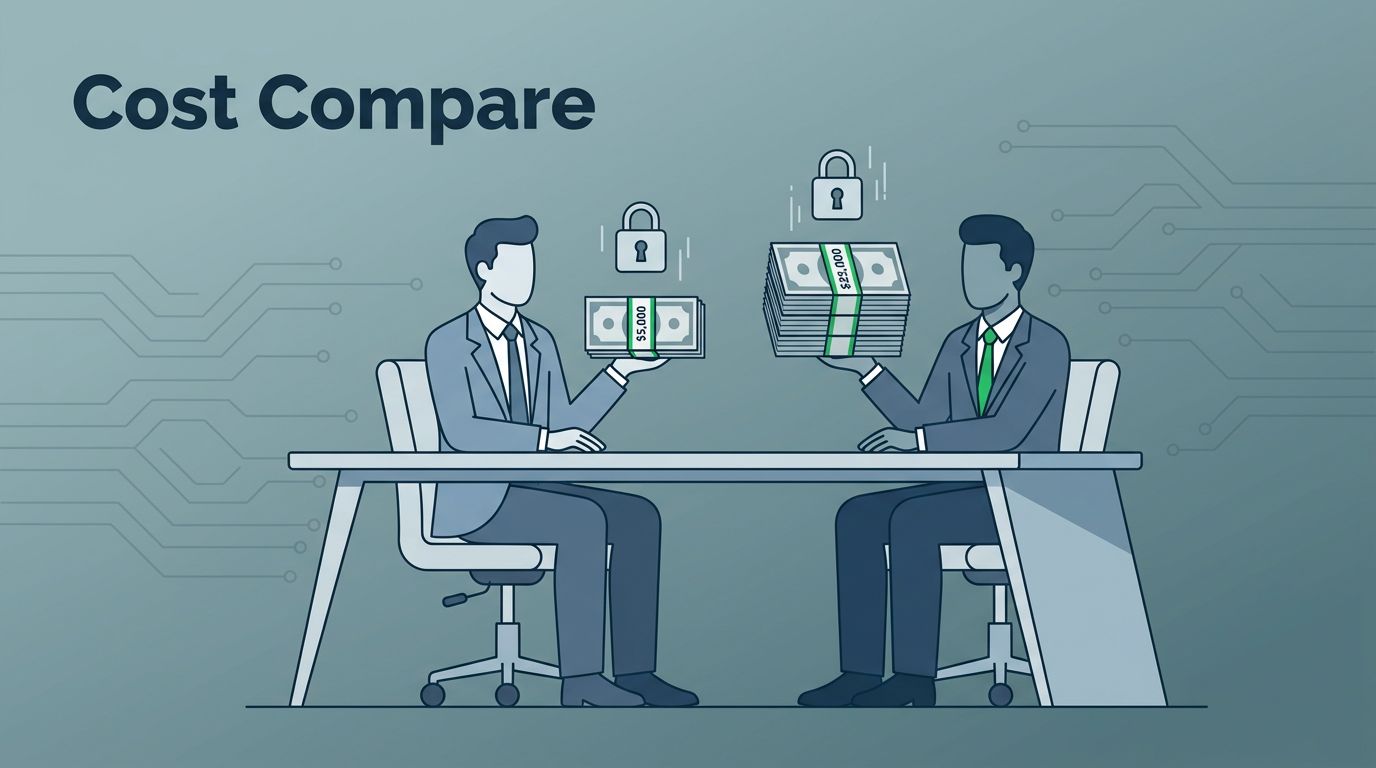
One cybersecurity consultant may quote $5,000, while another sends a $25,000 proposal for what sounds like the same job. The gap is real, and it usually comes from scope, urgency, industry risk, and who does the work.
If you’re comparing cybersecurity consultant cost in 2026, the cheapest quote is rarely the best buy. You want a price that fits your business, not a generic rate card. For a broad market snapshot, Clutch’s April 2026 cybersecurity pricing guide shows how firm size and service type change the bill. The sections below make the differences easier to read.
What drives the price in 2026
Four things move pricing fastest: scope, speed, sector, and seniority. A basic policy review costs far less than a test of a live payment system.
Region also matters. Rates in major US metros, London, or Singapore often run higher than in smaller markets. The consultant’s background matters too. A cloud security architect, IAM specialist, or incident responder will usually cost more than a generalist.
Urgency adds another layer. Rush work, weekend response, and short deadlines can raise the quote quickly. Healthcare, finance, and SaaS buyers also pay more when the work needs audit trails, evidence, or board-ready reporting. If you want another 2026 pricing benchmark, Techem Group’s cost guide gives a useful second opinion.
Cybersecurity consultant cost by provider type
The provider you choose changes more than the hourly rate. It also changes how much structure, support, and documentation you get.

For budgeting, these are practical planning ranges, not fixed market rules.
| Provider type | Typical 2026 pricing | Best fit | Trade-off |
|---|---|---|---|
| Independent consultant | About $120 to $175 per hour | Tight scopes, quick audits, advisory calls | Less bench strength if the project expands |
| Boutique firm | About $150 to $250 per hour | Mid-size projects, compliance prep, penetration tests | More overhead than a solo consultant |
| Large consultancy | About $225 to $400+ per hour | Complex programs, regulated industries, executive reporting | Highest cost, sometimes more team than you need |
Independent consultants save money when the scope stays narrow. Boutique firms sit in the middle and often balance depth with price. Large consultancies cost the most, but they can bring broad teams, formal reporting, and more backup if the work grows.
A top cybersecurity consultant companies round-up can help you compare how different firms package audits, vCISO support, and cloud security work.
Common engagement types and what they usually include
Project type matters just as much as provider type. Audits, penetration tests, and compliance work can look similar on a proposal, yet they demand very different effort.
| Engagement | Typical 2026 project cost | Usually included | Extra costs to watch |
|---|---|---|---|
| Security audit | $4,000 to $17,000 | Interviews, asset review, findings report, priority fixes | Retest, workshops, extra sites |
| Penetration testing | $9,000 to $26,000 | Scoped testing, exploit validation, evidence, summary | Extra apps, urgent scheduling, retest |
| Compliance readiness | $9,000 to $35,000+ | Gap analysis, control mapping, policy review, evidence help | Policy writing, remediation support, audit attendance |
These are project budgets, not fixed menu prices. A consultant can quote the lower end for a narrow scope, then move up fast if you add systems, regions, or evidence requests. That is why “same service” often hides very different deliverables.
A penetration test on one app is not the same as a review of your whole environment. Likewise, compliance work can stay lean for one framework, or become a much larger job when you need multiple standards at once.
How to compare proposals without overpaying
A low bid that skips retesting, evidence, or written findings can cost more later.
Price matters, but scope matters more. A careful proposal tells you who will do the work, what gets delivered, and where the limits are.
Start with the handoff. Some quotes cover only a slide deck. Others include a full report, a retest, and an executive readout. Ask whether the consultant has worked in your industry too. A healthcare or fintech project usually needs more proof and more control mapping than a small internal app.
Before you choose, compare these points line by line:
- Scope, including every system, site, and app in writing.
- Seniority of the people assigned to the project.
- Retest policy and response time for questions.
- Change-order rules if the project grows.
The cheapest option gets risky when the proposal omits retesting, assigns junior staff to a regulated environment, or charges separately for every small change. A better price can still win if it includes stronger reporting, faster turnaround, and less work for your team.
If you want help comparing scope, seniority, and pricing together, Book a Discovery Call with Bud Consulting to frame the options before you sign.
The smartest buy is the one with the clearest scope
The right cybersecurity consultant cost in 2026 depends less on the headline number and more on what sits behind it. An independent consultant can be perfect for a focused assessment. A boutique firm often fits growing teams. Large consultancies make sense when the project is broad, regulated, or cross-functional.
When quotes are close, read the deliverables, not just the total. That is where you see whether you’re buying advice, proof, and follow-through, or just a cheap first draft. In security work, clarity usually saves more than a discount.