table of contents
A strong security stack can still fail if the consultant doesn’t understand regulated finance. Banks, fintechs, insurers, and credit unions face different rules, different payment rails, and different threat models.
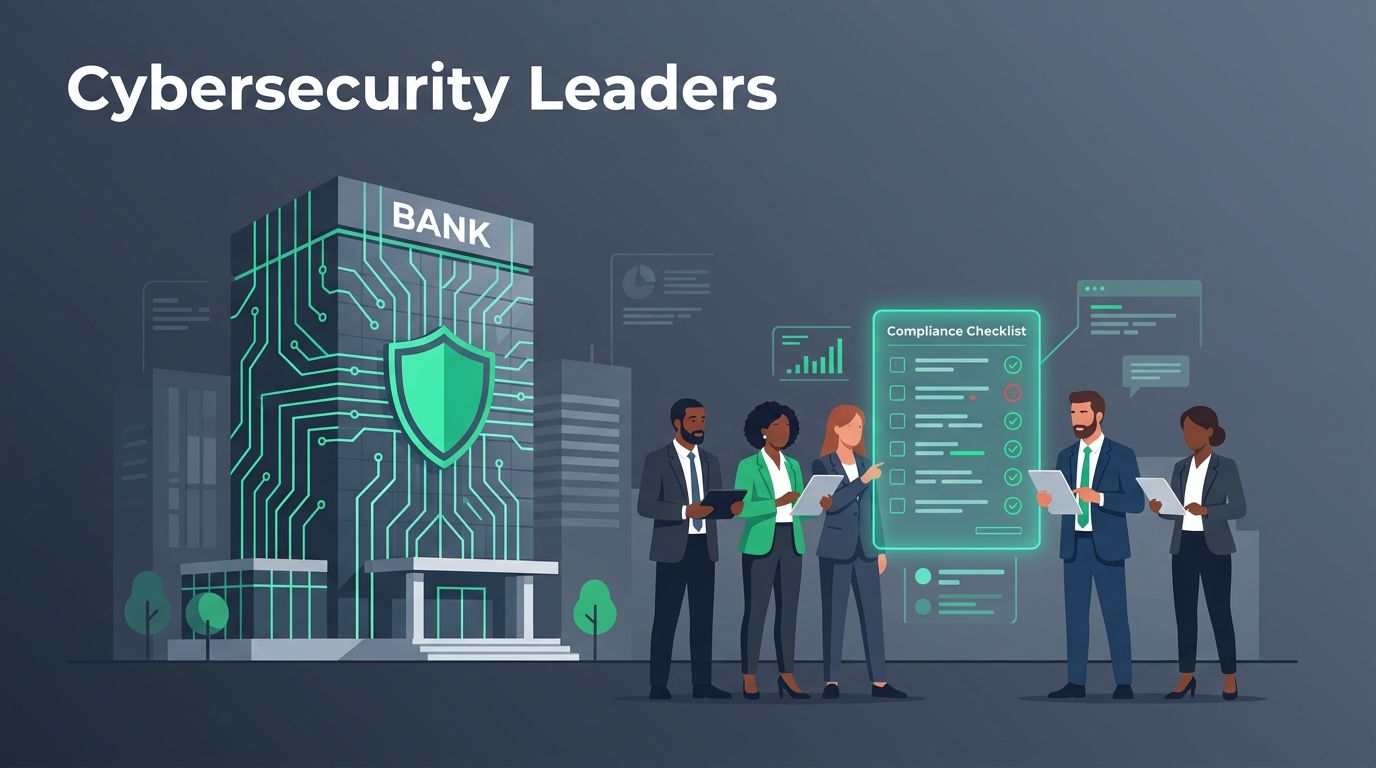
That is why the best financial services cybersecurity consultants know more than tools. They understand FFIEC expectations, GLBA privacy duties, PCI DSS scope, SOX controls, SEC and FINRA pressure, and the realities of SWIFT and card environments.
The right partner also needs to match your size and maturity. A community bank does not need the same playbook as a global insurer. Here’s how to tell the difference.
Why financial institutions need specialized cyber help
Financial services attract thieves because the payoff is fast and the data is rich. Attackers target identity systems, payment flows, vendor connections, and cloud estates.
A generalist can miss the details that matter, like privileged access paths, card data boundaries, or how audit evidence gets collected for examiners. Specialized consultants work faster because they already know the pressure points.
They also know how to talk to risk, legal, compliance, and the board. That matters when a finding is not just technical, but regulatory. It matters even more during an exam, a breach, or a merger. Third-party risk adds another layer, because a weak supplier can expose the whole chain.
Recent 2026 ranking pages, such as 2026 financial sector rankings, still show the same pattern: broad firms lead on scale, while specialists win on depth. That split matters because a bank preparing for an exam needs different help than a fintech fixing its attack surface.
What the strongest consultants usually bring
In 2026, the most visible names still include Deloitte, KPMG, Accenture, PwC, EY, and Booz Allen Hamilton. On narrower jobs, Mandiant, Optiv, IBM Consulting, and Palo Alto Networks often appear where incident response, cloud security, or testing depth matters.
Public service pages from PwC’s 2026 consulting recognition and EY’s financial services cybersecurity page show how broad the market has become. Still, one firm rarely covers every need equally well.
The right way to compare them is by fit. A large advisory firm may be best for enterprise governance, program design, and board reporting. A specialist may be stronger in one area, such as IAM or PAM, cloud defense, or red-team testing.
| Consultant type | Best fit | Typical strengths |
|---|---|---|
| Big advisory firms | Large banks, insurers, and global fintechs | Governance, compliance mapping, operating model design, board reporting |
| Incident response specialists | Teams that need fast containment and forensics | Threat hunting, breach response, tabletop exercises, recovery planning |
| Cloud and identity specialists | Cloud-first firms or IAM refresh projects | IAM, PAM, access reviews, cloud guardrails, logging, segmentation |
| Offensive security firms | Payment, SWIFT, or app-heavy environments | Pen tests, red-team work, external exposure checks |
The takeaway is simple. Choose the type of help that matches the problem in front of you, not the logo on the deck.
The right consultant is the one that fits your control environment, not the one with the biggest brand.
A practical checklist for evaluating consultants
Evaluation should start with scope. If the consultant can’t connect their work to your threat model and control stack, the proposal is too broad.
- Ask for proof of work with FFIEC guidance, GLBA, PCI DSS, SOX, SEC, FINRA, or SWIFT.
- Confirm they can handle cloud security, IAM, PAM, SOC design, incident response, and penetration testing.
- Look for recent work in banks, credit unions, fintechs, insurers, or payment firms.
- Ask who does the actual work. Senior experts should lead the engagement.
- Request a sample deliverable and see whether it fits your audit style.
- Check how they manage third-party risk and vendor reviews.
- Ask whether they support one-off projects or ongoing exposure testing.
If their answers stay generic, keep looking. Good consultants speak in clear examples, not vague promises. They should also explain how their work supports exam prep, incident response, or steady control improvement.
When a specialist beats a big-name firm
For smaller institutions, a boutique consultant can be the better call. It can move faster, focus on one gap, and stay close to the team.
For larger firms, a major advisor may still be the right anchor, especially when the project touches multiple regions or business lines. Yet even then, you may need niche help for SWIFT testing, card security, or offensive assessments.
A regional bank with a lean security team may need a consultant who also mentors staff. A fintech with heavy card traffic may need deeper PCI DSS and cloud testing. Meanwhile, an insurer with complex reporting may need help tying controls to SOX and board reporting. The best match depends on systems, regulators, and internal skills.
If your biggest gap is senior talent, not strategy, a specialist partner can help you close it faster. Book a Discovery Call with Bud Consulting if you need support finding cloud security architects, IAM/PAM specialists, DevSecOps leaders, or offensive security experts.
Choosing the right partner for your institution
The strongest financial services cybersecurity consultants do one thing well. They translate risk into action that fits your controls, your regulators, and your budget.
Big firms can bring reach, and specialists can bring depth. The right choice depends on your institution’s size, regulatory load, and security maturity, not on brand familiarity. That is the real test.