table of contents
Cybersecurity hiring is still tight in 2026. The talent gap remains large, and the hardest seats to fill are the mid to senior roles most teams need first. That means speed matters, but a rushed shortlist can push out the best people before you ever speak to them.
The better approach is to screen cybersecurity candidates by role fit, proof of work, and judgment, not by keyword-heavy resumes. General tech hiring rules miss too much here, because a cloud security architect, an IAM specialist, and a DevSecOps lead do very different jobs.
Why cybersecurity shortlisting needs a different lens
In general tech hiring, a strong language match often gets someone to the next round. In cyber, that can be misleading. Two people may both list AWS, but one has built secure cloud controls, while the other only used the platform.
That matters more now because the market is uneven. In 2026, there’s still a global shortage of about 4.8 million cybersecurity workers, and the biggest gaps sit at the mid to senior level. ISC2’s research on hiring resilient cyber teams reflects the same pattern, certifications still matter, but practical skill signals matter more.
So the shortlist has to answer a simple question: can this person do the work in your environment? If the answer is unclear, the resume is not enough.
Build a shortlist scorecard before you read a single resume
A scorecard keeps the process fair and fast. It also stops one loud keyword from overpowering everything else.

Use a 100-point model and adjust it by role. For senior roles, weight impact and judgment more heavily. For technical hands-on roles, give more room to tool depth and build work.
| Factor | Weight | What to score |
|---|---|---|
| Role-specific hands-on work | 25 | Built, secured, or investigated systems like yours |
| Impact and outcomes | 20 | Reduced risk, improved controls, or sped up response |
| Tool and platform depth | 15 | SIEM, EDR, cloud, IAM, DevSecOps, or scanning tools |
| Domain knowledge | 15 | Industry rules, data types, and likely attack paths |
| Certifications and training | 10 | Relevant and current, not used as a shortcut |
| Communication | 10 | Clear notes, stakeholder updates, and handoffs |
| Learning agility | 5 | Labs, side projects, refreshers, or open-source work |
Shortlists work best when every candidate is measured against the same job-shaped scorecard.
The best part is that this keeps the process consistent. You can compare candidates without treating them like identical resumes.
Screen for the role you are actually filling
Cybersecurity hiring fails when one checklist tries to cover every role. The signals for each seat are different, so the shortlist should be different too.
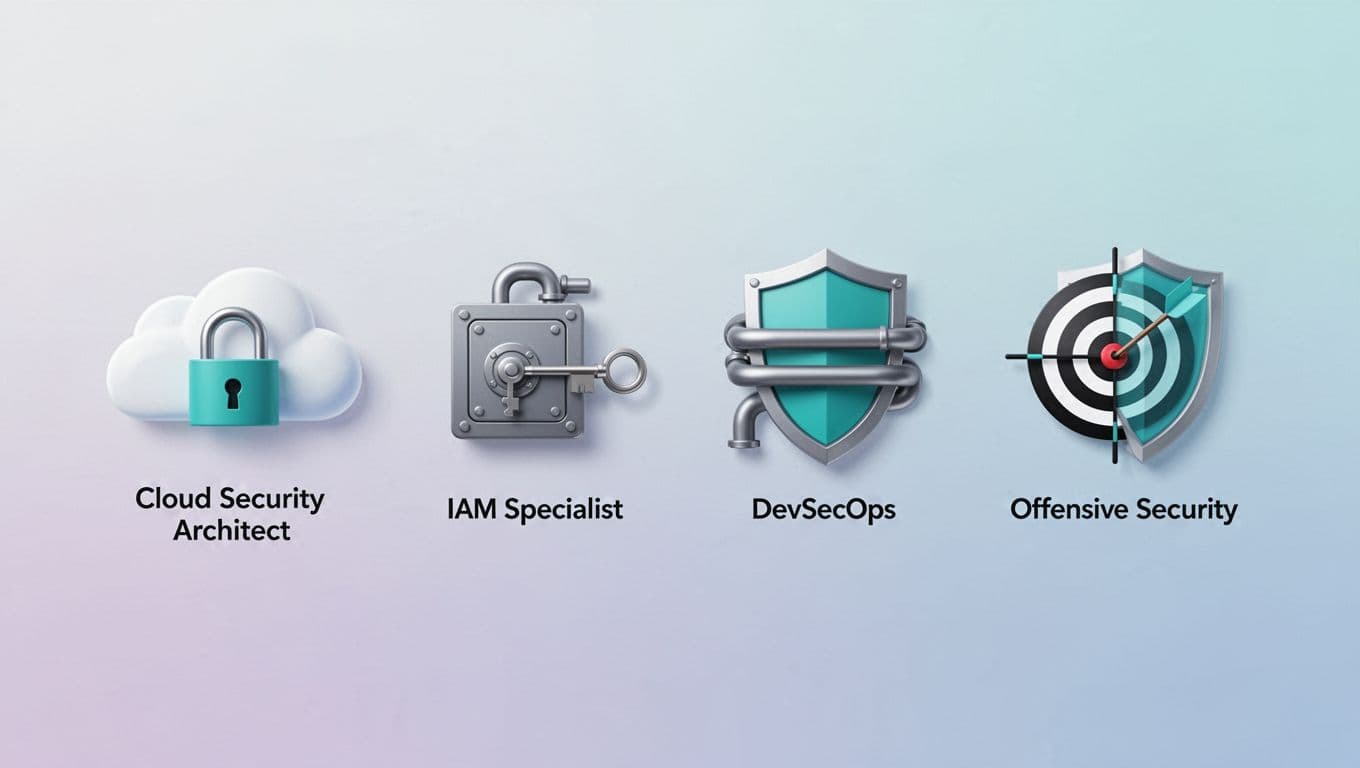
Cloud security architect candidates should show real experience with AWS, Azure, or GCP, plus IAM, logging, segmentation, and policy-as-code. Ask how they handled a bad default config or an exposed storage bucket.
IAM or PAM specialist candidates need strong identity thinking. Prioritize access flows, conditional access, service accounts, privilege boundaries, and user lifecycle controls. A good candidate can explain the difference between access, entitlement, and privilege.
DevSecOps or application security lead candidates should know how to work inside pipelines, not from the sidelines. Look for experience with scanning gates, secrets checks, code review guardrails, and developer buy-in.
SOC analyst or threat hunter candidates need triage speed, alert tuning, investigation notes, and escalation judgment. Great analysts do more than spot noise, they explain why it matters.
For cloud-heavy roles, credentials like the Google Cloud Professional Cloud Security Engineer certification or a current 2026 cloud security certifications roundup can help you benchmark depth. Still, they should support the decision, not drive it.
Look for proof of judgment, not polished buzzwords
A resume tells you where someone worked. Proof tells you how they think.
Ask for one concrete example of risk reduced. That could be a postmortem note, a policy change, a detection rule, or a hardening plan. Then ask what trade-off they accepted and why.
You’re looking for signs of judgment, not perfect polish. Can they explain a technical choice to a non-security leader? Can they show the difference between doing security work and improving security outcomes? Those answers matter more than a long list of tool names.
Watch for a few early warning signs:
- They name tools well, but can’t explain results.
- They list many certifications, but no project context.
- They speak only in theory, not in actions.
- They can’t show how they handled conflict, pressure, or a missed control.
That’s where real-world evidence wins. In a tight market, the safest shortlist is not the longest one. It’s the one built on clear proof.
The shortlist should show who can reduce risk
Shortlisting cybersecurity talent gets easier when you stop treating every resume like the same puzzle. The right filter is role-specific, evidence-based, and tied to the risks that role will face on day one.
If you keep that standard, you’ll lose less quality, not more. You’ll also spend less time sorting noise and more time talking to people who can actually do the job.
If you need help tightening that process for cloud security, IAM, DevSecOps, or senior security leadership roles, Book a Discovery Call with Bud Consulting.