table of contents
A strong cybersecurity candidate can still get lost in a messy hiring process. When one interviewer cares about tools, another about compliance, and a third about communication, the final decision turns muddy fast.
A cybersecurity candidate presentation template gives hiring teams one shared view. It keeps the discussion focused on evidence, not memory. It also helps recruiters and panel leads present each candidate in the same way, so comparisons feel fair and practical.
Why a standard presentation template saves time
Without a shared format, interview feedback gets scattered. One person writes about SOC tools. Another focuses on personality. Someone else remembers a certification but misses the story behind it.
A consistent template fixes that. It makes it easier to spot patterns, compare similar candidates, and explain decisions to hiring managers. That matters even more for senior roles, where scope, risk, and team fit shape the hire.
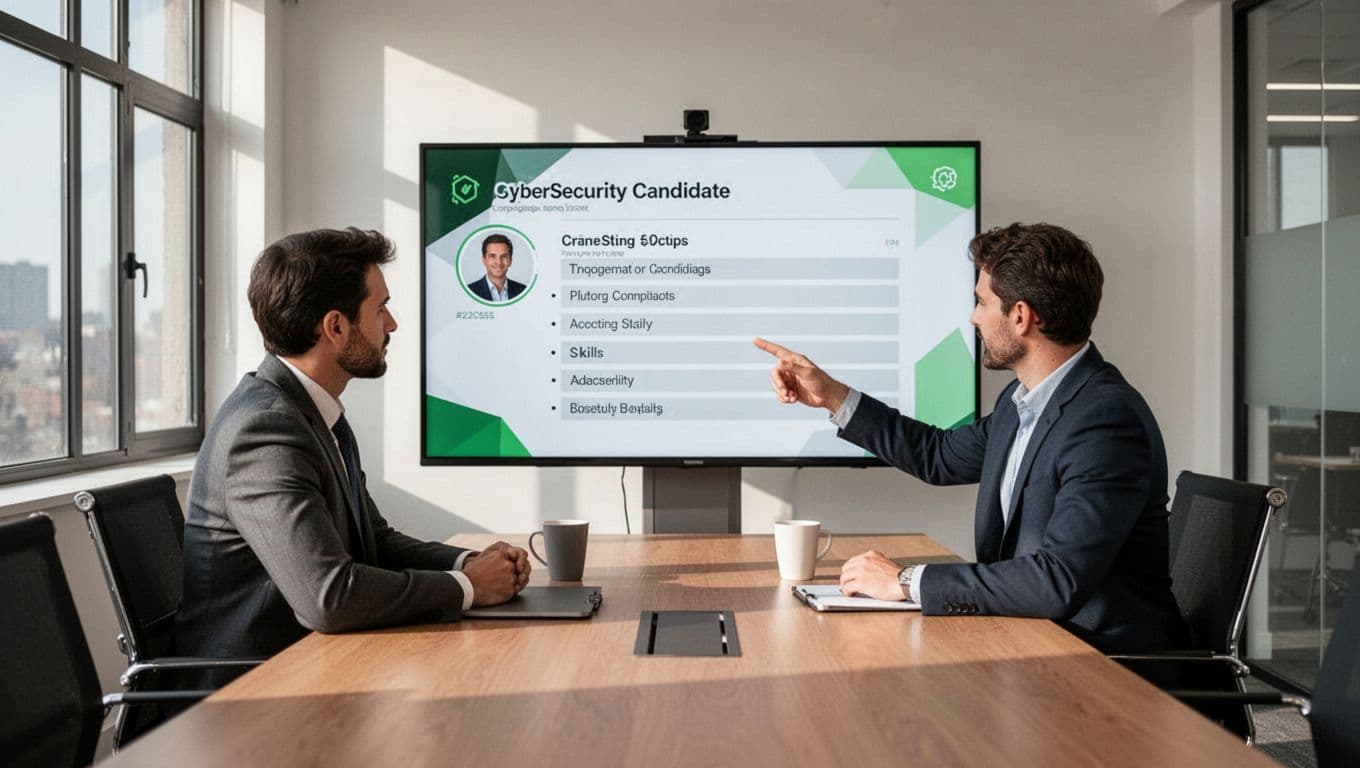
Think of it like a control panel. Each dial shows one part of the candidate, but the team reads the whole board at once.
The core sections every candidate presentation should include
The best templates are simple. They capture the facts that shape the hire and leave out the noise. Certifications still matter too, especially when they support the role, as shown in ISC2’s hiring trends study.
| Section | What to capture | Example of strong content |
|---|---|---|
| Candidate summary | One-line fit for the role | Cloud security lead with 8 years in regulated environments |
| Technical skills | Core strengths tied to the job | SIEM tuning, IAM design, threat hunting |
| Certifications | Active, expired, or in progress | CISSP, AWS Security Specialty |
| Security domain expertise | Deepest areas of experience | Cloud security, AppSec, IAM/PAM |
| Tools experience | Platforms used with confidence | Splunk, CrowdStrike, Okta, Prisma Cloud |
| Incident response experience | Events handled and outcomes | Led phishing response and root-cause review |
| Compliance knowledge | Frameworks and audit exposure | SOC 2, ISO 27001, PCI DSS |
| Communication skills | How the person explains risk | Clear with execs, calm under pressure |
| Interview feedback | Key panel notes and patterns | Strong on triage, weaker on policy detail |
| Risk areas | Gaps or unknowns | Needs deeper Azure exposure |
| Hiring recommendation | Clear decision and reason | Hire if cloud scope matches |
That format keeps the story tight. It also helps the panel see where the evidence is strong and where it still needs work.
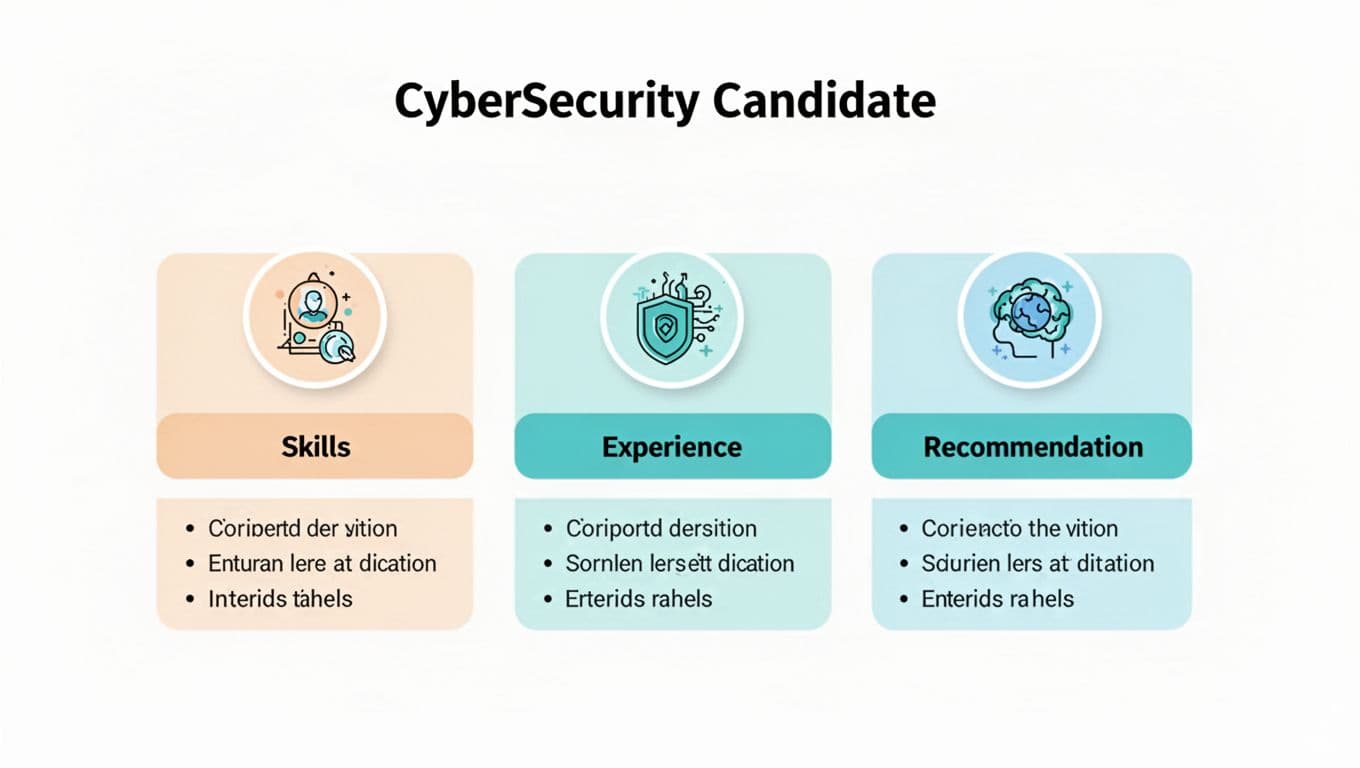
How to score and compare candidates consistently
A presentation template works best when it sits on top of a scorecard. For teams that want a ready-made reference, the skills-based interview guide and evaluation rubric is a useful starting point.
Use one scoring scale across the whole panel. Then ask each interviewer to back up the score with a fact, not a feeling.
- Score each section from 1 to 5.
- Require one short example for every score.
- Weight role-critical areas more heavily.
- Separate strengths from risks.
If the note can’t support the score, the score doesn’t help the hiring team.
For hands-on roles, pair the template with a practical test. This technical skills assessment guide is a good reminder that job-matched exercises beat generic quizzes.
A reusable framework your team can copy today
Use the template as a one-page briefing, not a resume rewrite. The goal is simple: help the hiring team answer whether this person can do the job, fit the team, and grow with the role.
A clean format looks like this:
- Candidate summary. Write one sentence on overall fit.
- Technical skills. List the strongest job-relevant skills.
- Certifications. Note what matters and why.
- Security domain expertise. Call out the deepest area of experience.
- Tools experience. Mention tools they’ve used in real work.
- Incident response experience. Capture actual events, not theory.
- Compliance knowledge. Show where they have audit or control exposure.
- Communication skills. Note how they talk to leaders and peers.
- Interview feedback. Summarize the panel’s main points.
- Risk areas. Flag gaps, ramp-up needs, or concerns.
- Hiring recommendation. End with a clear yes, no, or hold.
A strong presentation also shows context. Did the candidate work in a small team or a large security function? Did they own a tool, or only support it? That detail changes how the hiring team reads the profile.
If your team needs help shaping this for senior or hard-to-fill searches, Book a Discovery Call with Bud Consulting.

The best cybersecurity hiring decisions don’t come from scattered notes. They come from a shared picture built on the same facts, in the same order.
That’s what a candidate presentation template does. It turns a long interview cycle into a clearer, more defensible decision.