table of contents
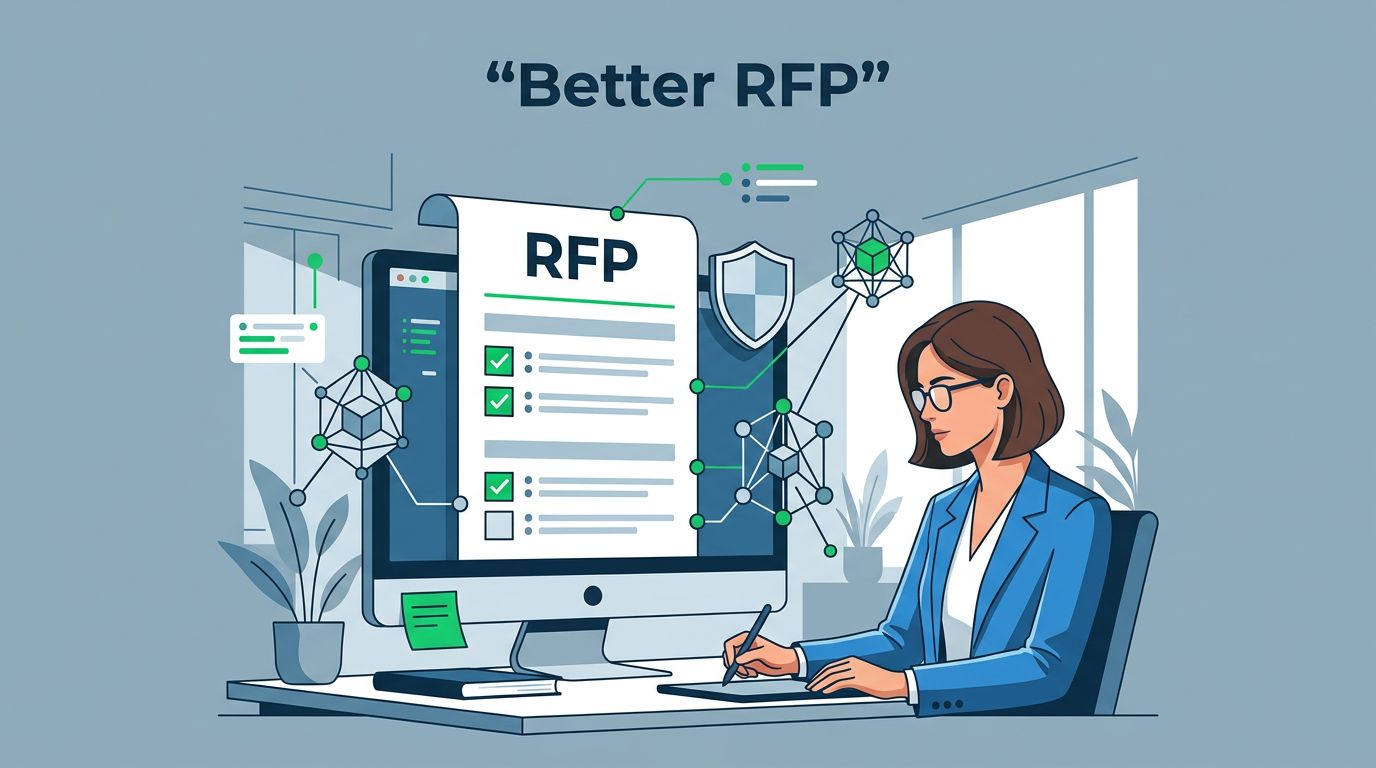
A weak cybersecurity consulting RFP doesn’t just waste time, it filters out the firms you actually want. If your document is vague, the best advisors will fill in the blanks with caution, then price in risk.
Better firms want clarity, not fluff. They want to know what problem you’re solving, what outcomes matter, and where they can add judgment.
This guide shows how to write an RFP that pulls in stronger proposals, cleaner scopes, and better-fit cybersecurity partners.
Start with the work you actually need done
Before you write a line of the RFP, define the job in business terms. Are you buying a risk assessment, a vCISO engagement, a compliance gap assessment, penetration testing, an incident response retainer, security program development, or a cloud and security architecture review?
That distinction matters. A firm that excels at a compliance gap assessment may not be the best fit for incident response. Likewise, a strong penetration testing team may not have deep board-level vCISO experience.
Write down the trigger, the pain point, and the decision this work must support. If leadership needs risk visibility, say so. If an audit deadline drove the project, name the framework and the date. For a broader structure, TechTarget’s guide to building a cybersecurity RFP is a useful reference, but your scope still has to reflect your own environment.

Give vendors room to propose a smarter approach
The best RFPs are specific about outcomes and flexible about method. That balance helps experienced firms show their judgment instead of forcing them into a rigid template.
Spell out the non-negotiables, such as required deliverables, due dates, systems in scope, and reporting needs. Then leave room for firms to recommend their own sequence, staffing mix, or workshop format if that improves the result.
The best RFPs define the problem well, then let strong firms show their judgment.
This is where many buyers overreach. They ask for exact tasks, exact tools, and exact timelines, then wonder why every proposal sounds the same. In contrast, a good cybersecurity consulting RFP invites ideas while still protecting your must-haves.
If you want help turning a business problem into a tighter scope, Book a Discovery Call with Bud Consulting. For more detail on security consulting RFP structure, Palomarr’s security consulting guide shows how service buyers can frame these projects.
Include the sections strong firms expect
Great firms move faster when the RFP includes the right building blocks. Keep this checklist tight and clear:
- Business context and goals, so vendors know why the project exists.
- Current state summary, including systems, gaps, and known pain points.
- Scope of services, with clear in-scope and out-of-scope items.
- Deliverables and success criteria, such as reports, roadmaps, workshop outputs, or retest results.
- Timeline and milestones, including deadlines, key reviews, and launch windows.
- Access and assumptions, such as log access, interview time, environments, and third-party data.
- Proposal format and questions, so every bidder responds in the same shape.
- Evaluation criteria and contract basics, including pricing rules, confidentiality, and insurance needs.

For service-specific work, add a short section that explains the exact context. For example, a vCISO search should name board reporting, policy ownership, and incident leadership. A penetration test should note asset count, test windows, and retest expectations. A cloud architecture review should list platforms, identity tools, and the environments under review.
That kind of detail helps firms respond like advisors, not form-fillers.
Score vendors on fit, not polish
A polished deck can hide a weak plan. That’s why the scoring model should reward relevance, method, and proof, not slick design. For objective scoring advice, this guide to evaluating RFP responses is a solid reference.
Use a simple weighted scorecard like this:
| Criterion | Weight | What strong answers show |
|---|---|---|
| Relevant experience | 25% | Similar work in your industry and size range |
| Methodology | 20% | Clear steps, evidence, and realistic deliverables |
| Team quality | 15% | Named experts, not just generic staffing promises |
| Business and compliance fit | 15% | Understanding of your risks, controls, and obligations |
| Project plan | 10% | A sensible timeline with milestones and dependencies |
| Pricing clarity | 10% | Transparent fees, assumptions, and exclusions |
| References and proof | 5% | Cases, outcomes, and client references that hold up |
Use the same rubric for every bidder, then score independently before discussion. That keeps loud opinions from drowning out solid evidence.

The takeaway is simple, better proposals come from better prompts. When vendors know how they’ll be judged, they spend less time guessing and more time solving.
Common mistakes that push better firms away
The fastest way to lose strong firms is to make the RFP feel risky. That happens when the scope is vague, the timeline is impossible, or the buyer hides key constraints until late in the process.
Avoid asking for a full strategy memo when you only need a focused assessment. Also avoid mixing unrelated services into one bid unless they truly belong together. A firm that sees a risk assessment, pen test, and incident response retainer bundled without logic will assume the project is poorly owned.
Better firms also notice when procurement and the business team aren’t aligned. If one group wants a fast test and another wants a long advisory program, say so early. A clear RFP gives bidders enough context to price the work honestly.
A cybersecurity consulting RFP works best when it reads like a real business problem. It should give firms enough detail to understand your world, then enough space to show how they’d improve it. That’s how you attract partners who think beyond the template and bring better answers to the table.