table of contents
If your team is guessing about risk, a cybersecurity consultation can save weeks of wasted effort. It gives you a clear view of gaps, priorities, and the business impact of each fix.
For small and mid-sized companies, that matters. Budgets are tight, compliance deadlines are real, and one missed control can slow sales or create audit trouble.
A strong first meeting should turn uncertainty into a plan, so let’s look at when to schedule one and what to expect.
When it makes sense to schedule the call
The best time to book a consultation is often before a problem becomes visible. If you’ve had a phishing scare, a vendor issue, a cloud migration, or a security question from a customer, the timing is right.
You should also move fast if your team is stretched thin. Many firms hit that point when IT wears too many hats, or when no one owns security full time.
That pressure shows up in other ways too. New compliance requests, a merger, or a new enterprise client can all force a faster review. For a simple view of why smaller businesses stay in the crosshairs, see this small-business cybersecurity overview.
In short, schedule the consultation when you need decisions, not opinions.
What a useful consultation should cover
A good consultation should sound like a discovery session, not a product pitch. The consultant should start with your business goals, your risks, and the systems that matter most.
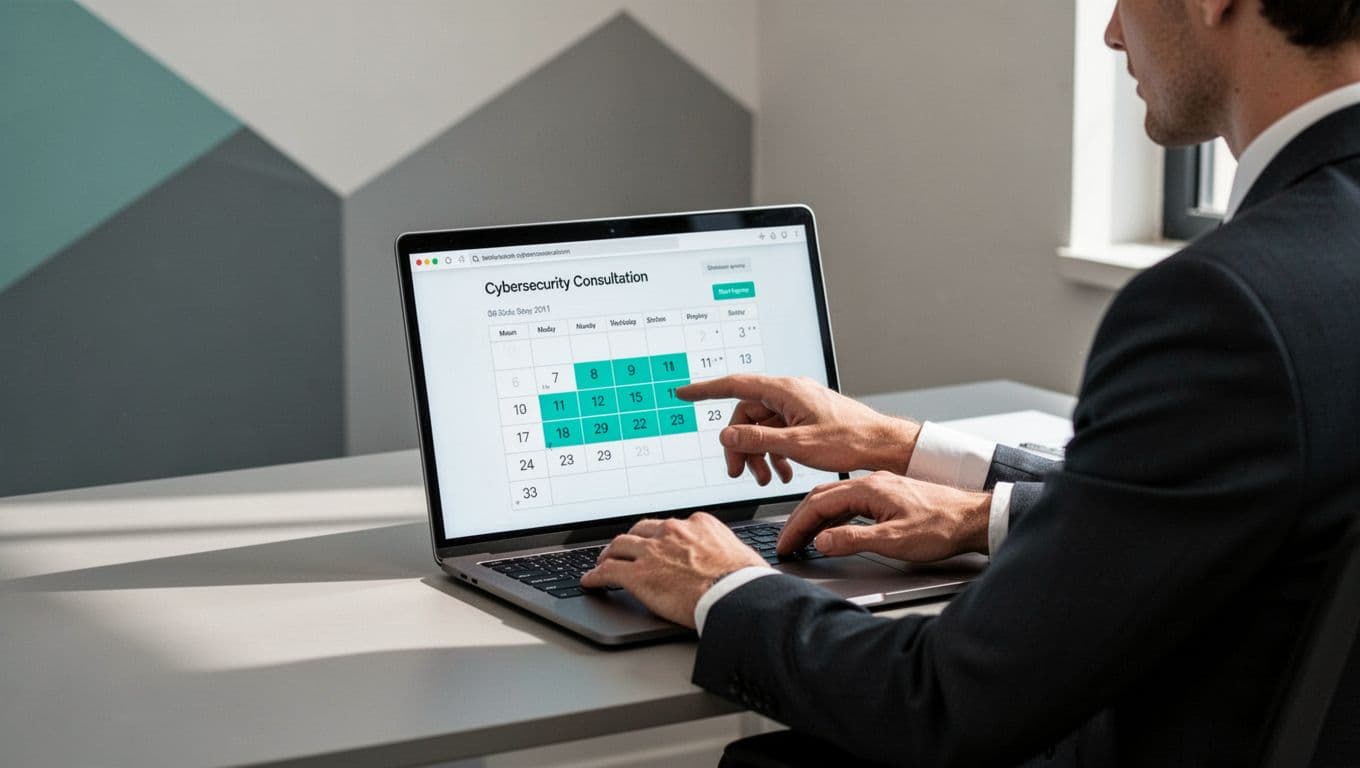
That first conversation should touch on access controls, backup plans, incident response, third-party risk, and compliance needs. If your business must meet SOC 2, HIPAA, ISO 27001, or a customer security review, the consultant should connect those goals to the work ahead.
It also helps when the firm can explain what they’ll leave you with. A good outcome might be a risk summary, a short roadmap, and clear next steps for your team. That structure lines up with Barracuda’s consultation guidance, which focuses on your requirements, questions, and pricing direction.
A useful consultation doesn’t start with tools. It starts with your business goals.
If the conversation jumps straight to software, slow it down. You need priorities first.
How to prepare before you book
A little prep makes the call far more useful. You don’t need a polished report, but you should bring a clear picture of your environment.
Start with the basics:
- List your most important systems and data.
- Note any recent incidents, even small ones.
- Share your current compliance targets.
- Identify who approves budget and risk decisions.
- Bring up any tools or vendors that feel messy or outdated.
This gives the consultant enough context to spot patterns. It also helps them avoid broad advice that sounds smart but solves nothing.
If your team wants a focused first step, Book a Discovery Call with Bud Consulting and come prepared with those notes. That kind of call can surface the fastest wins without dragging you into a long project too early.
Situations where a consultation pays off fast
Some business problems call for outside security advice right away. A consultation is especially useful when the stakes are high and the internal view is incomplete.

That often includes a SaaS company getting ready for a new enterprise customer. It also fits a healthcare or finance business facing stronger compliance demands, or a growing firm that needs better identity and access control.
A consultation helps in merger situations too. Two companies may have different policies, different tools, and very different habits. In that case, the first job is to find the biggest gaps before they create confusion.
It can also help when you need senior security guidance but can’t hire fast enough. Some firms, including Bud Consulting, support companies that need help finding hard-to-fill roles like cloud security architects, IAM specialists, AppSec leaders, or a CISO-level voice.
For teams that want ongoing visibility, ask whether the firm can validate your external attack surface over time. That matters when your web apps, cloud services, and vendors change often.
How to pick the right consulting firm
Not every cybersecurity consulting firm fits every business. The right partner should understand your industry, speak plainly, and explain what happens after the first meeting.
Look for a firm that talks about risk in business terms. They should connect security work to uptime, customer trust, audit readiness, and hiring gaps. If they can’t explain the plan without heavy jargon, keep looking.
It also helps to compare providers against a few basic points. TechTarget’s cybersecurity vendor criteria is a useful reference for scope, fit, and support style.
Ask whether the firm can help with both technical work and human risk. Security culture matters, because many incidents start with a bad click, a weak habit, or a rushed decision. The best consultants know that tools only go so far.
A clearer next move starts with one conversation
A good consultation should leave you with clarity, not confusion. It should show where your biggest risks sit and what you can tackle first.
That first meeting often feels like turning on a light in a dark room. Once the path is visible, the next step gets easier.
If your team is facing a deadline, a gap, or a growing list of questions, scheduling the call now can save time later.