table of contents
If your incident plan only works on paper, a tabletop exercise will expose that fast. In 2026, teams are dealing with ransomware, cloud outages, supplier failures, and AI-assisted phishing, often in the same quarter. A good exercise shows how people decide, who talks to whom, and where the plan breaks under pressure.
The goal is not to win the scenario. It’s to find weak spots before a real outage, breach, or disruption puts them on the clock. Start by choosing one outcome you want to test, then build the session around that.
Start With the Failure You Want to Catch
Too many exercises try to test everything at once. That sounds efficient, but it usually creates noise instead of insight.
Pick one business risk and one core process. For example, you might test how payroll holds up if identity systems fail, or how customer service responds if a SaaS vendor goes dark. If you need a continuity-focused framework, the UCI continuity training and exercises guide shows how tabletop work fits into broader business continuity testing.
The key question is simple, what do you want to know when the session ends? If the answer is vague, your exercise will be too.
A strong objective sounds like this:
- Can the team detect the incident fast enough?
- Do leaders know who can approve public messages?
- Can operations keep going while systems are down?
- Are vendor and recovery steps clear enough to use?
Once the objective is clear, the rest of the design gets easier.
Build a Scenario That Feels Real
A good scenario should feel close to work, not like a movie plot. In 2026, that often means mixing cyber risk with operational disruption. Think ransomware plus remote work issues, or a cloud outage that also blocks customer billing.
For a cyber-first structure, Sophos’s how to run a cybersecurity tabletop exercise is a useful reference. It shows how to move from a simple prompt to a meaningful response test.
Make the scenario specific. For example, imagine a Tuesday morning when finance can’t access the ERP system, the help desk gets phishing reports, and a supplier says its portal is offline. Who notices first? Who owns the call? What happens if the CISO is traveling and the CEO wants an answer in ten minutes?
That’s where tabletop exercises earn their keep.
The best tabletop exercise is a decision test, not a slide review.
If the room spends all its time talking about policy language, the scenario is too soft. If the team never has to choose, the drill isn’t doing enough.
Run the Tabletop Exercise Like a Real Meeting
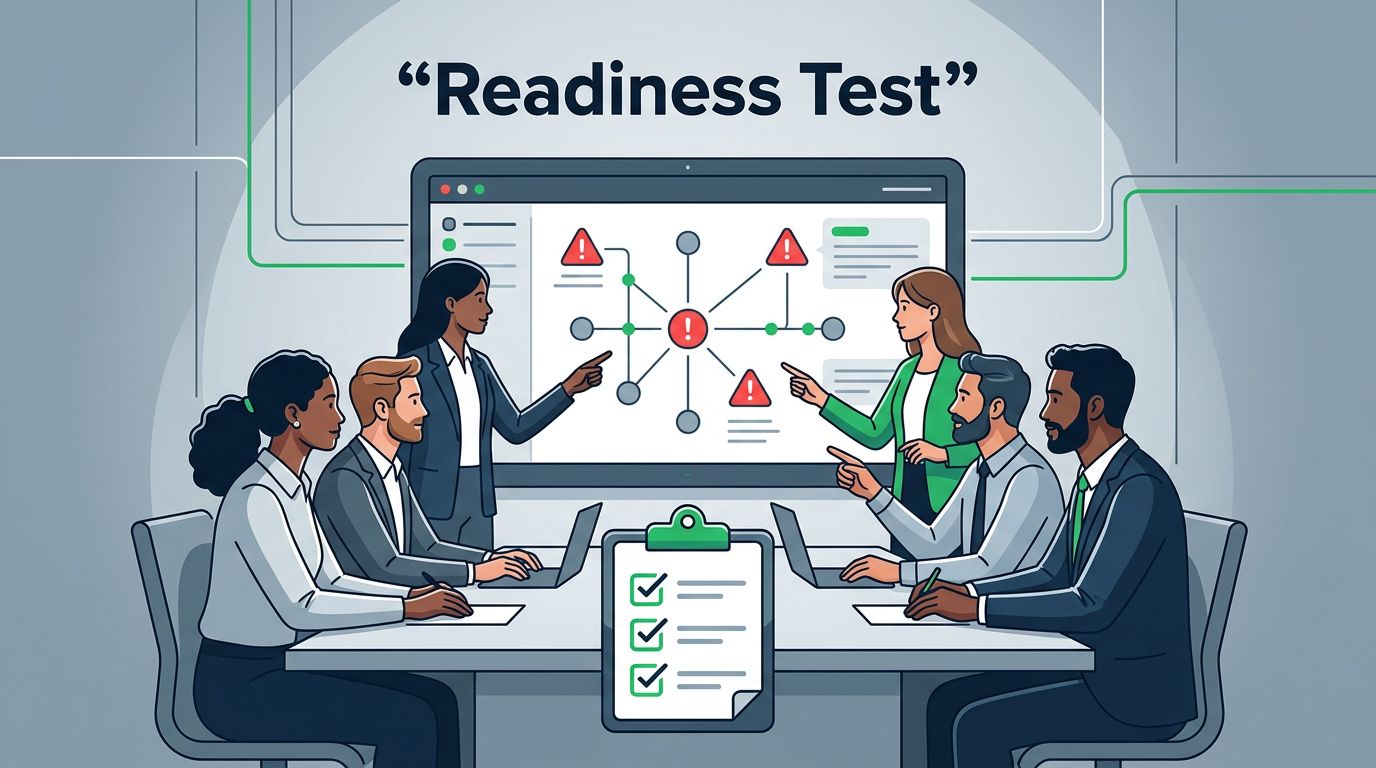
Treat the session like a live coordination call. Assign a facilitator, note-taker, and timekeeper before you begin. Also, make sure each function knows whether it is there to decide, advise, or observe.
Then walk through the scenario in small steps. Keep injects short and realistic. In 2026, some teams use AI-generated prompts to vary the pressure, such as a sudden media call, a regulator question, or a supplier failure. That can help, as long as the group still has to make real choices.
A simple run sequence looks like this:
- Open with the objective, scope, and ground rules.
- Present the first event and ask who takes the lead.
- Add one inject at a time and watch how decisions move.
- Record gaps, delays, and conflicting assumptions.
- End with owners, deadlines, and a short debrief.
Avoid these common mistakes:
- Too many people in the room, so no one speaks clearly.
- A scenario that grows so broad it stops feeling real.
- A debrief that ends with “good session” and no action list.
If you want a solid incident-response structure to compare against, TechTarget’s incident response tabletop exercises guide is a practical reference.
Measure Readiness with Numbers You Can Defend
A debrief only helps if you can measure what happened. That means looking past opinions and focusing on observable results.
A simple scorecard keeps the review honest.
| Readiness signal | What to watch | What strong readiness looks like |
|---|---|---|
| Decision speed | Time to name a lead and next step | The team acts without long debate |
| Role clarity | Who speaks, writes, and approves | Each function knows its lane |
| Communication flow | Internal and external updates | Legal, HR, IT, and comms stay aligned |
| Recovery path | Backups, workarounds, vendor steps | The plan matches real tools and limits |
| Follow-through | Actions after the session | Owners and due dates are assigned |
A slow answer on one line can matter more than a perfect score elsewhere. The point is to spot where readiness stalls, then fix that gap before the next event.

A Simple Checklist Before You Start
Use this as a quick prep list before your next session.
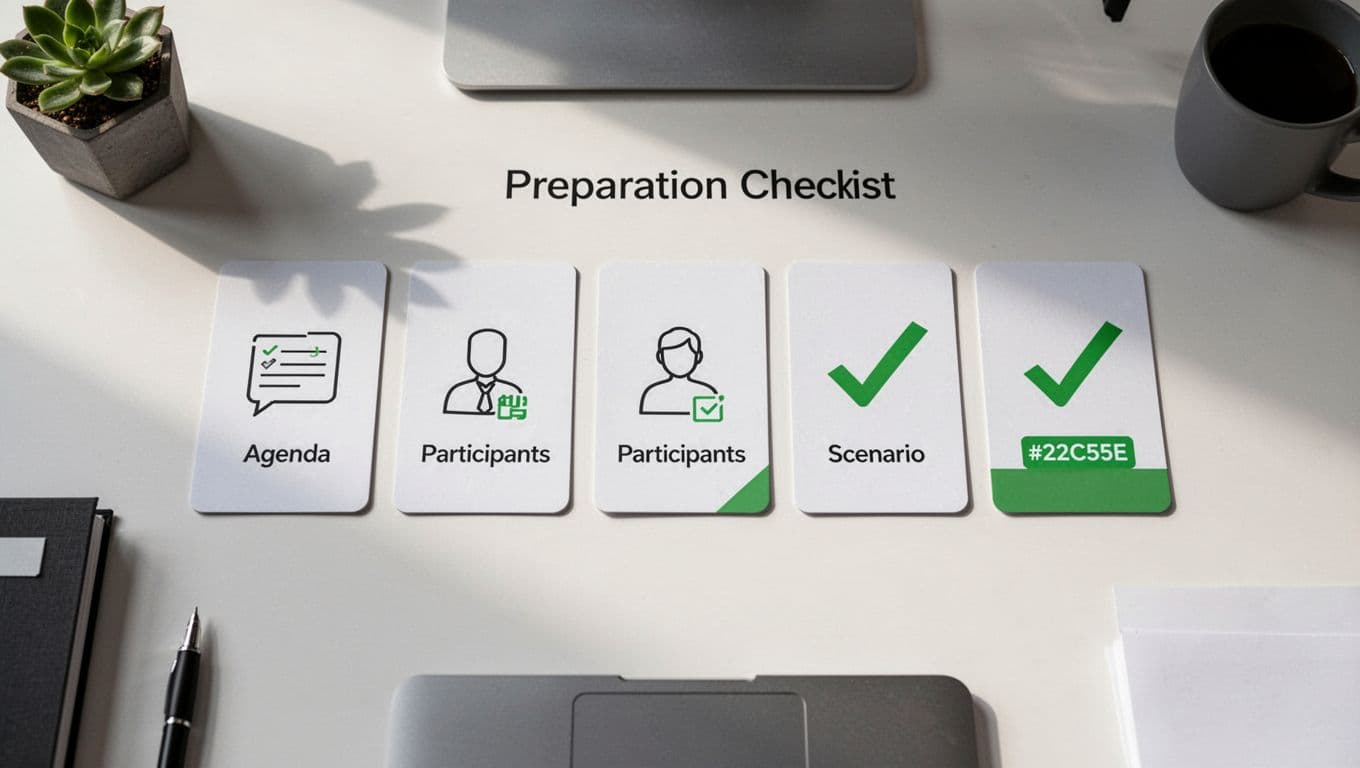
- Set one clear objective tied to a business risk.
- Pick a scenario that matches your threat profile.
- Invite the people who will make real decisions.
- Add a note-taker and a timekeeper.
- Prepare three injects that push the team forward.
- Decide how you will score readiness after the session.
- Confirm the follow-up owner for every major gap.
If you want help building a session around cyber risk, continuity gaps, and cross-functional response planning, Book a Discovery Call with Bud Consulting.
Turn the Findings Into Better Readiness
Tabletop exercises work when they are narrow, realistic, and honest. They show whether your team can make decisions before the pressure rises.
That matters even more in 2026, when cyber incidents and operational disruptions often hit at the same time. A plan that looks strong in a binder can still fail in the room.
Use the exercise to find the gaps that matter most, then fix them while you still have time. The real measure of readiness is simple, the team knows what to do when the room gets quiet.