table of contents
Most security incidents don’t start with a broken system. They start with a rushed click, a shared password, or a shortcut that seemed harmless at the time. A human risk register turns those patterns into something you can track, assign, and reduce.
That matters because people create risk in repeatable ways. Security, compliance, and IT teams need one clear place to see it. Here’s how to build that register without turning it into another spreadsheet that no one opens.
Start with the behaviors, not the blame
What do phishing clicks, shadow IT, and weak passwords have in common? They all point to behavior, not just technology.
A useful register starts with the actions that create exposure. That means looking at phishing susceptibility, privileged access misuse, file-sharing mistakes, password reuse, and third-party human errors. It also means naming the situations where people take shortcuts, because those are usually the repeat offenders.
Begin with evidence. Review phishing reports, IAM logs, service desk tickets, DLP alerts, and exception requests. If you want a broader view of current thinking, the Ultimate Guide to Human Cybersecurity Risk is a useful reference.
Common risks usually show up in a few clear forms:
- Phishing susceptibility: People click, reply, or share data after a fake message.
- Privileged access misuse: Admin accounts get used too broadly or too casually.
- Shadow IT: Teams adopt tools without approval or security review.
- Weak password behavior: Password reuse and poor reset habits keep showing up.
- Data handling mistakes: Sensitive files get sent to the wrong person or shared too widely.
- Third-party human risk: Contractors or vendors mishandle access, data, or requests.
The goal is not to score people. It’s to spot the patterns that keep creating incidents.

Once those behaviors are visible, the register starts to feel practical instead of abstract.
Use the right frame, not a generic risk log
A general risk register tracks business exposure. A human risk register tracks the behaviors that feed that exposure. That difference matters, because it changes what you measure and who owns the fix.
If you want a current model for measuring people-based exposure, the 2025 Human Risk Report and the Human Risk Management Framework both show how teams are moving beyond awareness-only programs.
Here’s a simple comparison.
| Tool | Main focus | Best use |
|---|---|---|
| Human risk register | Behavior-driven security exposure | Targeted controls and ownership |
| Enterprise risk register | Business, legal, and operational risk | Executive reporting |
| Awareness tracker | Training completion and click rates | Education reporting |
The key takeaway is simple. A human risk register should show where behavior creates risk, not just whether someone finished training.
Build the register with a repeatable process
A strong register follows the same steps every time. That keeps people focused on the risk itself.

- Define the scope. Decide whether you’re tracking one team, one process, or the whole company. Finance, IT admins, and contractors often need different treatment.
- Collect evidence. Pull from phishing results, access reviews, policy exceptions, help desk trends, and vendor incidents.
- Rate likelihood and impact. Keep the scale simple, such as 1 to 5. Use the same scoring rules every time.
- Assign one owner. Each risk needs a person who can act on it. Shared ownership often means no ownership.
- Choose a treatment. Use training, access controls, extra approval, monitoring, or process changes.
- Set a review date. Update the register after incidents, role changes, vendor onboarding, or campaign results.
If your team needs help turning those steps into a working program, Book a Discovery Call with Bud Consulting.
Use a simple entry format your team can keep up with
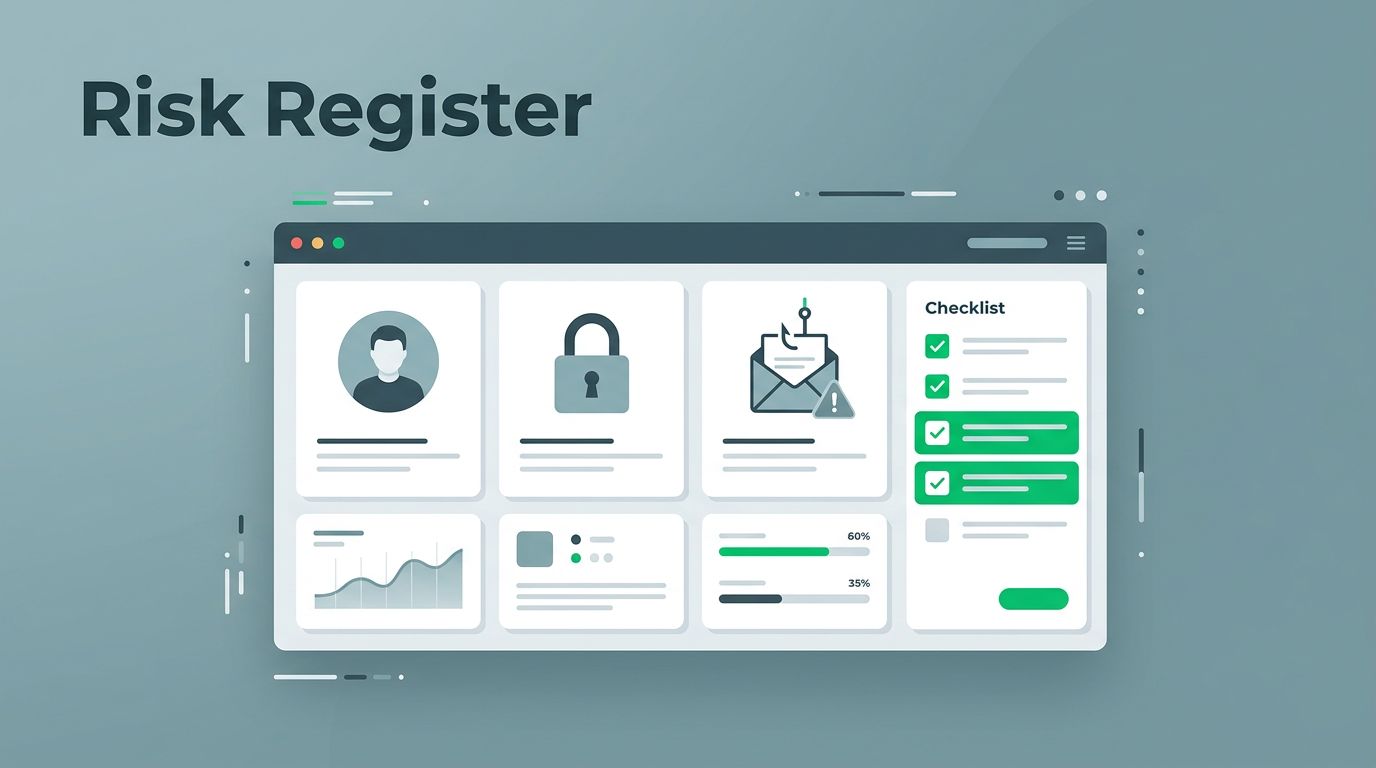
A register works best when each entry is short, clear, and easy to scan. Here’s a sample structure you can copy.
| Risk scenario | Signal to watch | Likelihood | Impact | Mitigation |
|---|---|---|---|---|
| Phishing susceptibility | High click rate, slow reporting | Medium | High | Targeted coaching, stronger filtering, MFA |
| Privileged access misuse | Shared admin accounts, odd session times | Low | High | PAM controls, approval steps, session logging |
| Shadow IT | Unsanctioned apps, unmanaged spend | Medium | Medium | Approved app list, intake process |
| Weak password behavior | Password reuse, reset spikes | High | Medium | Password manager, MFA, policy checks |
| Data handling mistakes | Wrong recipient, open links, bad sharing | Medium | High | DLP, labeling, sharing rules |
| Third-party human risk | Contractor errors, access gaps | Medium | High | Access reviews, contract controls |
A good entry names the behavior, the signal, and the fix. That makes the register useful for security, compliance, and managers who need action, not theory.
Keep it current with real evidence
A human risk register gets stale fast if nobody updates it. That’s why regular review matters more than perfect formatting.
Review it on a set cadence, then refresh it after major events. New hires, role changes, vendor access, and failed phishing tests all change the picture. So do repeated mistakes in the same team.
Use the register to answer a few direct questions. Which risks keep returning? Which teams need better controls? Which issues need access changes instead of more training? Those answers are what make the register useful.
A human risk register should help you reduce repeat behavior, not just document it. When it ties evidence to ownership and action, it becomes part of security operations, not a side project.
The teams that get real value from it keep it simple, keep it current, and treat people-related risk like any other security exposure.