table of contents
A security role can fail even when the person in it is strong. The problem is often the same, no one defined the lane, the authority, or the finish line.
A security role charter fixes that. It gives a CISO, security manager, or security lead clear direction before work turns into guesswork, overlap, or gap-filling.
What a Security Role Charter Should Cover
Think of the charter as the guardrails around the role. It should explain why the role exists, what it owns, what it can decide, and how success gets measured.
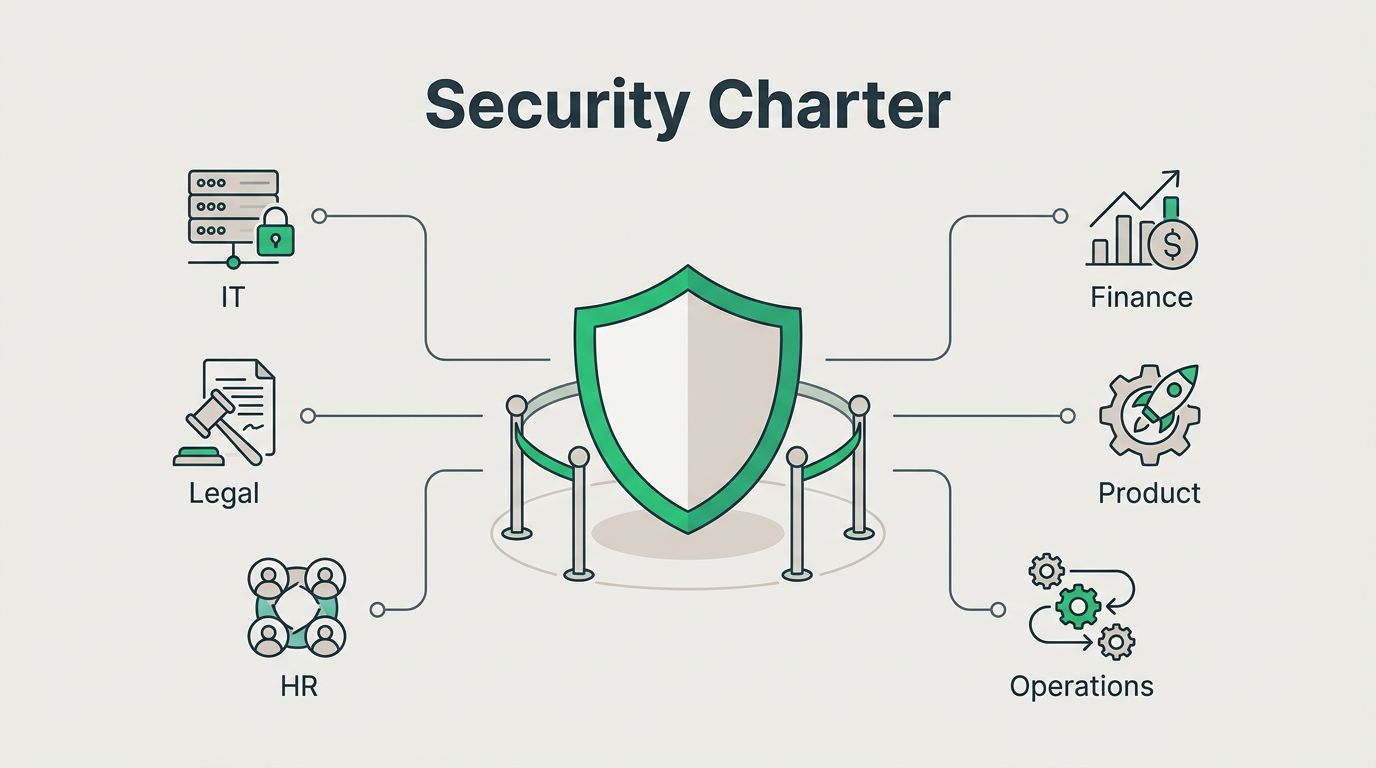
That matters because security work touches many teams. IT, legal, HR, finance, product, and operations all feel the impact. Without a clear charter, people start treating security like a help desk with a vague mission.
A strong charter usually covers:
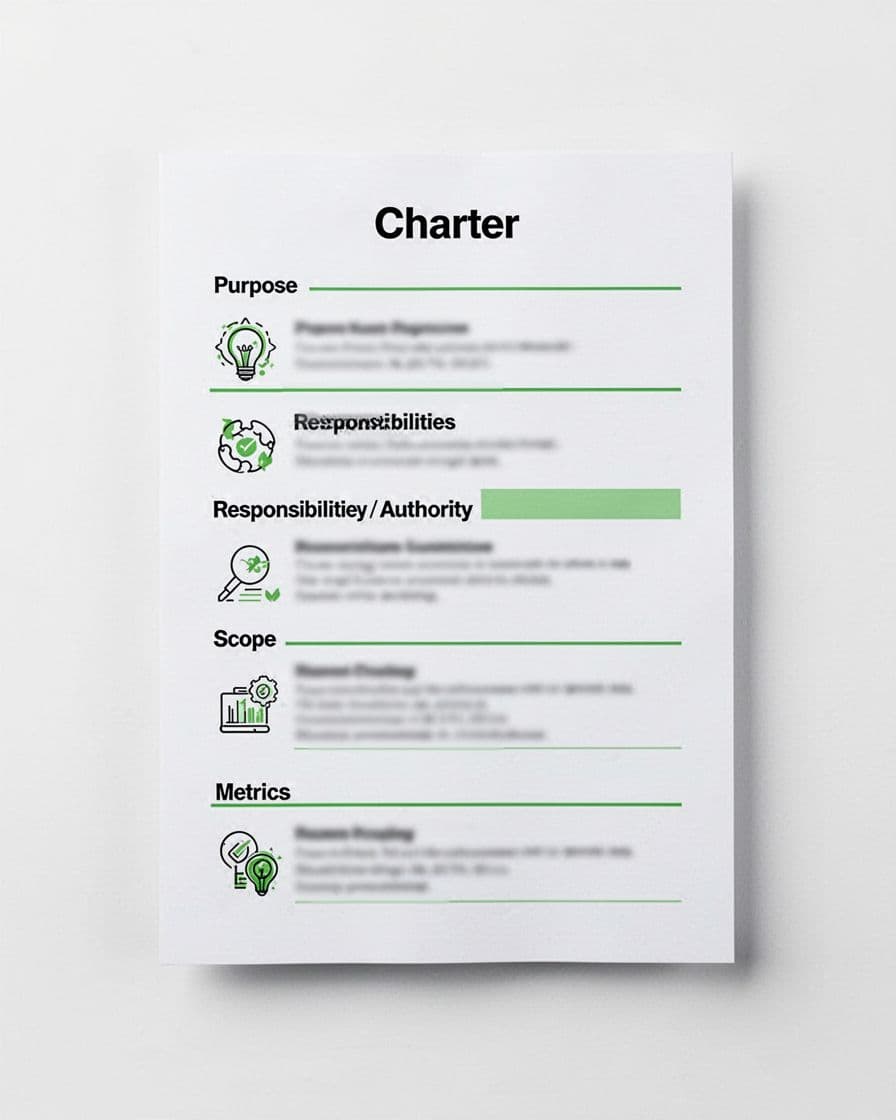
- Purpose, why the role exists.
- Responsibilities, what outcomes the role owns.
- Scope, what systems, teams, or risks sit inside the role.
- Authority, what the role can approve, block, escalate, or change.
- Stakeholders, who the role works with most often.
- Measures, how leadership will judge progress.
For example, a CISO charter might include board reporting, risk acceptance, and program oversight. A security manager charter may focus on policy rollout, control checks, and team coordination. A security lead charter might cover incident triage, day-to-day response, and cross-team follow-through.
If the charter doesn’t answer who decides and what success looks like, it isn’t finished yet.

Why the Charter Is Not a Job Description
A lot of teams mix these up. They’re related, but they do different jobs.
A job description is built for hiring. A team charter is built for how a group works together. A role charter sits in the middle, it defines the mission and authority of one role inside the wider security function.
Here’s a quick comparison.
| Document | Main purpose | Audience | What it answers |
|---|---|---|---|
| Job description | Attract and screen candidates | Candidates and recruiters | What skills and experience are needed |
| Security role charter | Define mission, scope, and authority | Leaders, peers, and the role holder | What the role owns and how it succeeds |
| Team charter | Set shared rules for a group | Team members and cross-functional partners | How the group works, decides, and escalates |
The takeaway is simple. A job description helps you hire the right person. A charter helps that person do the right work. A team charter helps the group stay coordinated.
Build the Charter in Five Clear Steps
Start with the real problem the role should solve. Then move from broad goals to specific ownership. That keeps the charter useful instead of abstract.
- Talk to the people around the role.
Meet with the business leader, direct peers, and key partners. Ask where confusion, delay, or risk shows up today. - Define the outcome, not just the activity.
If the role is a security manager, the goal may be better policy adoption or fewer repeat audit issues. If it’s a CISO, the goal may be stronger risk visibility for executives. - Draw the boundaries.
Be clear about what’s in scope and what isn’t. For example, does the role own cloud security policy, or only advise on it? - Set decision rights.
Spell out what the role can approve, recommend, reject, or escalate. This is where many charters get fuzzy, and fuzziness creates conflict. - Attach measures and review dates.
Pick metrics the role can influence. Then decide how often the charter gets reviewed, usually every six to twelve months.

A Sample Security Role Charter Outline You Can Reuse
A good charter should fit on one or two pages. If it runs too long, people stop reading it.
Use this structure as a starting point:
- Role name and reporting line
- Purpose of the role
- Core responsibilities
- Decision rights and authority
- Scope, including what sits outside the role
- Key partners and escalation paths
- Success measures
- Review cadence and approval owner
For a growing company, this outline keeps the role from becoming vague as the security function matures. For a larger organization, it helps standardize senior roles across regions or business units.
Here’s a short example of how one line might read: “The security lead owns triage coordination for priority incidents and escalates unresolved issues to the CISO within one business day.” That’s clear, testable, and easy to use.
Make the Charter Work Through Governance and Metrics
A charter only matters if leaders use it. Put an owner on the document, then link it to governance meetings, hiring plans, and performance reviews.
Cross-functional alignment matters here. Security can’t set authority in a vacuum. Legal may need to weigh in on risk acceptance. IT may need to own parts of the control work. HR may need to support training or policy enforcement.
Choose metrics that match the role. Good examples include audit issues closed on time, policy adoption rates, incident response times, or the number of high-risk exceptions still open. Avoid vanity numbers that look busy but say little.
If you’re defining a senior role and want help shaping the scope, you can Book a Discovery Call with Bud Consulting.
The best charters don’t sit in a folder. They guide decisions when pressure is high and time is short.
A security role charter brings order to a role that often sits at the center of competing demands. When it sets clear authority, scope, and measures, people stop guessing and start working from the same playbook.
That’s what turns a security role from a loose title into a function the business can trust.