table of contents
Cyber insurance renewals now hinge on proof, not promises. If your security review partner can’t speak an underwriter’s language, your team may waste weeks fixing the wrong gaps.
In April 2026, carriers still compete on price, but they ask harder questions about MFA, EDR, ransomware response, third-party risk, and regulatory pressure. The right cyber insurance partner helps you answer those questions before renewal turns into a scramble.
The decision is less about brand names and more about fit, evidence, and timing. Here’s how to separate a useful reviewer from a report generator.
Why the insurance market asks harder questions now
The market is softer on pricing, but not on control quality. Recent data from April 2026 shows flat or lower premiums in many cases, yet underwriting still demands proof that your defenses work.
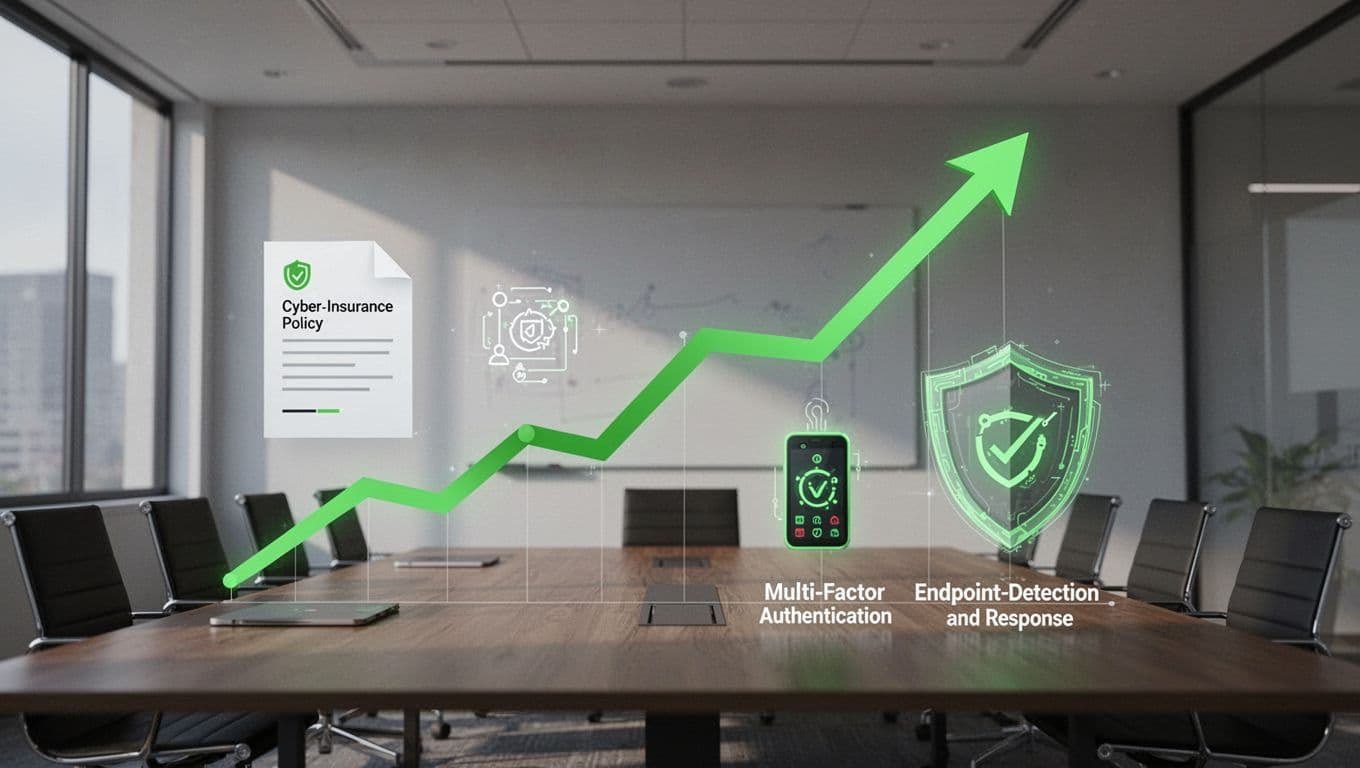
That matters because ransomware keeps driving a large share of claims, while AI-assisted phishing and deepfakes are making credential theft easier. Carriers know that one weak admin account can open the door to a costly loss. So they want evidence that MFA is enforced, EDR is running, backups are tested, and vendor access is controlled.
A recent cyber insurance readiness guide for 2026 shows the same pattern. Better posture lowers friction at renewal, but only when the controls are documented well.
If a partner can’t map controls to underwriting questions, they’re helping you produce paperwork, not readiness.
Look for underwriting fluency, not generic security advice
A strong review partner knows how carriers think. They can tell you where your evidence is thin, where your controls are misaligned, and where an exception needs a clean business case.
They should ask direct questions early, not after the questionnaire lands:
- Which systems still use MFA exceptions?
- Is EDR active on every endpoint, including admin devices?
- When was the last restore test, and how long did it take?
- Which vendors can reach sensitive data or critical workloads?
- What proof will the broker or carrier want at renewal?
If those questions never come up, the review is too shallow. A current 2026 underwriting overview shows that insurers care about enforcement, not policy titles. In other words, “we have MFA” is weaker than “MFA is enforced for remote access, privileged accounts, and cloud admin work.”
The best partners also translate technical detail into insurance language. They can explain compensating controls, gap closure dates, and residual risk without making your renewal packet harder to read.
Use a vendor evaluation checklist
A formal checklist keeps the conversation honest. It also makes it easier to compare firms that sound similar on a sales call.

| Criterion | What strong evidence looks like | Warning sign |
|---|---|---|
| Underwriting experience | They can explain common carrier questions and renewal pressure. | They speak only in broad security terms. |
| Technical depth | They understand MFA, EDR, backup isolation, IAM, and incident response. | They rely on one-size-fits-all advice. |
| Evidence handling | They know how to gather logs, diagrams, policies, and test results fast. | They ask for documents without saying why. |
| Third-party risk | They review vendor access, SaaS exposure, and contract gaps. | They ignore suppliers and shared access. |
| Renewal support | They help you close gaps before the questionnaire goes out. | They disappear after the first report. |
The takeaway is simple. A good partner leaves you with a clear action plan, not a pile of slides. They should help your team focus on the controls that matter most to the carrier.
Strong and weak partners look different in practice
Strong partners
A strong partner acts like a translator between security and insurance. They connect your technical state to what underwriters need to see.
They usually do four things well:
- Translate questionnaire items into specific tasks.
- Flag exceptions before the broker does.
- Test assumptions about backups, access, and recovery.
- Help you explain residual risk in plain language.
They also understand that renewal pressure exposes talent gaps. If your team lacks IAM, EDR, or incident response depth, the right reviewer notices that fast.
Weak partners
Weak partners tend to work from templates. They often focus on the size of your budget or the name of your tools, then stop there.
Their blind spots are easy to spot:
- They recycle a generic assessment format.
- They talk about products more than control use.
- They skip vendor risk because it takes too long.
- They treat the renewal as a paperwork exercise.
That kind of help can create noise. It may also leave real gaps hidden until the carrier asks for proof.
Match the partner to your timeline and team
The best review partner also fits your internal pace. A mid-market IT team needs a different rhythm than a global company with multiple business units and a larger broker chain.
So ask who will do the work, how often they’ll meet, and how they handle open items when the renewal date gets close. You want someone who can work with your CISO, IT, risk, and finance teams without creating more handoffs than necessary.
If your team needs help closing gaps before renewal, Book a Discovery Call with Bud Consulting. A focused review can surface control gaps, talent gaps, and third-party exposure before they slow your insurer conversation.
Choose the partner that improves insurability
The right cyber insurance security review partner does more than tidy up a questionnaire. They help you tighten controls, document proof, and present risk with confidence.
In a year when MFA, EDR, ransomware defense, and vendor risk matter more than ever, that difference shows up fast. The best partner makes renewal feel managed, not rushed.
A good review won’t promise coverage. It will give you a stronger case for it.