table of contents
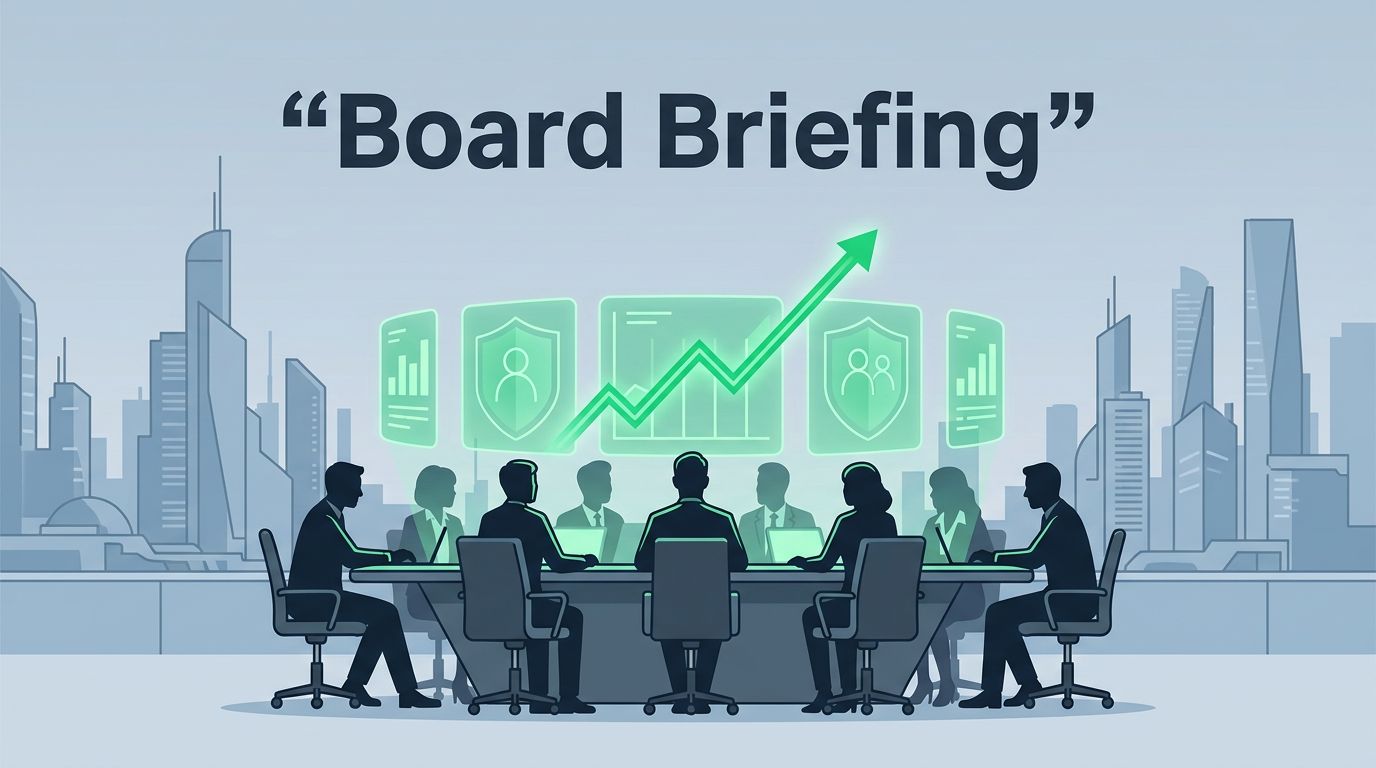
A board cybersecurity briefing can win trust or waste half the meeting. In April 2026, directors want to know what changed, what it means for the business, and what decision they need to make.
That means your prep has to turn threat data into clear choices on money, uptime, compliance, and reputation. The fastest way to lose the room is to bury the message in tool output and jargon. The better way is simpler, and far more disciplined.
Lead with the decision, not the incident
Boards are not asking for a log review. They want to know whether risk is rising, where the business is exposed, and what should happen next.
A short, decision-focused brief works better than a long slide deck, and that matches board cyber reporting guidance. Many boards now expect quarterly updates, even if the company is busy or under pressure.
Start by naming the one or two decisions you want from the board. For example, you might need approval for identity security spend, support for a vendor exit plan, or a faster recovery project. If you cannot point to a decision, the item probably belongs in the appendix.
The board should leave with choices, not a tour of every control.
That shift matters even more in 2026. Directors are hearing about AI-powered phishing, deepfake fraud, and vendor-driven breaches. They do not need technical detail first. They need to know where the company stands and what help is needed.
Turn technical data into board language
Before the meeting, convert technical signals into a board-ready scorecard. Keep each metric tied to one business effect. For public companies, that also helps with the evolving governance and disclosure view around cyber oversight, as seen in recent coverage of the SEC cybersecurity disclosure rules.
Use this simple structure.
| Metric | What the board hears | Why it matters |
|---|---|---|
| Critical systems availability | Which systems are at risk of outage | Revenue, operations, and customer service |
| Mean time to detect and contain | How fast the team spots and limits an attack | Less spread, less downtime, lower recovery cost |
| Vendor risk open items | Third parties with unresolved gaps | Supply chain disruption and contract exposure |
| Phishing and fraud trend | Whether people controls are weakening | Payment fraud and reputation damage |
| Recovery test result | Whether restore plans worked in practice | Business continuity and legal defensibility |
The table should do the heavy lifting. Your job is to explain the trend, the consequence, and the decision.
For example, do not say, “Our phishing rate rose 12%.” Say, “Finance and HR are seeing more realistic fraud attempts, and that raises payment risk.” Do not say, “We have 18 high-severity vulnerabilities.” Say, “These gaps increase the chance of outage in two customer-facing systems.”
That is the level of clarity a board can use. It also helps directors connect cyber risk to financial, operational, legal, and reputational impact without getting lost in terminology.
If a metric does not support a decision, cut it. If a control result does not change the board’s view of risk, move it to backup slides. The briefing should be a conversation about judgment, not a dump of activity.
Give the meeting a clear agenda
A board cybersecurity briefing should feel focused from the first minute. Keep the session tight, and leave deep technical detail for follow-up material.

A clean agenda often looks like this:
- Open with the business headline.
- Review the top three cyber risks.
- Show the metrics and trend lines.
- Cover any material incidents or near misses.
- State the decisions needed from the board.
- End with owners, timing, and follow-up.
That format keeps the meeting on track. It also helps directors understand whether the company is getting safer, staying flat, or falling behind.
A useful rule of thumb, ask yourself whether each section answers one of three questions: What changed? Why does it matter? What do you need from us? If the answer is no, trim it.
For a practical benchmark on board-level structure and oversight, best practices for board-level cybersecurity oversight line up well with this approach. The best briefings are short, direct, and anchored in decision-making.
Rehearse the packet before the meeting
The best briefings feel calm because the work happened before the meeting. Rehearsal matters, especially when the board wants straight answers on risk, cost, and readiness.

Use a short pre-meeting checklist:
- Confirm the source, owner, and date for every metric.
- Write one sentence that states the main risk trend.
- Align finance, legal, communications, and IT on the same story.
- Rehearse the board questions you expect, including cost, downtime, and disclosure risk.
- Bring the ask, the owner, and the due date.
- Prepare the follow-up plan if the board wants more detail.
That last step matters. A strong briefing ends with a path forward. It does not end with “we’ll keep watching.”
If your team needs support tightening the story or filling a senior security gap, Book a Discovery Call with Bud Consulting.
A good board packet also includes a short backup section. Put the technical detail there, not in the opening deck. That gives directors confidence without overwhelming them.
A board cybersecurity briefing works best when it feels like a business update with cyber facts, not a technical lecture. It should show the current risk, the likely impact, and the exact decision needed next.
When directors leave knowing the financial, operational, legal, and reputational stakes, the briefing has done its job. That is the standard boards expect in 2026.