table of contents
A polished report can still miss the point. The real test of cybersecurity consulting deliverables is whether they help you make decisions and reduce risk.
That matters because business owners, IT leaders, and compliance teams need more than nice slides. They need proof that the work fits their environment, budget, and control requirements.
The best way to judge a consultant is to look past the format and ask a simple question: does this deliverable help the next person act with confidence?
Start with the outcome, not the format
A strong deliverable names the problem, shows the evidence, and points to the next step. It should explain what is at risk, who owns the fix, and what changes if you wait.
A weak deliverable often feels neat but empty. It repeats generic advice, avoids trade-offs, and leaves you guessing about priority.
Use this quick comparison when you review a report or roadmap:
| What to check | Strong deliverable | Weak deliverable |
|---|---|---|
| Risk statement | Tied to your systems, data, or business process | Broad and generic |
| Priority | Ranked by impact and exploitability | A flat list with no order |
| Evidence | Backed by scans, interviews, logs, or tests | Based on opinion only |
| Feasibility | Realistic for your team and budget | Requires vague “more resources” |
| Ownership | Clear next owner and due date | No accountable person |
Reusable strategic guidance names patterns that matter across your business. Generic templates just swap in your company name and stop there.

Check for clarity, completeness, and proof
Every finding should trace back to something real. That might be a configuration review, a vulnerability scan, an interview, a policy check, or a test result.
If a consultant says your MFA controls are weak, the report should show where the gap exists. If they say backups are sound, it should include restore-test evidence. If they recommend segmentation, it should explain the systems, zones, and business reasons.
A deliverable without evidence is a claim, not a finding.
This is where current best practice matters. In 2026, strong work usually reflects identity-first controls, fast patching of known exploited issues, tested recovery, and active exposure tracking. For a practical current checklist, the latest cybersecurity best practices for 2026 resource is a useful reference point.
You can also anchor the review to NIST CSF 2.0 guidance and NIST assessment and auditing resources. Those sources help you judge whether the deliverable maps to recognized outcomes, not just vendor preferences.
Measure prioritization, feasibility, and compliance
The best cybersecurity consultant reports don’t treat every issue as equal. They sort work by business impact, exposure, and how likely the issue is to be abused.
That means the first items should usually be the ones that touch privileged access, internet-facing systems, sensitive data, or known exploited vulnerabilities. Lower-risk work can wait, as long as the report says why.
A usable recommendation also respects your operating reality. If a fix needs six months, a new platform, and three more hires, the consultant should say so. Good deliverables show an interim step, a target state, and the effort needed to get there.
Compliance matters too, but it should never hide the real risk. A sound deliverable maps findings to frameworks such as NIST or ISO 27001, then explains what that mapping means in practice. It should tell you which control is weak, how the weakness was found, and what evidence would prove the gap is closed.
A simple test helps here. Ask whether the recommendation changes anything if you delay it by 30 days. If the answer is no, the item may belong lower in the queue.
Make sure executives and technical teams can use the same work
One good report should serve two audiences. Executives need a short view of risk, cost, timing, and business effect. Technical teams need the details that let them fix the issue.
If a consultant gives you only executive language, engineers will struggle. If they give you only technical notes, leaders will miss the business meaning.
Strong cybersecurity consulting deliverables usually include a summary layer and a technical layer. The summary should answer what matters most, what happens next, and where decision points sit. The technical section should name the affected assets, required changes, and evidence behind each recommendation.

That mix matters because security work dies when people can’t use it. A great deliverable changes behavior, not just document storage.
If your team wants help reviewing deliverables before they turn into expensive rework, you can Book a Discovery Call with Bud Consulting.
The real test is usefulness
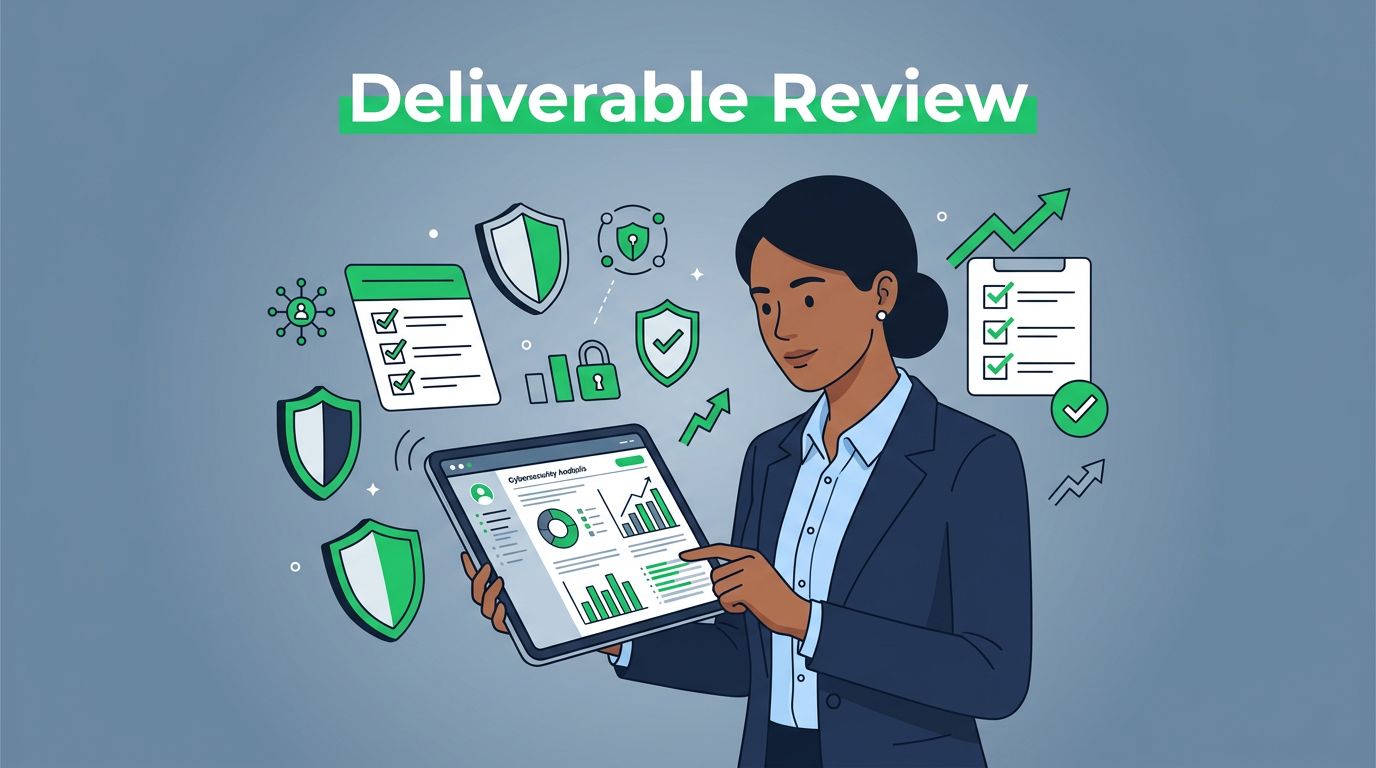
When you review a consultant’s work, don’t ask whether it looks complete. Ask whether it is specific, evidence-based, prioritized, and usable by the people who must act on it.
If the deliverable gives you clear decisions, clear ownership, and a clear path forward, it has value. If it reads like a template, it probably is one.