table of contents
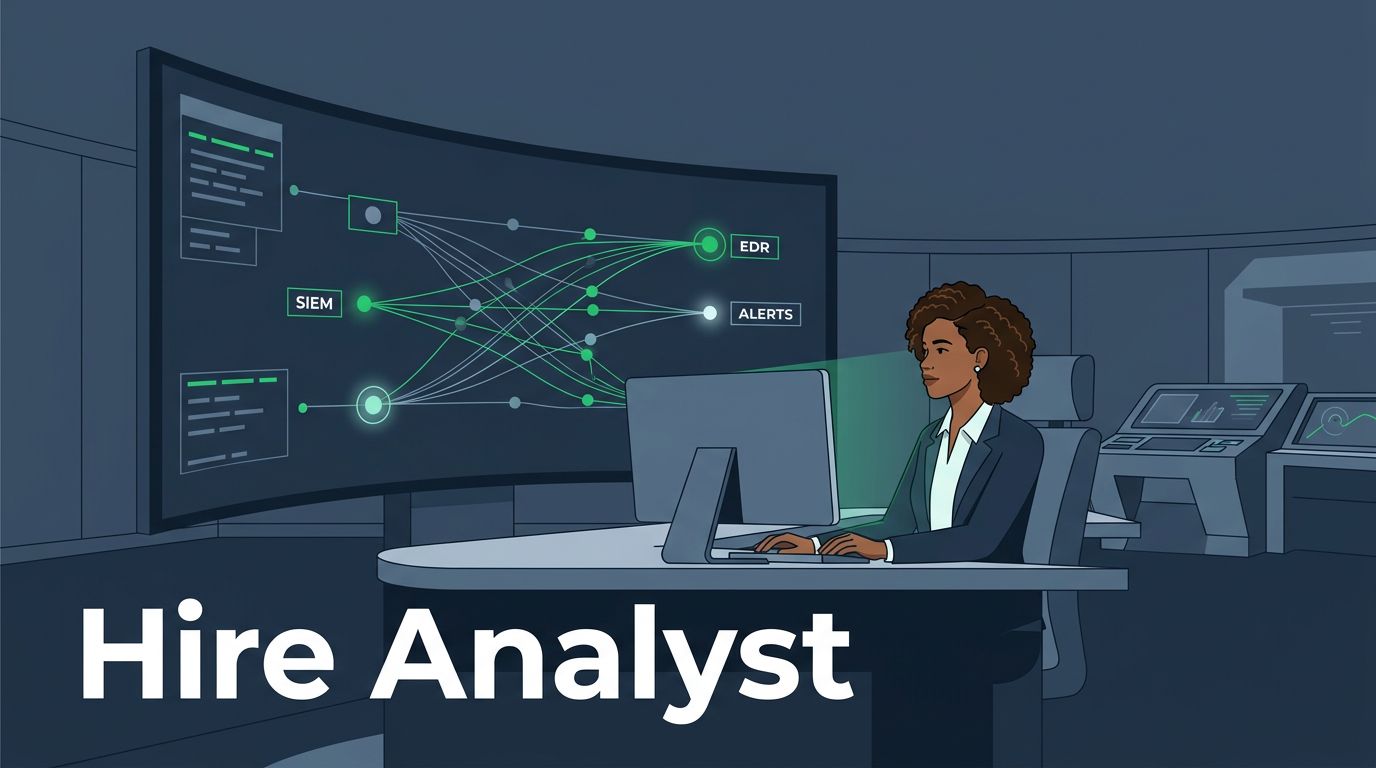
Hiring a security data analyst is different from hiring a regular analyst. You need someone who can read messy security data, spot patterns fast, and explain what matters before the SOC gets buried.
If you hire for dashboards alone, you may miss the person who can tie SIEM, EDR, and incident data together. If you hire for technical skill only, you may end up with someone who can’t brief a manager in plain English.
The best hires turn raw security data into clear action. Here’s how to find that person.
Define the role before you post the job
Start with the problem, not the title. Are you trying to cut alert noise, support incident response, or build weekly security metrics for leadership? Each goal needs a slightly different profile.
In April 2026, U.S. data analyst pay averages about $78,000 to $97,000. A security-heavy role usually sits higher, especially when you expect real SIEM and Python work.
If you need long-term ownership, choose an in-house hire. If you need backlog cleanup or short-term coverage, a contractor can make sense.
| Option | Best fit | Tradeoff |
|---|---|---|
| In-house | Ongoing detection work, dashboard ownership, SOC support | Slower search, higher long-term cost |
| Contract | Tool rollout, backlog cleanup, temporary coverage | Less context, less ownership |
If the role has no clear owner for alerts, metrics, and follow-up, the analyst will spend the week translating chaos.
Separate must-haves from nice-to-haves
Don’t hire by label alone. A strong posting should separate the skills that keep the SOC moving from the ones that help later. For a quick refresher on the platform mix, Core SOC analyst tools explained gives a useful view of SIEM, EDR, and related tools.

Use a simple split like this:
| Skill | Must-have | Nice-to-have |
|---|---|---|
| SIEM | Search logs, correlate events, tune alerts | Build advanced use cases and automation |
| EDR | Investigate endpoint alerts | Write response workflows |
| SQL | Query and join security data | Build complex models |
| Python | Automate repetitive analysis | Package scripts for team use |
| Dashboards | Build clear security views | Design executive scorecards |
| Threat detection and incident response data | Triage and document findings | Run hunt programs and post-incident reviews |
If a candidate has all the nice-to-haves but weak SIEM skills, the ramp-up will be slow. If they know SIEM and SQL but can’t explain their findings, they may struggle with leadership.
Ask interview questions that test real judgment
A strong interview should sound like the job. Ask about actual investigations, not trivia. If you want more prompt ideas, compare your list with SIEM technical interview questions and Coursera’s cybersecurity interview prep guide.

Try questions like these:
- How would you triage a spike in failed logins across cloud and on-prem logs? Look for structure, time windows, and source validation.
- What SQL would you use to compare endpoint alerts with authentication logs? Strong candidates talk through joins, filters, and data quality checks.
- Tell me about a Python task you automated in a security workflow. Good answers show repeatable work, not one-off scripts.
- Which dashboard metrics tell you alert noise is getting worse? Listen for false positives, backlog age, and response time.
- How do you combine SIEM and EDR data during an incident? The best answer shows correlation and clear handoff notes.
Strong candidates explain their thinking step by step. They also admit what they would escalate.
Use a practical assessment and a short checklist
A practical test should mirror the job. Give the candidate a small alert set, a few log samples, and one KPI target. Ask for a short written summary, not a slide deck.
The best assessment criteria are easy to score.
| What to assess | Strong signal |
|---|---|
| Data accuracy | Correct joins, time ranges, and entity matching |
| Judgment | Knows what is urgent and what is noise |
| Communication | Writes clearly for non-technical readers |
| Process fit | Uses your SIEM, EDR, and ticket flow well |
A simple hiring checklist helps keep the process honest:
- Define the business problem the role must solve.
- Decide whether the need is in-house or contract.
- Separate must-haves from nice-to-haves.
- Run a short live exercise with real security data.
- Score the work with the same criteria every time.
- Check references for investigation depth and teamwork.
Common hiring mistakes are easy to spot. Teams often hire a general data analyst and hope security knowledge appears later. They also overvalue certifications, skip a live log test, or ask for pretty dashboards when they need alert triage.
If you want help tightening the role profile or screening candidates, Book a Discovery Call with Bud Consulting.
Hire for signal, not noise
The right candidate won’t just report numbers. They will connect SIEM, EDR, SQL, Python, and security metrics into one clear story.
When you define the role well and test real work, hiring gets simpler. You stop guessing, and you start choosing someone who can turn noise into action.