table of contents
A security vendor demo can look flawless and still miss the mark. The hard part is seeing the gap between real fit and polished sales theater.
That gets harder when every product sounds similar and every presenter seems prepared. A fair review needs structure, shared criteria, and questions that force the product to show its work. Start before the call begins, not after the rep starts clicking through slides.
Build a scorecard before anyone joins the call
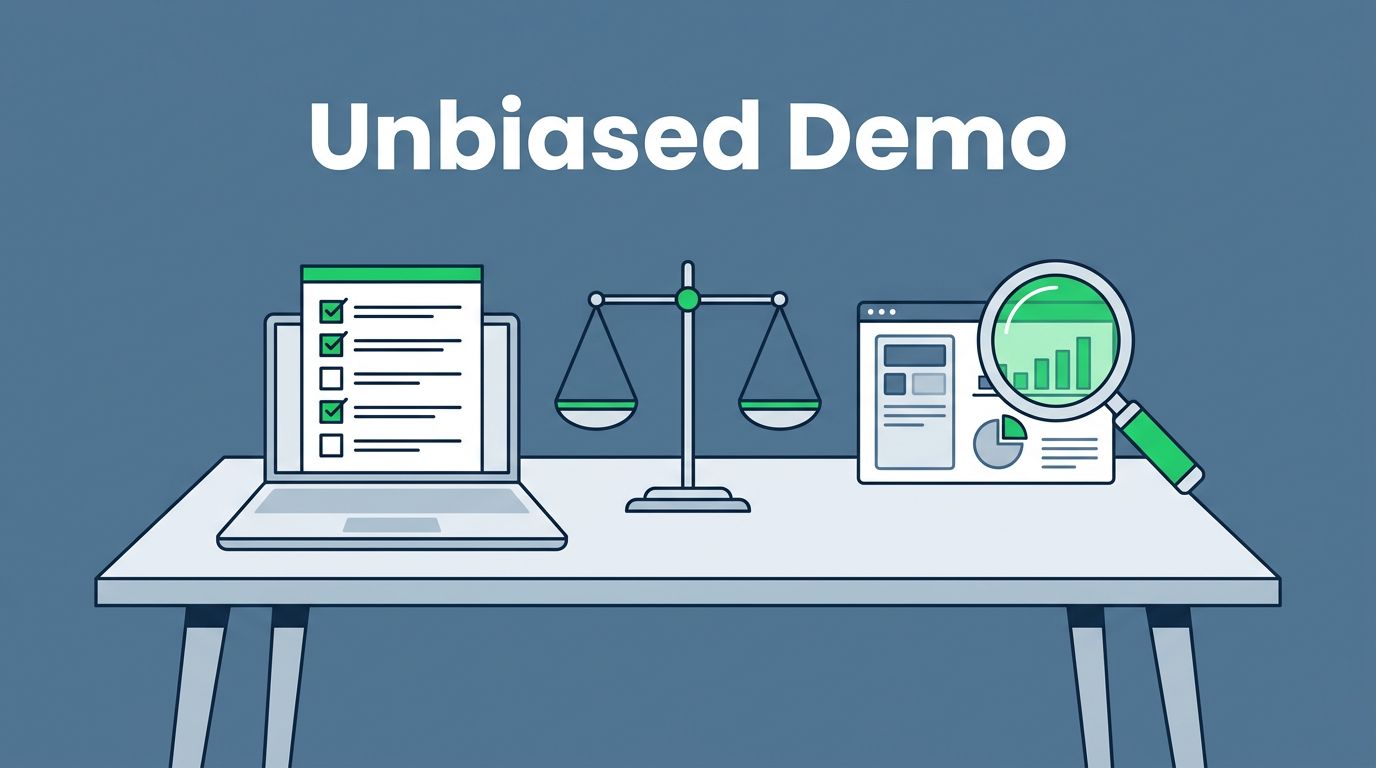
A security vendor demo goes off track when each viewer is judging something different. One person watches for integrations. Another cares about admin work. A third is impressed by the story. A simple scorecard keeps those views aligned.
If you need a practical starting point, a weighted scoring framework helps turn opinions into comparable notes. Give every criterion a weight before the demo, then keep those weights fixed.

| Criterion | What to score | What good evidence looks like |
|---|---|---|
| Fit to use case | Can it handle your top workflows? | Live steps that match your environment |
| Integration readiness | Can it connect to current tools? | Native connectors, API details, data flow |
| Usability | Can admins and analysts use it fast? | Clear screens, simple tasks, few workarounds |
| Operational effort | Who maintains it after go-live? | Honest setup, tuning, and support effort |
| Evidence quality | Are claims easy to verify? | Docs, logs, settings, and examples |
Before the demo, decide what a pass looks like. Pick three to five criteria and define them in plain language. If one vendor scores higher on integration but lower on usability, that trade-off should be visible before the call. That keeps the conversation on evidence, not memory.
A scorecard like this does two things. It slows down snap judgments, and it gives procurement a clean record later. It also makes it easier to compare a polished pitch with a product that fits your real workflow.
Ask for proof, not a guided tour
Vendor demos can drift into smooth narration fast. Keep the conversation tied to your own use case. A set of standard prompts, such as the key questions to ask during vendor demos, makes later comparison much easier.

Ask the same questions to every vendor, in the same order. That matters because different phrasing often changes the story you hear. Also keep one person assigned to capture answers, so the group can listen instead of multitask.
Use questions that force detail:
- Show the product handling our hardest workflow without slides.
- Which parts of this demo are standard, and which were set up for us?
- What breaks when data is noisy, incomplete, or delayed?
- Which actions need a human, and which run on their own?
- What proof can you show after the call, such as logs, configs, or reports?
Watch the answers as closely as the product. If the rep keeps circling back to a future roadmap, mark it down. If they can explain the current product clearly, that matters more than a perfect pitch. The best demos make it easy to see what is real today.
Test integration and day-two work
A tool that looks strong in a demo can still create extra work in real life. That is why you should test the parts teams live with after purchase, not just the features that look good on screen.
A demo proves little if the vendor controls every variable.
Ask to see the normal path, not a hand-built showcase. Then check the basics that shape daily use:
- SSO and role-based access
- native integrations or a clean API path
- data export, retention, and audit logs
- alert routing, ticketing, and case handling
- setup steps, tuning, and owner responsibilities
A custom demo environment can hide weak defaults. It may show the best path, not the real path. Ask what parts are configured, what parts are native, and what parts need professional services. If the vendor says “it depends,” press for the condition and the cost.
If the vendor needs heavy services to reach the shown result, note that cost now. If the product only works with special prep, ask how often that prep is needed. Real fit shows up in the parts nobody highlights first. For a broader pre-purchase review, the Cloud Security Alliance security questionnaire is a useful cross-check.
Compare notes while the demo is still fresh
After the call, separate the room. Have each evaluator score the demo on their own before group discussion starts. That keeps one loud voice from shaping the result.
Then compare a small set of questions:
- What did the product do without coaching?
- Which claims had evidence, and which ones did not?
- What would our team need to maintain after go-live?
- Which integration or workflow risks still need proof?
Give each reviewer a score, then ask for one sentence of evidence for the highest and lowest marks. That keeps the debrief grounded. If a claim matters, ask for a reference call, a documentation link, or a live follow-up. A good demo should leave fewer questions about effort, not more.
If your team wants help tightening the review process or building a more objective vendor scorecard, Book a Discovery Call with Bud Consulting.
Choose the product, not the performance
Bias rarely comes from one bad question. It comes from a loose process that rewards confidence more than evidence. When the scorecard is fixed, the questions are shared, and the follow-up is disciplined, the strongest product stands out faster.
That is the real goal of a security vendor demo review. You want proof of fit, proof of integration readiness, and proof of operational value. A polished presentation can help, but it should never decide the outcome on its own.