table of contents
A rushed caller can turn a routine reset into an incident in under five minutes. When the tone gets urgent, the right response is a calm process, not faster guesses.
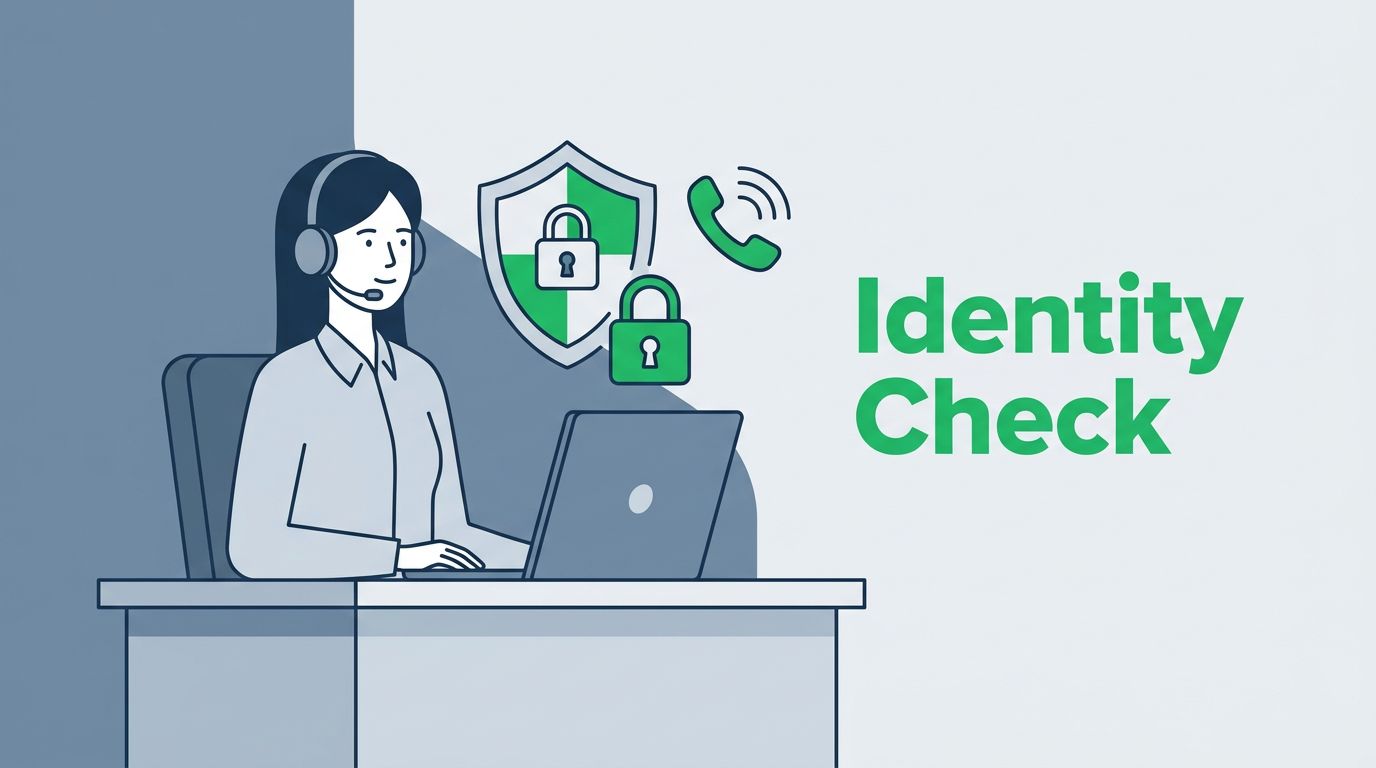
Help desk identity verification works best when the script is short, the rules are fixed, and every agent knows when to stop. That matters most before password resets, MFA changes, account unlocks, privilege changes, or any sensitive data disclosure.
Why high-pressure calls change the risk
High-pressure calls often come wrapped in real business pressure. The caller may mention payroll, a board meeting, a travel delay, or an executive deadline. Attackers use that same pressure to push for exceptions.
Weak checks break first. Caller ID can be spoofed. Email-only approval can be intercepted. Personal facts, like a home address or last four digits, are often easy to find. Even a familiar voice is no proof of identity, especially now that voice cloning is cheap and convincing.
That is why support teams should anchor their process to stronger controls. NIST SP 800-63B-4 backs authentication methods that are harder to fake, and Microsoft’s verified helpdesk guidance shows how support verification can move beyond guessable questions.
A convincing voice, a known name, or a busy schedule is not proof of identity.
A verification flow that holds up on live calls

The best flow is simple enough to use under stress. It also needs to be strict enough that an agent can follow it without improvising.
- Start by setting the rule.
Say, “I can help, and I need to verify identity before I touch the account.” - Classify the request.
A password reset is lower risk than an MFA reset. A privilege change or data disclosure deserves a higher bar. - Use a trusted factor tied to the account.
Good options include a registered authenticator, a secure callback to the number already on file, or a verified identity workflow. Okta’s caller verification guidance is a useful reference point for structuring that step. - Match the caller to the account, not to the story.
The person should prove control of an existing factor or a pre-approved workflow. Do not accept a number the caller gives you during the call. - Complete the action only after the check passes.
Log the request, the method used, and any exceptions that were approved.
A simple script helps agents stay steady:
“I can process that request after verification. Please complete the push in your registered app, or I’ll call you back at the number already on file. If that fails, I’ll route it through the approved escalation path.”
That script protects the caller and the agent. It also keeps the conversation focused on policy, not personality.
Red flags that mean slow down or escalate

When pressure shows up, the safest move is to pause. If any of these signs appear, stop the request and escalate to a supervisor or security team:
- The caller pushes for immediate action and rejects the normal flow.
- The caller claims to be an executive, board member, or vendor contact.
- The caller asks for a policy exception “just this once.”
- The caller resists callback, second-factor checks, or ticket-based proof.
- The caller wants account data before identity is confirmed.
- The caller seems to know internal terms, but the ticket details do not line up.
- The caller wants password reset, MFA reset, or privilege change without a valid verification path.
Pressure tactics deserve special attention. So does executive impersonation. If the request sounds urgent and unusual, treat it as a security event until it is cleared.
A practical SOP your team can train on

A short SOP keeps agents consistent during busy shifts and after hours. It also makes coaching easier.
- Verify identity before any password reset, MFA change, account unlock, privilege change, or data release.
- Use only approved methods that tie back to a trusted account record.
- Reject caller ID, email-only approval, and personal facts that can be found or guessed.
- Escalate policy exceptions to a supervisor or security contact.
- Log the request, the verification method, the result, and any red flags.
Training should include live roleplay. A good exercise is a caller who sounds calm, then becomes impatient, then claims to be a senior leader. Agents need to hear that pattern before they face it in real time.
If your team needs help tightening support-call controls, Book a Discovery Call with Bud Consulting.
High-pressure calls are where habits matter most. When the help desk holds the line on identity verification, it protects the account, the business, and the person on the other end of the phone.