
table of contents
Hybrid offices can hide risk in plain sight. A site may look secure on Tuesday and weak on Friday, when occupancy drops and oversight thins out.
That shift changes everything. A strong physical security audit has to reflect how people, vendors, parcels, and access badges move across each location, not how the office looked when it opened.
Why hybrid offices change the risk profile
In a distributed hybrid model, some offices stay busy while others run with a skeleton crew. That creates uneven security coverage. A front door that feels safe in a full office can become a soft target when only a few people are present.
Shared suites add more complexity. Visitors may pass through common lobbies, contractors may use temporary credentials, and package deliveries may sit unattended longer than expected. Meanwhile, teams often rely on mobile credentials and smart locks, which makes access easier to manage, but also easier to misconfigure.
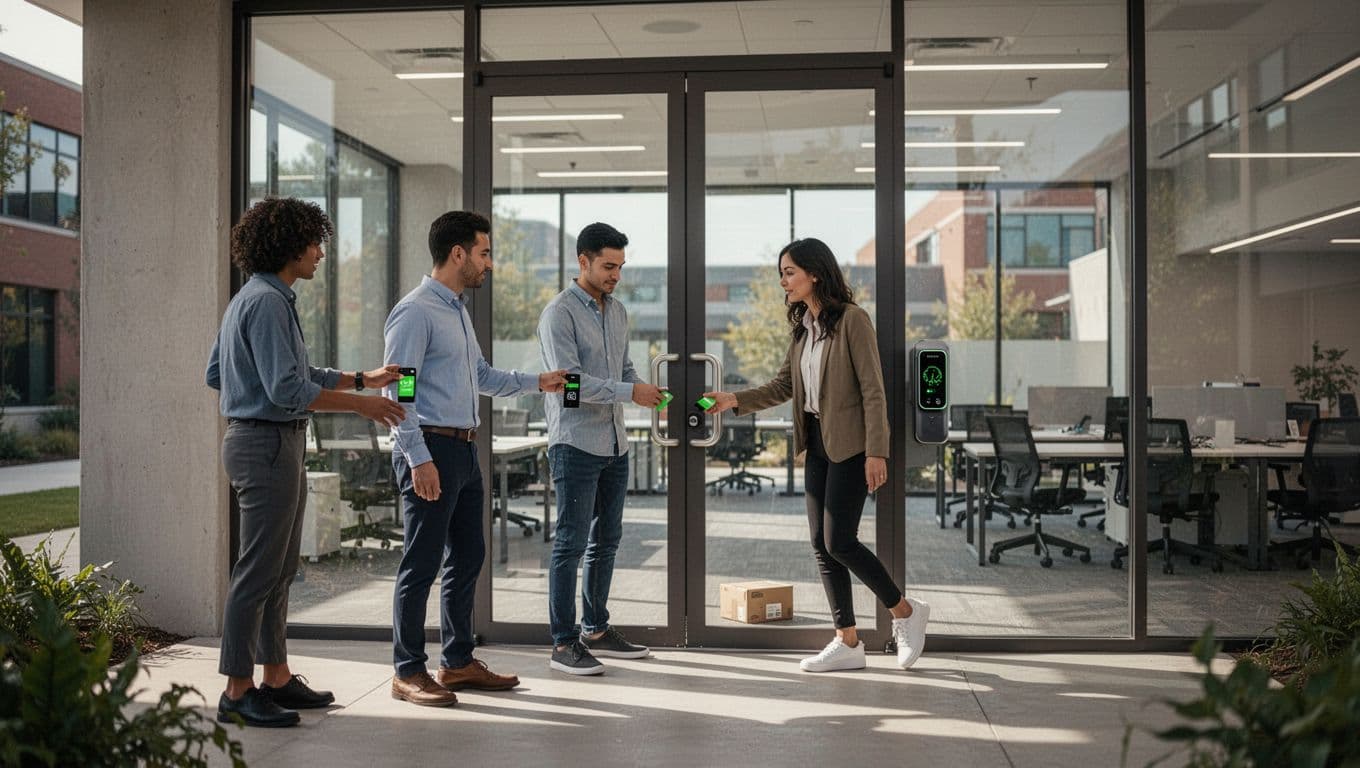
The biggest mistake is treating every office the same. A lightly staffed site needs tighter controls at the door, better visitor handling, and clearer after-hours rules. A busy hub may need stronger tailgating prevention and more camera coverage at shared entrances.
A step-by-step physical security audit process
Start with a map of every location, entrance, shared space, and critical room. Include reception, loading areas, server closets, storage rooms, and tenant-only corridors. If a space is used by vendors or contractors, mark it.
Next, pull access data. Review badge analytics, mobile credential use, and after-hours entries. Look for patterns such as repeated access outside business hours, badges used at multiple sites in a short window, or doors that remain unlocked longer than expected.
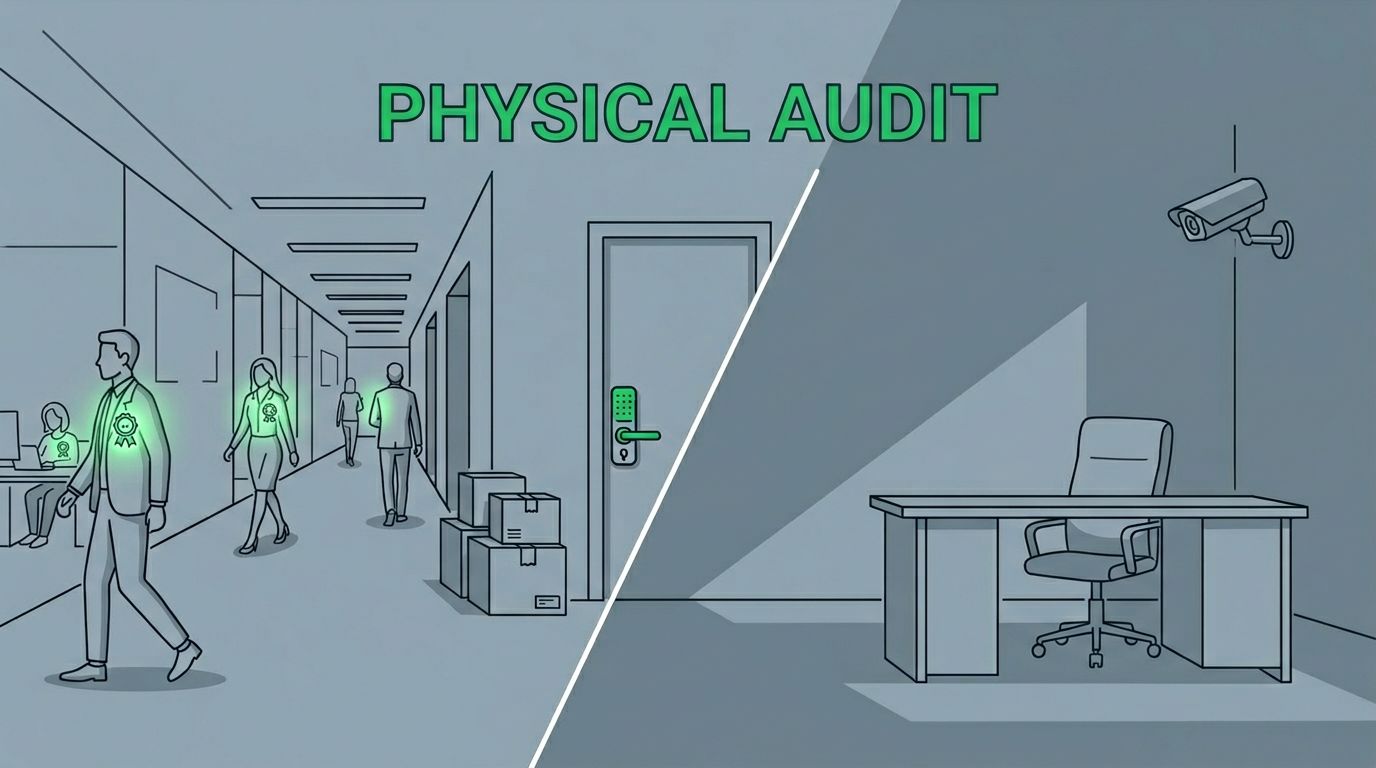
Then walk the site at different times. Visit during peak occupancy, low occupancy, and after hours. That is when blind spots show up. Check for tailgating risk at entrances, package handling gaps, and doors that rely on memory instead of control.
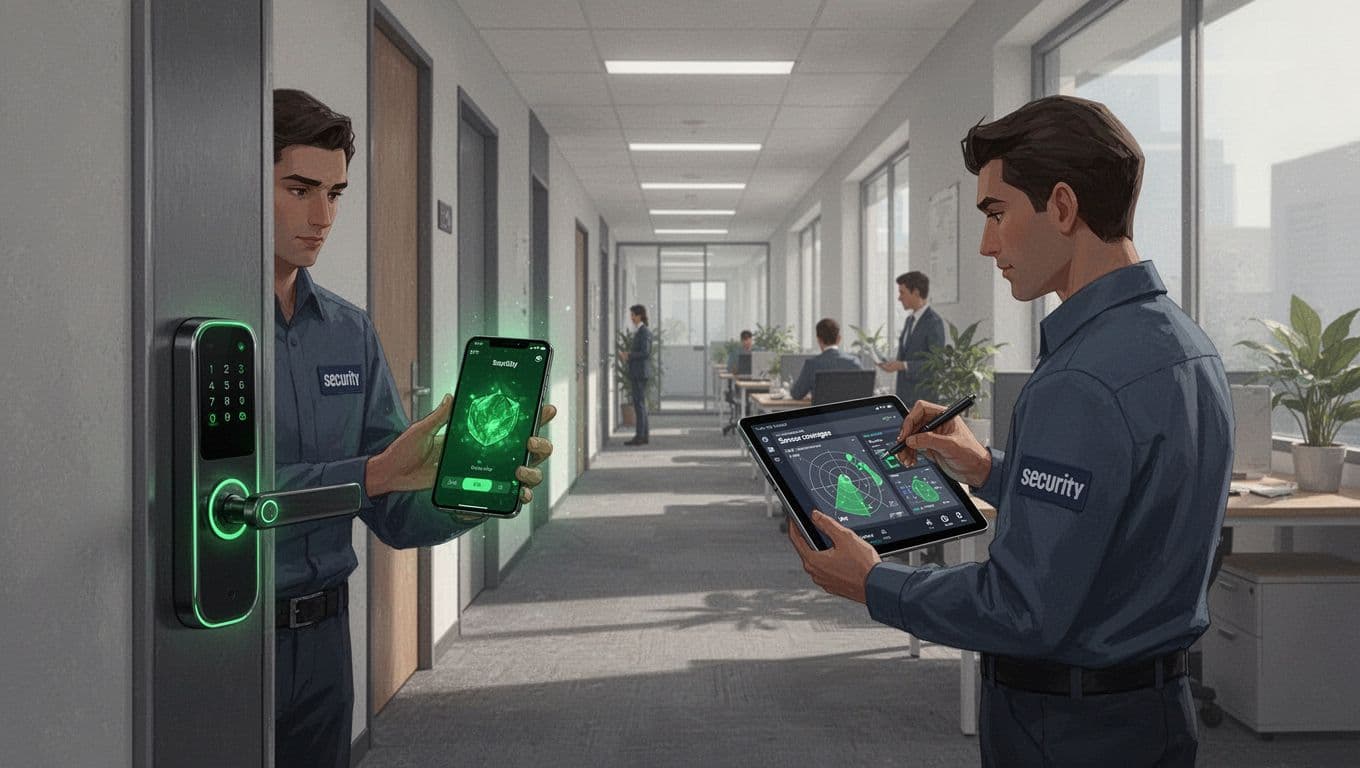
After that, test the controls that matter most. Confirm that smart locks work as expected. Check whether motion sensors and cameras leave dead zones near side doors, mail areas, and shared corridors. Review contractor and vendor entry controls, including sign-in, escort rules, and badge expiration.
Finally, assign an owner and a due date for each issue. A finding without an owner is just a note. A finding with a date becomes work.
Use a simple risk assessment framework
A short scoring model keeps the audit useful. It also helps teams compare locations without turning the process into guesswork.
| Score | Meaning | Action |
|---|---|---|
| 1 to 2 | Low risk | Fix during routine maintenance |
| 3 to 5 | Moderate risk | Set an owner and review within 60 days |
| 6 to 10 | High risk | Remediate within 30 days |
| 12 to 15 | Critical risk | Mitigate immediately and escalate |
Use the same logic for each finding. Score likelihood based on occupancy, exposure, and control strength. Score impact based on theft, disruption, safety, and possible data exposure. A shared office with weak visitor control and no camera at the entrance will usually score higher than a staffed site with strong monitoring.
If a control fails only when the office is half empty, it still fails.
A simple framework like this helps you rank work across many sites. It also gives leadership a clean view of where money and time should go first.
Practical checklist for hybrid office audits
This checklist is easy to adapt for monthly reviews or quarterly audits.
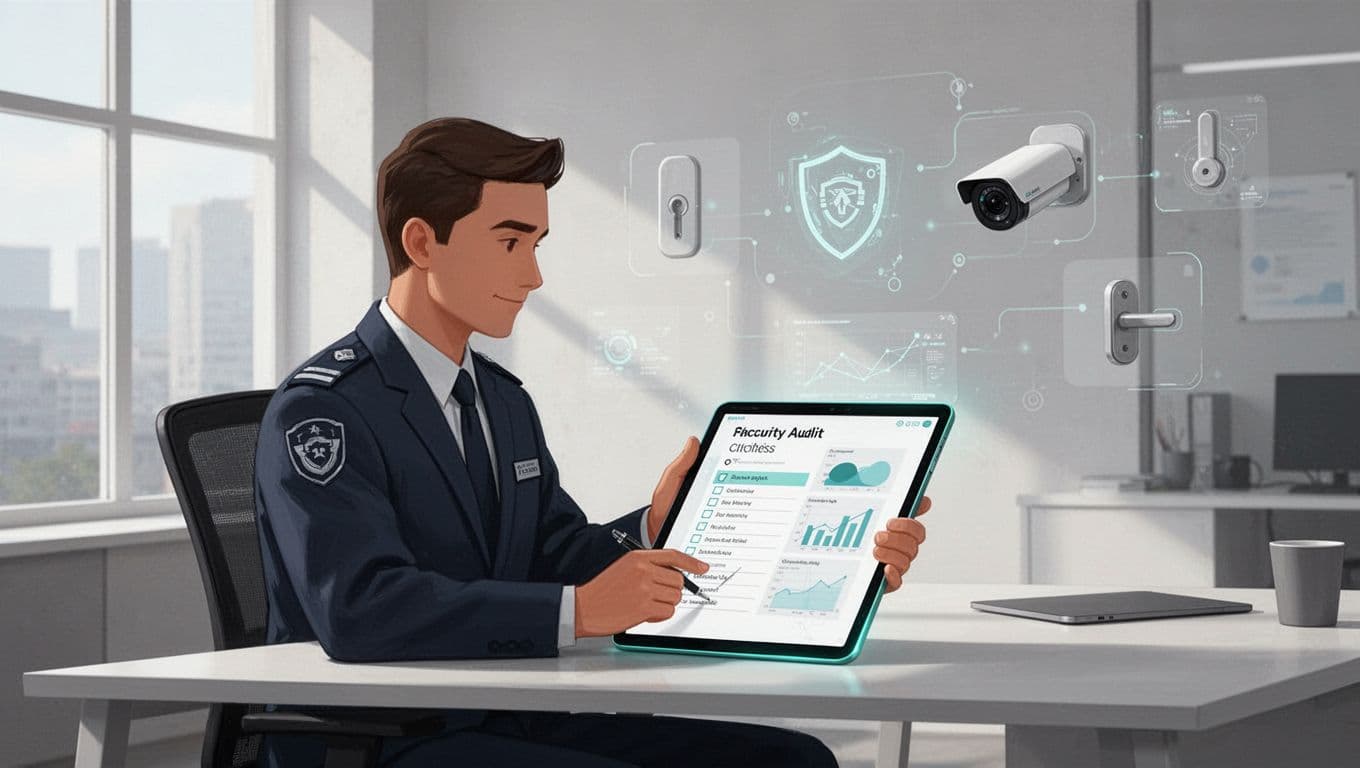
- Entry points and lobbies have clear camera coverage and no easy blind spots.
- Tailgating prevention works, either with staffing, sensors, or door controls.
- Mobile credentials and smart locks are monitored for failed use, shared use, or odd access times.
- Package handling has a fixed process, so deliveries never sit in open areas.
- After-hours access is approved, logged, and reviewed.
- Contractor and vendor entry controls include sign-in, escort rules, and time limits.
- Sensor coverage gaps are documented, especially near side doors, storage rooms, and back corridors.
- Visitor badges are visible, returned, and tied to a real host.
If your team needs help closing the gap between audit findings and staffing capacity, Book a Discovery Call with Bud Consulting.
Keep physical security, cyber-physical overlap, and safety separate
These areas connect, but they are not the same. Physical security covers access, intrusion, surveillance, and asset protection. Cyber-physical overlap covers smart locks, badge systems, connected cameras, and the logs they create. Workplace safety covers injuries, fire exits, first aid, evacuation routes, and crowding risks.
That distinction matters because ownership changes. Facilities may own doors and lighting. IT may own badge systems and camera networks. Safety teams may own evacuation planning and incident response. When those roles blur, issues linger.
A clean audit names the control, the risk, and the owner. That keeps action focused and avoids handoff gaps between teams.
Distributed hybrid offices need more than a standard checklist. They need audits that reflect real occupancy, shared spaces, modern access tools, and the weak spots that appear when fewer people are on site.
A good physical security audit does not chase every possible threat. It finds the few that matter most, ranks them clearly, and gets them fixed before they become incidents.

