table of contents
Low-code tools help ops teams move fast, and that speed can hide a bill. A ticket-routing flow, an internal dashboard, or an approval bot may look harmless until it starts carrying shared secrets, broad permissions, and undocumented handoffs.
That is how low code security debt begins. The platform keeps working, the business keeps shipping, and the risk sits out of sight until an audit, outage, or incident pulls it into view.
The hard part is that the damage builds slowly. Each shortcut feels small on its own, but the stack of shortcuts becomes a real security problem.
How low-code turns small shortcuts into hidden risk
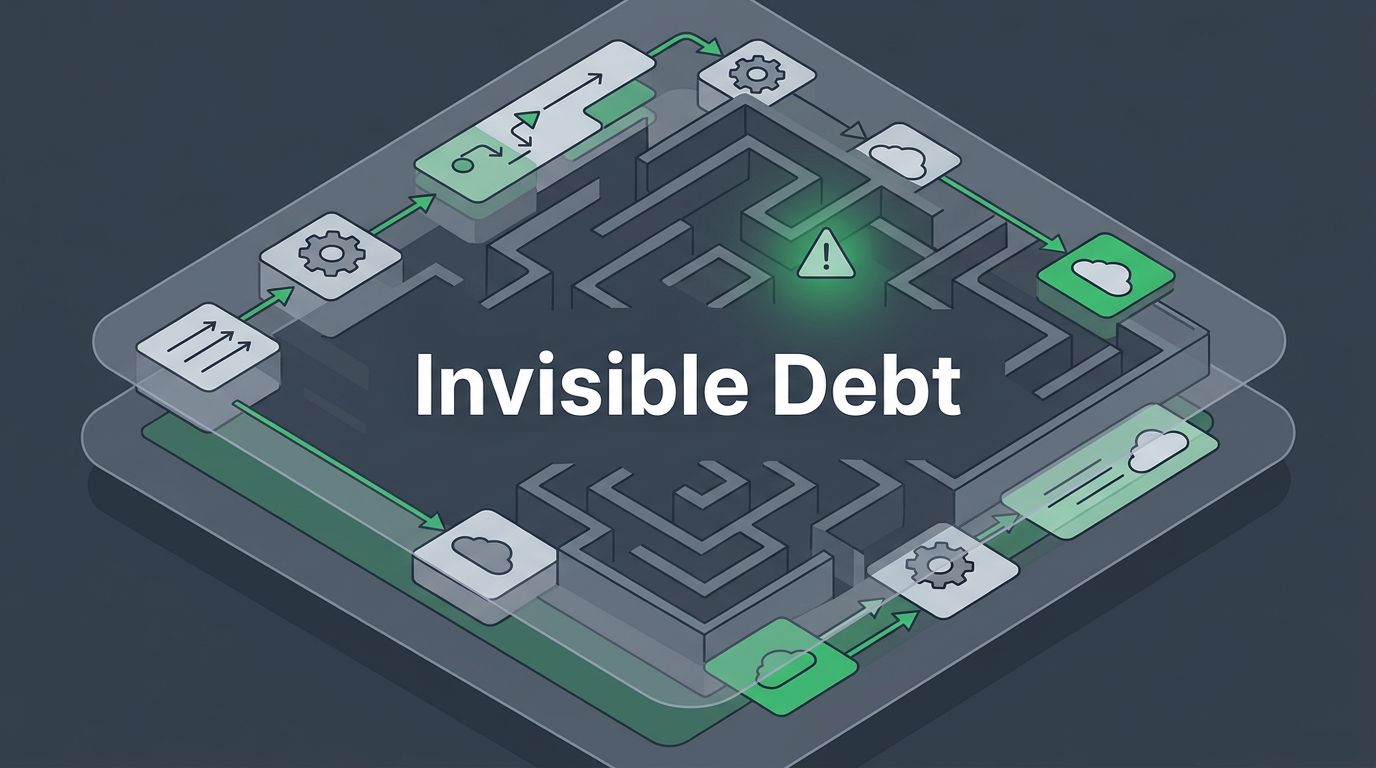
Invisible security debt is the gap between what a workflow does and what your team can explain. A low-code app might route approvals, sync records, send chatbot alerts, and update a dashboard across several SaaS tools. Each step adds a connector, a credential, or a new data path.
That sounds efficient until the original owner leaves, the use case changes, or the process becomes business critical. Then ops inherits a system that works, but no one fully understands.
The OWASP Low-Code/No-Code Top 10 is a good reminder that these risks are not theoretical. They usually show up as access control gaps, unsafe connectors, poor data handling, and weak audit trails.
A 2026 Flowise flaw also showed how fast trouble can spread when a platform trusts input too much. In that case, a custom node in a low-code AI workflow created a path for arbitrary JavaScript injection, which is exactly the kind of surprise ops teams hate because it sits inside normal business automation. See the CSO Online report on the Flowise flaw for context.
The risk rarely shows up in the builder. It shows up later, when nobody can name every connector, secret, and owner.
Where ops teams feel the pain first
The first sign is often access sprawl. One approval workflow needs a Jira token, another needs Slack, and a chatbot needs access to customer data. Before long, the platform has more permissions than most internal apps.
Fragile automations are the next problem. A workflow can break because an API changes, a field name shifts, or a connector loses scope. When that happens, ops usually patches the flow fast instead of fixing the design. That repair keeps the business moving, but it also adds more hidden debt.
Undocumented dependencies make the mess worse. A dashboard may depend on three upstream flows, and one of those may depend on a service account nobody reviews. If a team can’t inventory its automations, it can’t tell what an incident might affect.
Weak change control adds more risk. In many ops environments, a business user can edit a live flow without the same review that code would get. That is where data exposure sneaks in, because a harmless field mapping can start sending sensitive records to the wrong system.
Incident response gets harder too. Security teams need to know who changed what, which credentials were used, and whether the behavior is expected. Low-code platforms often blur those answers. For a practical view of the common failure points, the TechTarget guide on low-code security challenges is worth a look.
The controls that keep low-code useful
Low-code is useful. It cuts wait times, removes busywork, and helps ops teams automate more of the work that usually clogs queues. The goal is to keep that speed while shrinking the hidden risk.

A secure low-code program starts with a few basic controls:
- Least-privilege access keeps builders and bots limited to the connectors and data they actually need.
- Connector reviews check every SaaS integration, secret, and API scope before a flow reaches production.
- Centralized logging sends workflow activity into the same log stack or SIEM the rest of ops uses.
- Inventorying automations gives each flow a named owner, a purpose, and a data classification.
- Change management treats production edits like real changes, with review, rollback, and approval.
- Environment separation keeps dev, test, and prod apart so a test failure does not hit live data.
- Security testing checks for input issues, permission errors, and unsafe data movement before release.
- Ownership models assign one business owner and one technical owner to every critical flow.
These controls do not slow good teams down. They make the work visible.

Ownership keeps the debt from compounding
The real fix is ownership. Every low-code workflow should have a clear answer to three things, who owns it, what data it touches, and how it gets retired. Without that, even a simple approval flow can become a long-term liability.
This matters more in ops than in most teams, because ops systems connect everything else. A small mistake in a ticket router or cross-SaaS orchestration flow can spread bad data, break service handoffs, or delay incident response.
A mature program reviews low-code assets on a schedule, not only after something breaks. It also keeps business users, platform owners, and security in the same review loop. That is how you get speed without blind spots.
If your team needs help mapping where low-code risk is piling up, Book a Discovery Call with Bud Consulting.
Low-code is powerful when it stays visible. The moment it becomes invisible, the security debt starts to grow.