table of contents
Small wires often slip through review because they look harmless. That is exactly why fraudsters like them. A $4,800 transfer may not trigger much attention, yet it can still be the first step in a larger payment scam.
Finance teams that rely on one approver for small wires leave a gap in control. Secondary wire transfer approval closes that gap without turning every payment into a project. It adds a second set of eyes where rushed decisions and email tricks do the most damage.
Why small wires are an easy target
Fraudsters know that large transfers get more scrutiny. Smaller wires often move faster, involve fewer people, and feel routine. That makes them easier to hide inside a busy AP queue.
The FTC warns that wire scams depend on pressure, speed, and a sense of urgency, which is why people send money before they slow down and verify the request. Its wire transfer scam guidance is blunt about one thing, once money leaves the account, recovery is difficult.
A realistic example helps. An attacker may break into a vendor inbox and send a change to bank details for a “small corrected invoice.” The amount is low, so the request feels normal. The payment goes out, and only later does someone notice the vendor never changed banks.
Another common case is the “test wire.” A criminal asks for a tiny transfer to confirm banking details before a larger payment. Small amounts make the request look safe. In practice, they help the scammer build trust.
Small wires are attractive because they often get less attention, not because they are less risky.
A second approver helps here because the first reviewer may be too close to the request. A fresh person can spot the odd vendor name, the rushed language, or the bank change that does not match past records.
What a second approval catches that the first review misses
Secondary approval is most useful when the issue feels normal at first glance. That is where fraud hides.
| Scenario | Why it slips through | What the second approver catches |
|---|---|---|
| Vendor bank change by email | The amount matches an expected invoice | The bank detail change needs verification |
| Small urgent wire request | The payment looks routine and time-sensitive | The wording, timing, or sender may seem off |
| Payment just under a review threshold | It avoids attention by design | Repeated low-value requests can signal a pattern |
| “Test wire” before a larger payment | The request sounds like a safe check | The request itself is a warning sign |
The control works best when it is paired with out-of-band verification. If a bank account changes, someone should confirm it using a known phone number or trusted contact path. Trustpair’s wire instruction verification steps give a useful model for that kind of check.
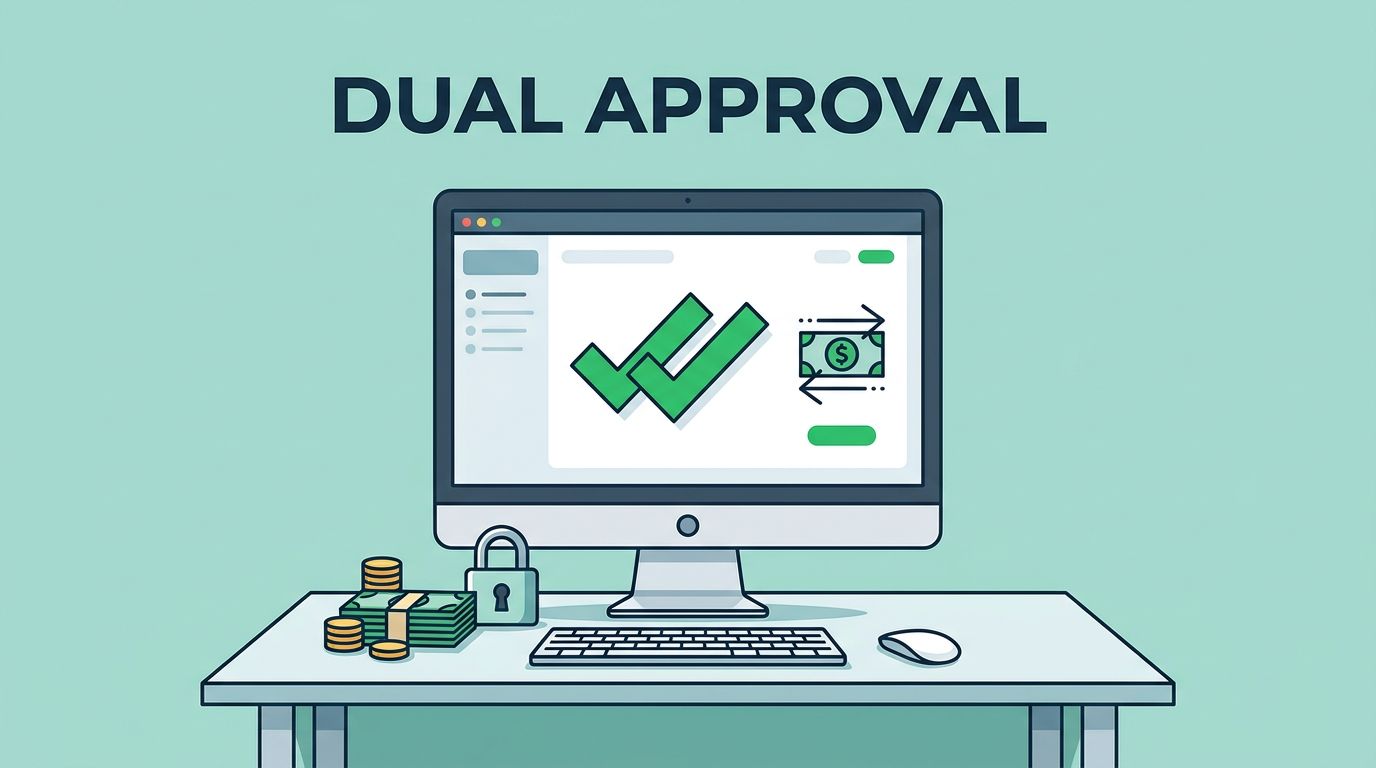
Citi explains the value of dual approval in its overview of why dual approval matters. The idea is simple. One person prepares the payment, another person confirms it before release. That split lowers the odds of both error and fraud.
The business case goes beyond fraud loss
Secondary approval is not only about stopping criminals. It also improves day-to-day control.
It reduces rework because mistakes get caught before money moves. It also creates a cleaner audit trail, which matters when questions come up later. If a payment is disputed, the team can show who reviewed it and what they checked.
There is also a people benefit. Finance teams get sick days, vacations, and busy periods. A second approver means the process does not depend on one person’s memory or judgment. That matters in small teams, where one inbox often holds too much power.
The financial case is easy to miss. One bad wire can cost far more than the time spent on a second review. Even if the dollar value is small, the cleanup takes time, energy, and sometimes a client relationship.
A good approval process also helps with control design across the team:
- It lowers the chance of one-person fraud.
- It catches duplicate or misdirected payments.
- It gives managers a better view of spending patterns.
- It makes policy easier to enforce because the steps are clear.
Common pushback, answered plainly
The first objection is speed. Teams worry that a second approver will slow down urgent payments. In practice, that problem usually comes from poor design, not from the control itself. Set service-level targets, define backup approvers, and route only wire payments through the extra review.
The second objection is admin burden. Yes, there is more work. Still, the task is small compared with the cost of one bad transfer. If the volume is high, automation can help with routing and alerts, while people handle the judgment call.
The third objection is trust. Some leaders fear that a second approval sends the wrong message. It doesn’t. It says the process matters. Good controls protect honest people, too.
A simple policy works best:
- Use a dollar threshold, but keep it low enough to matter.
- Require a second approver for all new payees and bank changes.
- Ask for out-of-band confirmation on any changed instructions.
- Review access rights on a set schedule.
- Keep backup approvers ready for leave or travel.
If your team wants help tightening payment controls without adding noise, Book a Discovery Call with Bud Consulting.
Small wires are popular with fraudsters because they can move under the radar. That is why they deserve the same care you’d give a much larger transfer.
A second approval adds a pause at the right moment. It gives your team time to spot the odd detail, confirm the request, and stop a bad payment before it leaves the bank.