table of contents
Sales teams rarely cause a breach, but they often feel the impact first. They hold customer data, field worried calls, and carry the trust the company has spent years earning.
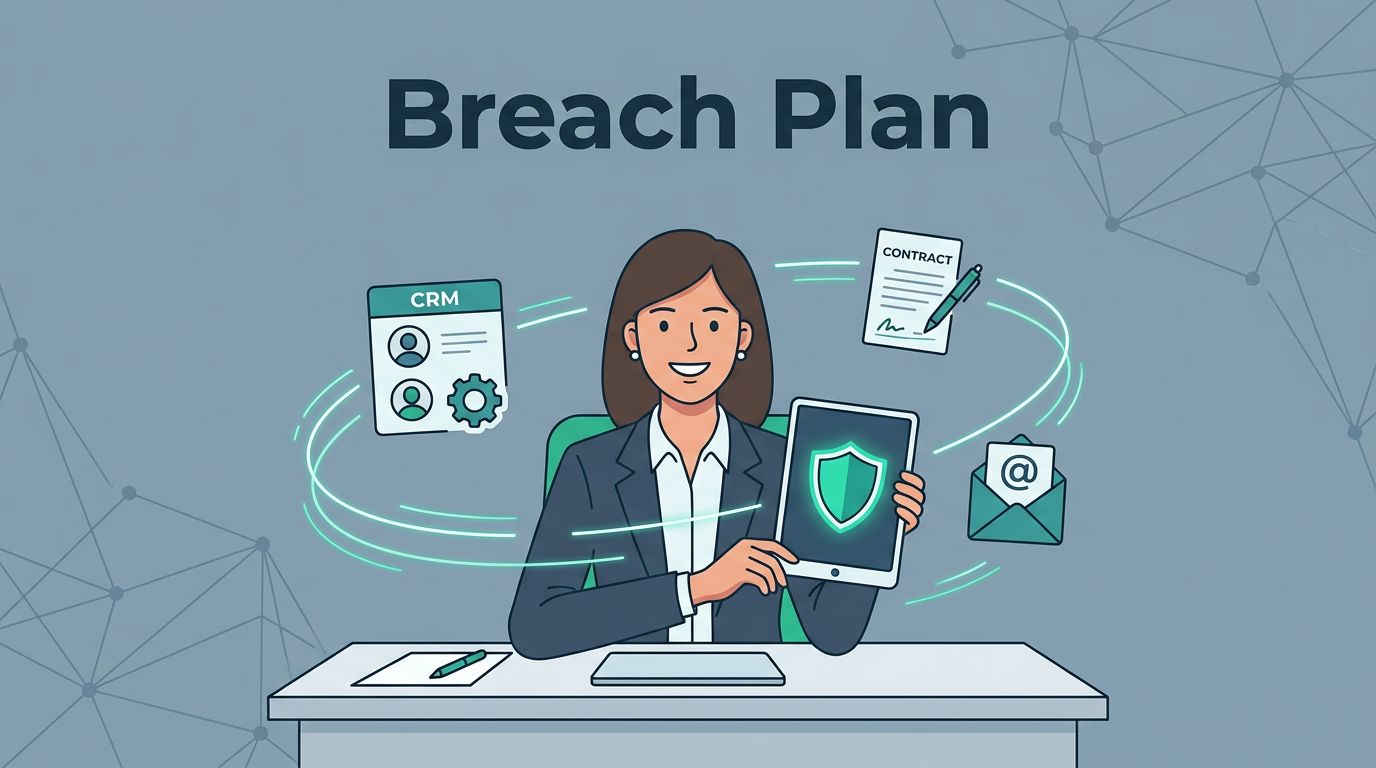
A breach readiness plan gives sales a clear lane when something goes wrong. It tells reps what they can say, who takes over, and how to avoid making a hard moment worse. In 2026, buyers expect fast, plain answers, so the plan has to be simple and shared across teams.
Why Sales Needs Its Own Breach Readiness Plan
Sales teams work inside the most sensitive parts of the business. CRM records, pricing details, contracts, renewal notes, and contact lists all sit close to the revenue engine. That makes sales a frequent source of customer questions after a security event.
The team also sits close to the customer relationship. If a breach affects names, emails, phone numbers, or spend data, customers often call their account manager before they call anyone else. That means sales needs a plan that fits its daily work, not a security document written for another group.
A good reference point is a cybersecure sales team. The idea is simple, sales can stay productive and still handle security issues without guessing.
Assemble the Right People Before the First Alert
Sales should never handle a breach alone. The fastest response comes from a small group with clear jobs and backups. Security owns the facts. Legal owns the wording. PR owns public tone. Customer success manages account risk. RevOps protects the systems. Sales owns the customer conversation.

A simple role map helps everyone move in the same direction.
| Team member | What they own | First action |
|---|---|---|
| Sales leader | Rep guidance and account risk | Stops speculation and sets the chain of command |
| Security | Incident facts and containment | Confirms what is known and unknown |
| Legal | Notice duties and approved wording | Reviews customer and prospect language |
| PR or comms | Public statements and media tone | Aligns external messaging |
| Customer success | High-risk customer follow-up | Flags sensitive accounts |
| RevOps | CRM controls and data flow | Freezes risky exports or automations |
Give every role a backup and after-hours contact. Also set one place for updates, so nobody chases five chat threads at once.
In a breach, speed matters, but approved speed matters more.
If you want a formal way to spot gaps, the breach readiness review from Palo Alto Networks is a useful benchmark.
Write the Rules That Keep Reps on Script
A sales rep does not need a long legal memo. A rep needs short rules that work under pressure. Your playbook should answer four things:
- Who tells sales that an incident is real.
- What facts can be shared, and what stays private.
- Which accounts need direct outreach first.
- Who approves any customer-facing message.
That is where RevOps matters. If the breach touches CRM data, email sends, routing rules, or exports, RevOps should freeze them right away. If Salesforce is central to your sales process, compare your process with a Salesforce incident response plan so the CRM side does not lag behind the security side.
Then write sample language reps can use.
Good lines to use
- “I can confirm we’re reviewing a security issue and will share approved updates as soon as we have them.”
- “I don’t have verified details yet, so I’m escalating this now.”
- “Please send any concerns to the named incident lead, and we’ll route them correctly.”
Lines to avoid
- “Your data is probably fine.”
- “Only a few records were involved.”
- “I think the breach came from our vendor.”
- “Don’t worry, this won’t affect you.”
Those phrases create risk because they sound helpful but add no proof. Keep the message calm, brief, and consistent.

Train Reps for the First 24 Hours
The first day after a suspected or confirmed breach is when confusion grows fast. Sales reps need to know when to pause, when to escalate, and when to stop answering from memory.
Use tabletop drills with real sales scenarios. Try a stolen email list, a leaked quote deck, or a vendor account compromise. Then time the response. Who speaks first? How fast does legal review the message? Which account executives need a heads-up?
A short drill agenda works well:
- Walk through the incident from the customer’s point of view.
- Test the approval chain for one customer email and one call script.
- Check whether account data, email templates, and routing rules need a freeze.
- Review what reps said before the approved message went out.

This is also where coaching matters. A rep should sound steady, not overconfident. The goal is trust, not a perfect speech.
If your team needs help turning training into a working process, Book a Discovery Call with Bud Consulting.
Test the Plan and Keep It Current
A breach readiness plan gets stale fast. Org charts change. Tools change. Customer rules change. That is why the plan needs a refresh cycle, not a one-time rollout.
Run a drill at least quarterly, and review it with sales, security, legal, PR, customer success, and RevOps. In 2026, that matters even more because customers expect faster notice, tighter control of third-party access, and clearer answers when personal data is involved.
Use each review to check three things: whether contacts are current, whether scripts still match legal guidance, and whether account owners know their role. If your team works through multiple sales tools, a cybersecure sales force mindset helps keep daily habits aligned with the plan.
A strong plan does not remove the stress of a breach. It keeps sales from adding noise to it.
Sales teams do their best work when they know where the guardrails are. A clear breach readiness plan gives them those guardrails before the first urgent call arrives.