table of contents
Hard-to-fill security roles break pay ranges faster than most job families. A cloud security architect in Austin, an IAM specialist in Chicago, and a CISO in a hybrid enterprise need different comp math.
If you use one broad security band, you’ll lose candidates or create pay issues inside the team. The better answer is a security salary band that reflects base pay, bonus, equity, location, seniority, specialization, and hiring difficulty.
Why hard-to-fill security roles need their own pay math
Security hiring in 2026 is still tight, especially for roles that mix deep technical skill with business risk. Recent pay guides, including Cybersecurity Salaries 2026 by Role, show wide gaps between specialist roles and more common security jobs.
That gap matters because a cloud security architect does not compete in the same market as a SOC analyst. IAM and PAM specialists face a different shortage than offensive security experts. CISOs bring leadership scope, budget ownership, and board exposure, so their bands need another level of structure.
A narrow band can help with consistency, but only if the role is defined well. Otherwise, hiring managers keep asking for exceptions, and the comp team keeps saying no.
Build the band around total compensation, not base pay alone
Base salary is only one part of the offer. For scarce security talent, the full package often includes a bonus, equity, location adjustment, and a hiring premium for urgent roles.
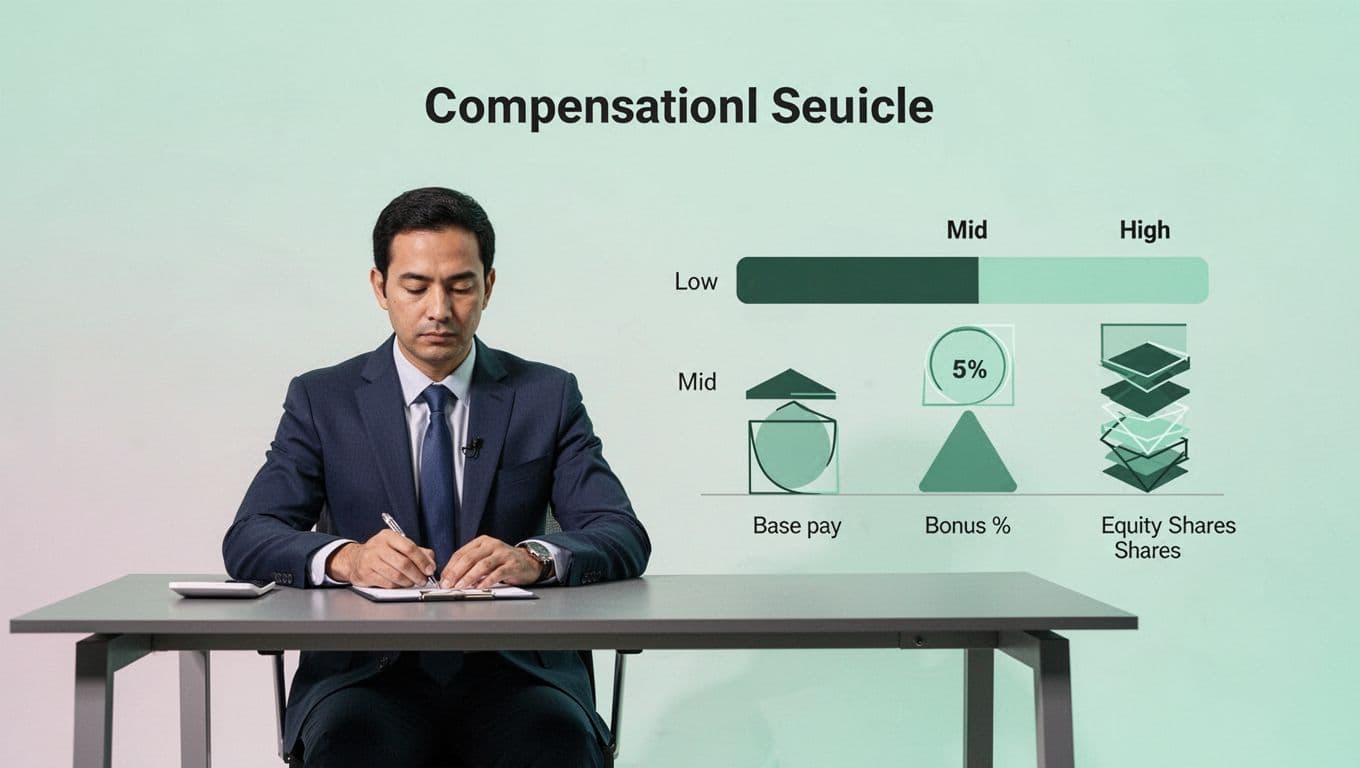
Use a simple framework before you set the numbers.
| Pay element | What to define | Why it matters |
|---|---|---|
| Base salary | Midpoint by level and market | Anchors the band and protects equity |
| Bonus | Target % by role family | Helps compete for senior talent |
| Equity | Grant size and eligibility | Matters most in growth and tech firms |
| Location | National, metro, or geo-tiered pay | Keeps offers aligned to labor cost |
| Hiring premium | Temporary or role-specific uplift | Helps close urgent, thin-market searches |
The key is to decide what belongs in the band and what sits outside it. A temporary hiring premium is easier to defend than a permanent band expansion.
Use role families, levels, and hiring difficulty
A single “security” band hides real market differences. Instead, group jobs by role family and then layer in level, scope, and scarcity.

If you need a broader structure for range design, how to establish salary ranges gives a solid starting point. Then tailor it to the security roles that are hardest to fill.
| Role family | 2026 base pay pressure in the US | Banding note |
|---|---|---|
| Cloud security architect | $130k-$240k | Wider upper half if cloud design ownership is deep |
| IAM/PAM specialist | $115k-$200k | Tighten the band for regulated or cleared work |
| DevSecOps engineer | $128k-$194k | Match engineering levels, not analyst levels |
| Application security leader | $130k-$250k | Split player-coach from people manager roles |
| Offensive security expert | $100k-$200k | Add premium for red team, cloud, or wireless depth |
| CISO | $220k-$500k+ | Use a separate executive band with bonus and equity upside |
The takeaway is simple. The rarer the skill and the larger the scope, the more room your band needs at the top. However, that room should still be tied to level, not to one-off negotiation.
A simple process your team can repeat each quarter
Salary bands age fast in security. That is why quarterly review beats an annual reset.
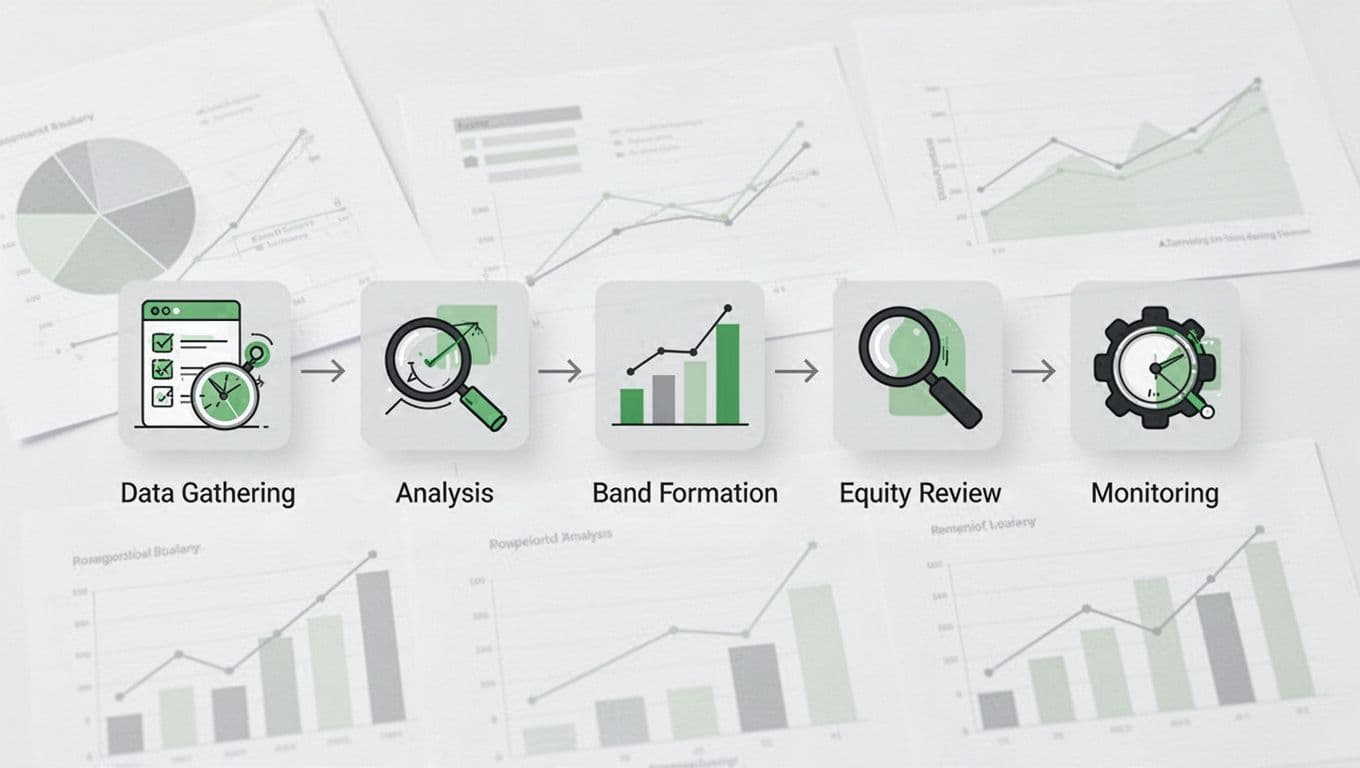
- Map each role to a family and level. Separate architects, engineers, leaders, and executives. Then define the scope for each one.
- Pull market data from at least two sources. Compare base, bonus, and equity. If the role is thin, ask recruiters where offers are landing now.
- Set midpoint, minimum, and maximum. Use a tighter range for stable roles and a wider one for rare skills or leadership scope.
- Check current employee pay against the band. Look for compression, large outliers, and gaps between new hires and long-tenured staff.
When a req is urgent and the market is thin, use a hiring premium with an end date. That keeps the band clean while still helping the search move.
If your team needs current market input for a hard-to-fill req, Book a Discovery Call with Bud Consulting.
Keep the bands defensible under scrutiny
A strong band helps managers make faster decisions because it explains the tradeoffs up front. It also gives candidates a clearer view of what the company pays.
If a band cannot explain why two people with similar scope are paid differently, it will cause friction later.
That is why internal equity matters as much as market data. A strong external offer can still create problems if it sits far above nearby roles with similar responsibility.
Before you publish ranges or use them in hiring, review pay transparency, posting, and recordkeeping rules by jurisdiction. The legal rules vary by state and city, and they change often.
For a useful framework on range structure and pay equity, salary band best practices is a helpful reference.
Security pay will keep moving in 2026, but your bands do not need to feel unstable. The strongest ones combine market data, clean role design, and room for hard-to-fill talent.
When you get that mix right, the band stops being a ceiling and starts becoming a hiring tool.