table of contents
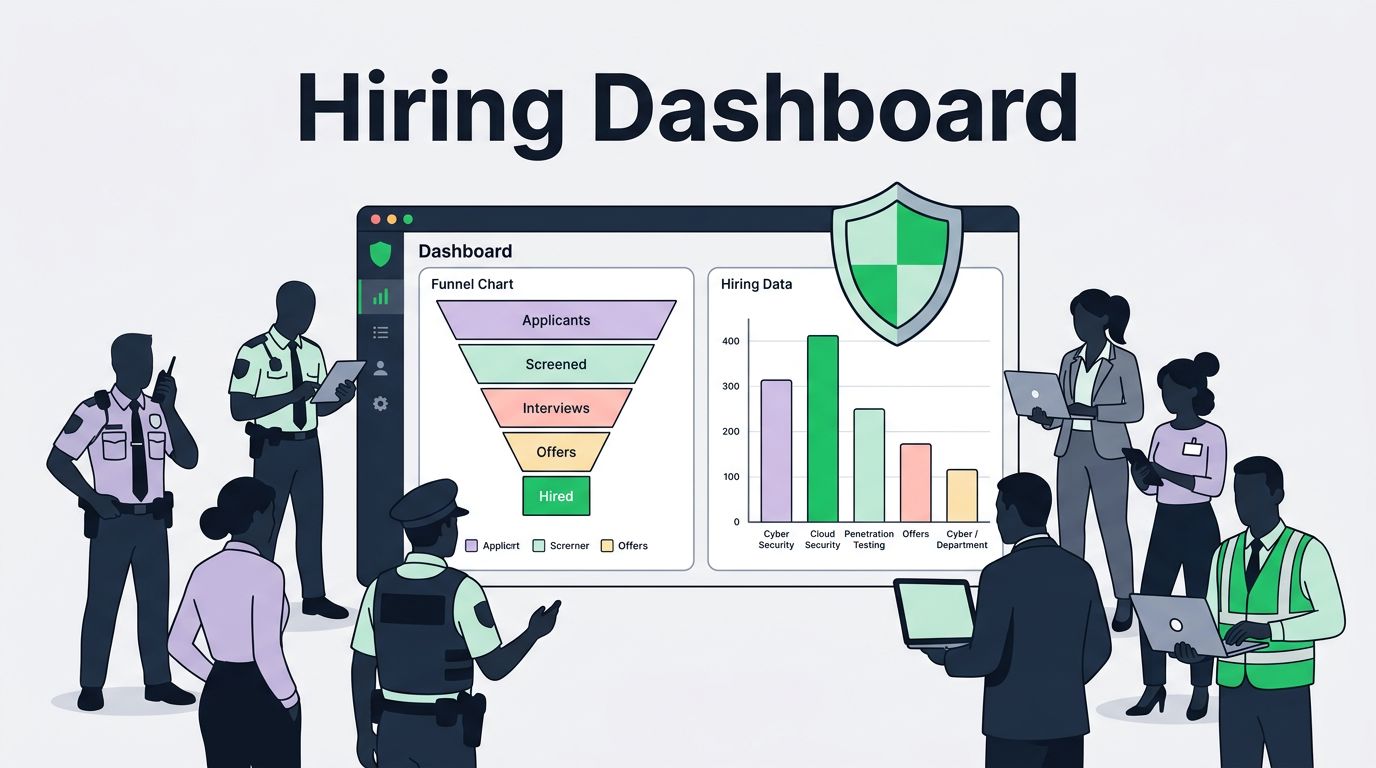
Security teams still face a stubborn talent gap, and the market does not reward slow hiring. A security hiring dashboard helps leaders see where roles stall, which channels work, and when a search needs a different plan.
That matters even more now. ISC2’s 2025 cybersecurity hiring trends study shows broad demand across cloud security, AppSec, GRC, and security engineering. When demand stays high, leaders need a dashboard that helps them act, not just report activity.
Start with the decisions the dashboard should answer
A useful dashboard begins with the choices leaders make every week. Which roles need attention first? Where does the funnel slow down? Which source brings the best hires? Which search is at risk of missing its date?
Security hiring needs extra care because every role has a different business impact. A SOC analyst search may protect incident coverage today. A cloud security architect may unblock a product launch. A GRC leader may support a contract, audit, or customer requirement. Your dashboard should reflect that mix.
Set a simple role-criticality score for each open req. Use three inputs, business risk, delivery impact, and time sensitivity. Keep the scale small, such as 1 to 5. That makes priority clear without turning every intake meeting into a debate.
The best dashboards also separate replacement hires from net-new roles. A backfill for a senior security engineer needs a different timeline than a new AppSec team member. When leaders can see that difference, they can make cleaner workforce decisions.
Track the metrics that change hiring choices
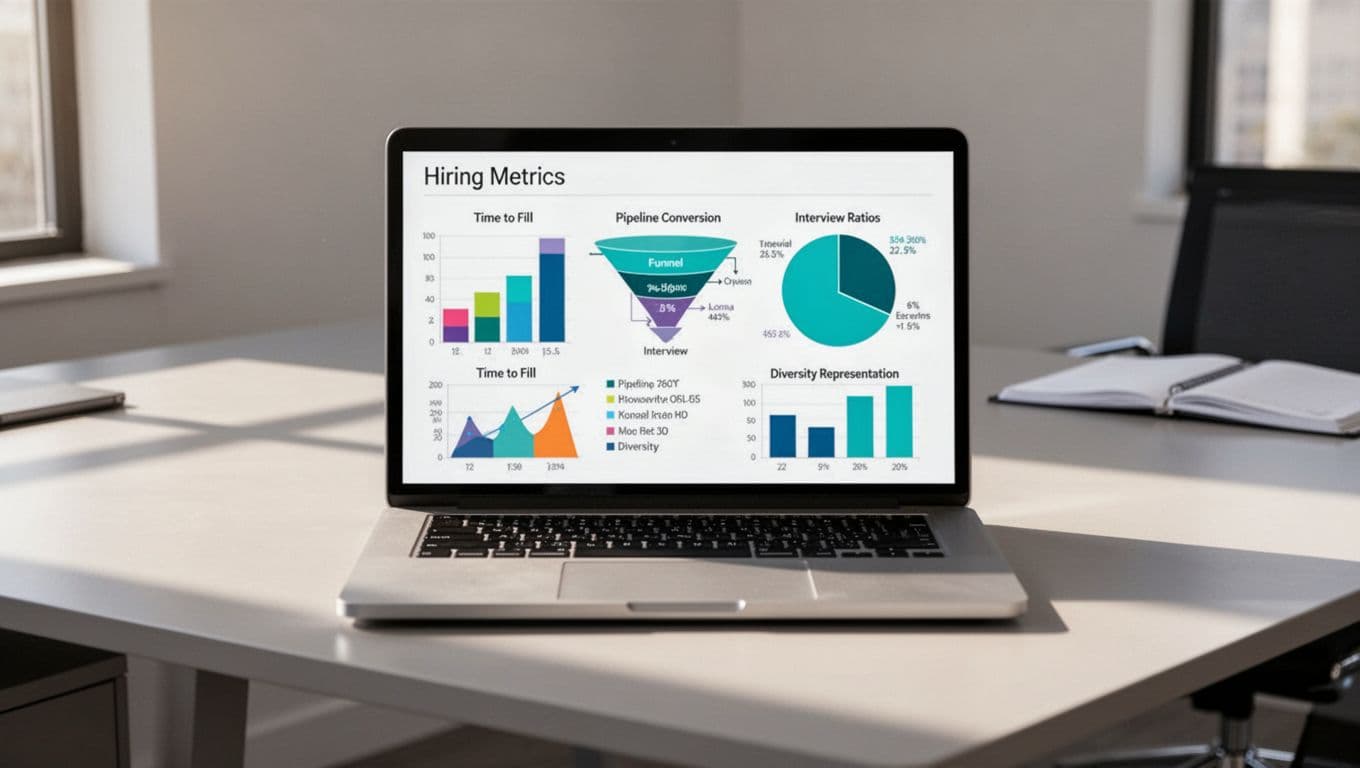
A good dashboard stays small enough to read in one meeting. It should show speed, flow, quality, and access. For a broader dashboard baseline, Recruitment Dashboards: Data-Driven Metrics for Hiring Success makes the case for a short list of core metrics, and that approach fits security hiring well.
Here is a simple metric set that leaders can use.
| Metric | Simple definition | Why it matters |
|---|---|---|
| Time to fill | Days from approved req to accepted offer | Shows search length and bottlenecks by role family |
| Pipeline conversion rate | Candidates who move forward divided by candidates in stage | Shows where SOC or AppSec searches leak |
| Interview-to-offer ratio | Interviews completed divided by offers made | Too high usually means weak screening or too much interview drag |
| Offer acceptance rate | Offers accepted divided by offers extended | Flags pay, process, or market fit issues |
| Source quality | Hires from a source who pass the 90-day success check divided by hires from that source | Shows which channels deserve more spend |
| Diversity representation | Share of slates, interviews, and offers from underrepresented groups | Shows where access narrows |
| Hiring manager responsiveness | Feedback returned within SLA divided by feedback requests | Reveals process friction and candidate drop risk |
Those numbers tell a story fast. If time to fill rises while conversion falls, the problem may sit in sourcing or screening. If offer acceptance drops, comp or process may need review. If manager response slows, candidates often drift away.
If a metric does not change a hiring decision, it does not belong on the main dashboard.
Build the dashboard sections leaders actually use
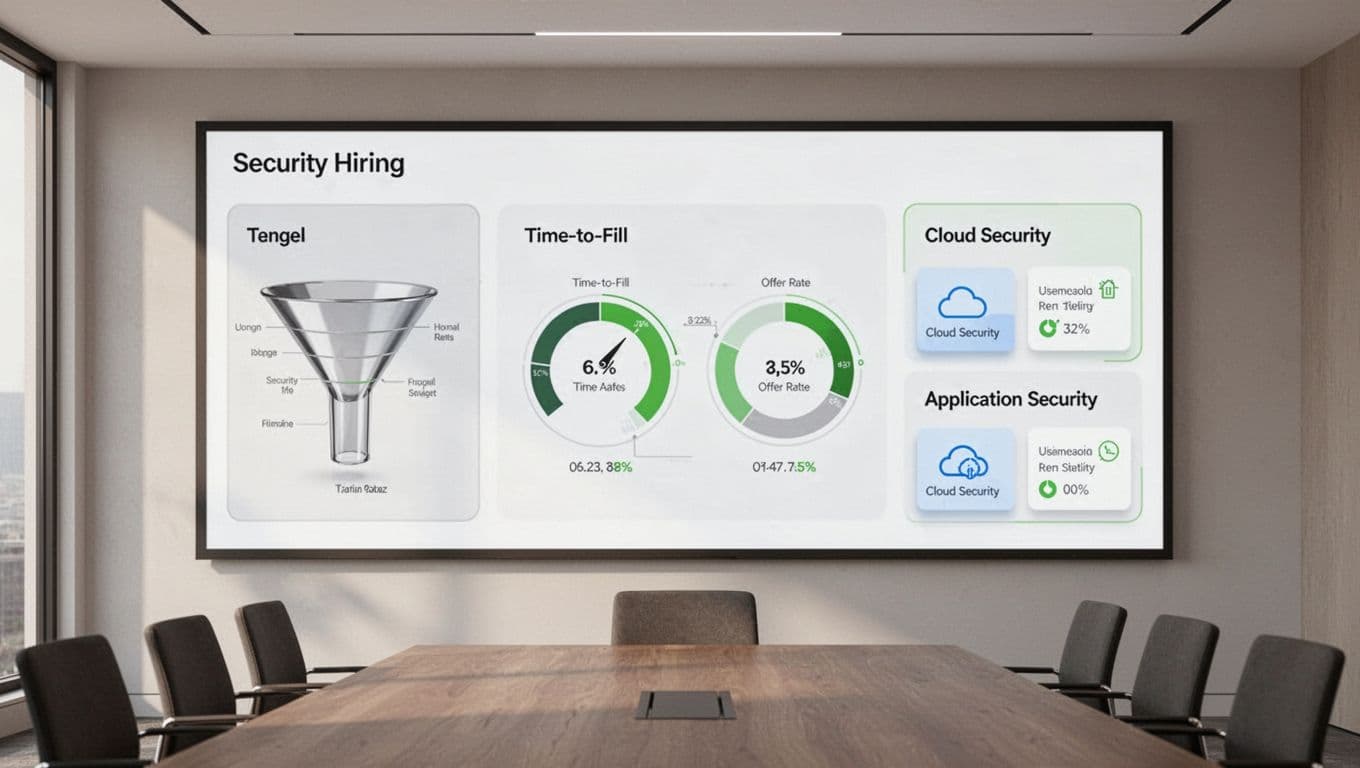
A clean layout helps people see the story in seconds. Put the dashboard into sections that match how security hiring gets managed.
Workforce plan and role priority
This panel should show every open security role by function, team, and priority. Include SOC, cloud security, AppSec, GRC, IAM, PAM, and security engineering. Add a flag for replacement or growth, plus the target close date.
A simple color code works well here. Use one color for on-track, one for watch, and one for at-risk. Leaders should see which roles are blocking work, which are tied to compliance, and which can wait. That keeps hiring aligned with the business plan.
Funnel health and source quality
This panel should show candidate volume, stage conversion, and age in stage. Break it out by source, too. Referral, direct sourcing, job board, internal move, and agency should not be lumped together.
Security roles often behave differently by function. For example, referrals may work best for SOC and security engineering, while targeted sourcing may work better for cloud security or AppSec. Source quality helps you spot that pattern. If one channel fills roles but fails the 90-day check, it is not a good source.
Process friction and fairness
This panel should show interview-to-offer ratio, manager response time, and diversity representation at each stage. If a hiring manager takes four days to review feedback, the dashboard should surface that delay. If underrepresented candidates drop off after first interview, leaders should inspect panel mix, interview questions, and stage timing.
That view helps leaders fix the process, not blame the market.
Set a review cadence that leads to action
Weekly reviews work best for active searches. Leaders should scan time to fill, stage aging, manager responsiveness, and offers at risk. That is enough to catch problems before a strong candidate disappears.
Monthly reviews should compare role families and source performance. This is where patterns appear. Maybe SOC searches move fast, but cloud security searches stall. Maybe AppSec offers need better comp alignment. Maybe one recruiter source keeps sending weak candidates.
Quarterly reviews should feed workforce planning. Recheck headcount plans, replacement timing, and the mix of roles your business needs next. Keep metric definitions stable across ATS, HRIS, and recruiter notes. It is much easier to trust a dashboard when everyone calculates it the same way.
If you want help shaping the role map, search process, and dashboard structure across SOC, cloud security, AppSec, and GRC, Book a Discovery Call with Bud Consulting.
A strong dashboard does one job well, it tells leaders where to act. When a security search slows, the right metric should point to the fix.
That is what makes the dashboard useful. It turns hiring data into clearer decisions, faster moves, and a better fit between security demand and security talent.