table of contents
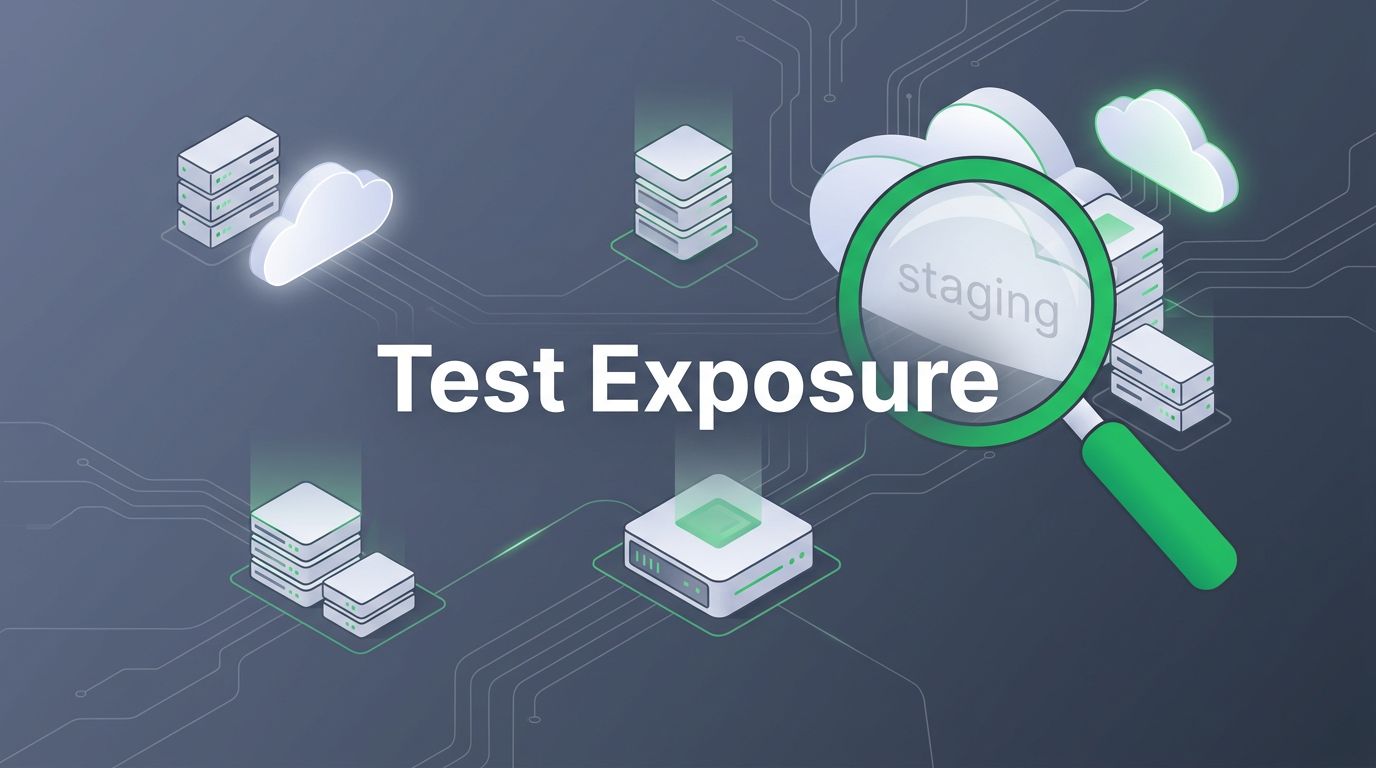
Exposed test environments rarely fail loudly. They leak small clues first, then someone on the outside notices them.
Dev, test, staging, sandbox, preview, and QA systems are meant to move fast. That speed often leaves gaps, especially in cloud-native setups where preview apps, containers, and CI/CD jobs appear and vanish all day.
Attackers do not need magic to find them. They look for public names, open services, weak auth, stale links, and misread cloud defaults, so defenders should watch for the same signs.
Public clues that give non-production away
Public-facing non-production systems leave fingerprints. A hostname like staging-api, a TLS cert with a test name, or a login page with a debug banner can be enough. So can exposed object storage, a forgotten preview URL, or a service that still answers on a public IP long after the project ended.
Recent reporting on misconfigured demo environments shows how often these assets drift into view because nobody owns the cleanup. The pattern is simple, the system was meant to be temporary, but the access rules were not.
A test app that can be found from the internet is a production problem, even if nobody planned for it.
Watch for names that include dev, test, qa, stage, sandbox, or preview. Also watch for public dashboards, admin panels, API docs, default credentials, shared accounts, open buckets, backup snapshots, debug flags, directory listings, and verbose error pages.

One exposed preview app can reveal code paths, service names, and links to other internal tools. That is enough to turn a harmless test box into a real risk.
Build one inventory for cloud, CI/CD, and DNS
A reliable inventory is the fastest way to spot gaps. Pull from the places teams already trust, then compare that list with what the internet can see.
Cloud-native systems make this harder because resources change fast. Preview apps, short-lived containers, and serverless jobs can slip past monthly reviews. Infrastructure-as-code drift makes it worse, because the deployed state no longer matches the approved template.
| Source | What it reveals | Common miss |
|---|---|---|
| DNS and certificate logs | Old hostnames, preview domains, stale subdomains | Records that outlive the project |
| Cloud accounts and load balancers | Public IPs, buckets, and exposed endpoints | Assets created outside IaC |
| CI/CD pipelines and build logs | Ephemeral preview apps, tokens, and deploy URLs | Leaks in job output |
| Kubernetes and container platforms | Ingresses, services, and debug portals | Namespaces that bypass policy |
| EASM or external scan data | What outsiders can reach now | Drift between intent and reality |
External attack surface management helps because it shows the estate from the outside. That matters when internal records lag behind reality. Tenable’s Cloud Security Risk Report 2025 also points to exposed data and risky secrets as common cloud problems, which fits what many teams see in non-production.
Hunt your own exposures without crossing the line
Attackers often start with easy evidence, not fancy exploits. They piece together public DNS, certificate transparency logs, search results, exposed buckets, and links that leak into chat or repos. Defenders can review the same clues inside an approved scope.

Use a simple review loop:
- Check for public login pages that do not require SSO.
- Look for API docs, debug consoles, and admin panels on public hosts.
- Review build logs and command output for secrets or tokens.
- Flag preview URLs that still resolve after a branch is closed.
- Compare cloud tags and naming rules against what is actually live.
Build logs deserve extra attention. Orca’s write-up on leaky cloud command-line tools shows how credentials can surface in places teams rarely search. That is how a small mistake becomes a broad exposure.
In 2026, the biggest blind spots are short-lived assets and containerized workloads. They may sit outside normal change control, so point-in-time audits miss them. Continuous checks are the better fit.
Close the gaps before they come back
Once you find an exposed test environment, move in a strict order. First, pull it off the public internet or wrap it in tight access controls. Next, remove any shared access and force SSO with MFA for every admin path.
Then clean the data. Test systems should not hold live customer records unless there is a documented reason and strong control around them. Use masked or synthetic data where you can, and purge production copies when you do not need them.
Rotate every secret tied to the asset, including API keys, service tokens, SSH keys, and certs. If the system was public, assume those secrets are burned.
After that, lock in the fix:
- Set default deny for new non-production assets.
- Require approval for public exposure.
- Auto-expire preview apps and sandbox links.
- Add alerts for new DNS records, public IPs, and buckets.
- Reconcile cloud state with IaC on a set schedule.
IaC drift should trigger the same attention as an unexpected firewall change. If the live asset no longer matches the code, someone needs to look at it.
If your team needs help mapping the external attack surface and tightening non-production controls, Book a Discovery Call with Bud Consulting.
Exposed test environments are usually missed because they look temporary, not because they are hard to find. The fix is to treat every dev, test, staging, sandbox, preview, and QA system like a real asset.
If it can be seen from the internet, it belongs in inventory, monitoring, and cleanup.